Comet Ice From Another Star Does Not Look Like Ours
Water ice leaves the same characteristic fingerprints wherever it is. Point an infrared telescope at it and it takes bites out of the sunlight it reflects: two shallow ones near 1.5 and 2.0…
Open with CtrlK — press Esc to close
Tag
Everything we've published on JWST: articles, news, opinion and video.

Water ice leaves the same characteristic fingerprints wherever it is. Point an infrared telescope at it and it takes bites out of the sunlight it reflects: two shallow ones near 1.5 and 2.0…

Astronomers at Trinity College Dublin used NASA's James Webb Space Telescope to track one full rotation of SIMP J013656.5+093347, a free-floating brown dwarf that orbits no star, and applied…

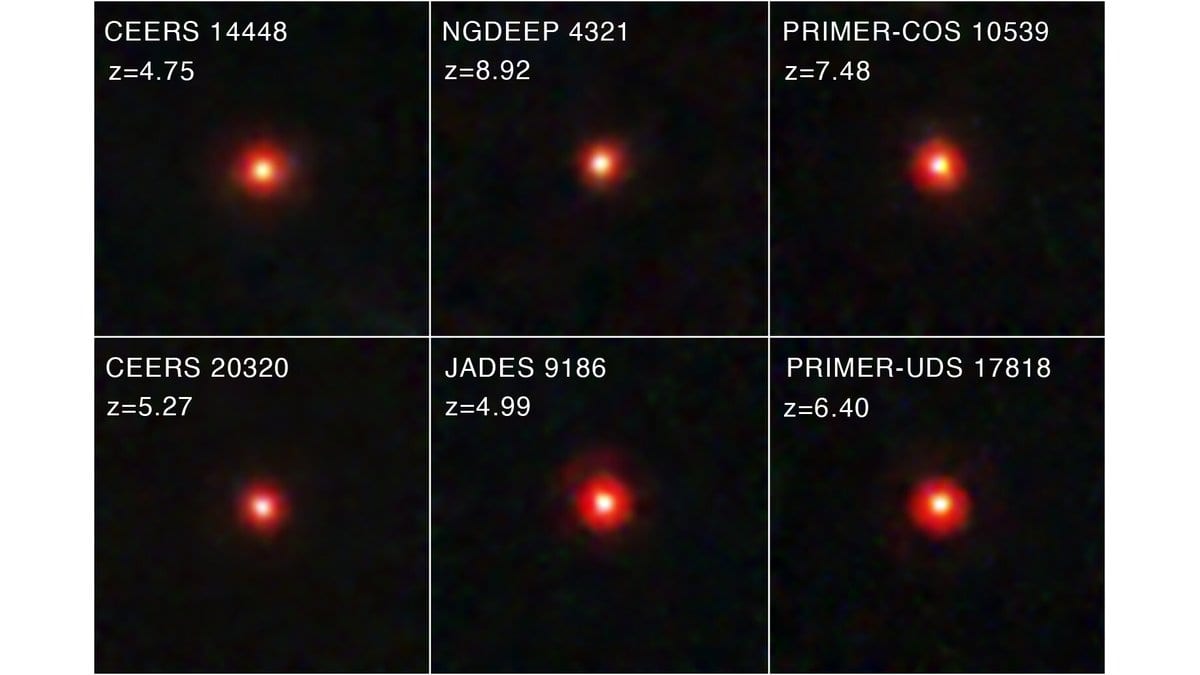
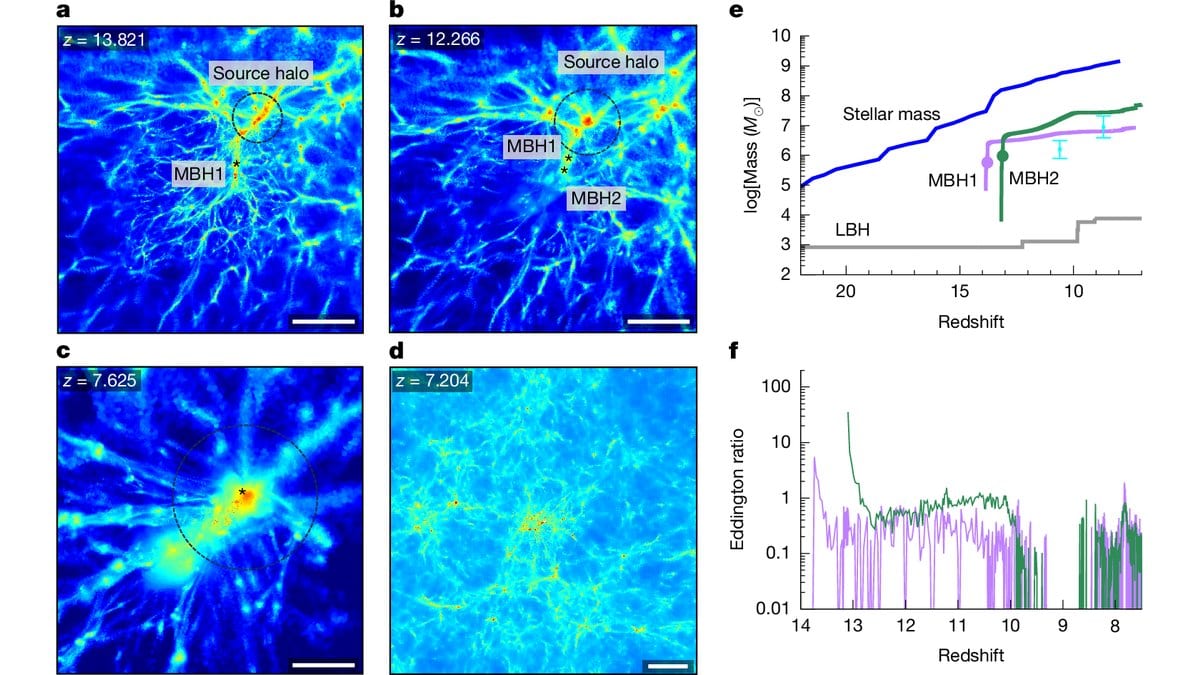
Cosmological simulations published Sept. 16 in Nature propose that JWST's so-called Little Red Dots are an early, short-lived phase in the formation of supermassive black holes, one explanation among…

Astronomers pointed the James Webb Space Telescope at five young stars to photograph giant planets inferred from the motion of gas around them, and found no sign of any. The planets have never been…

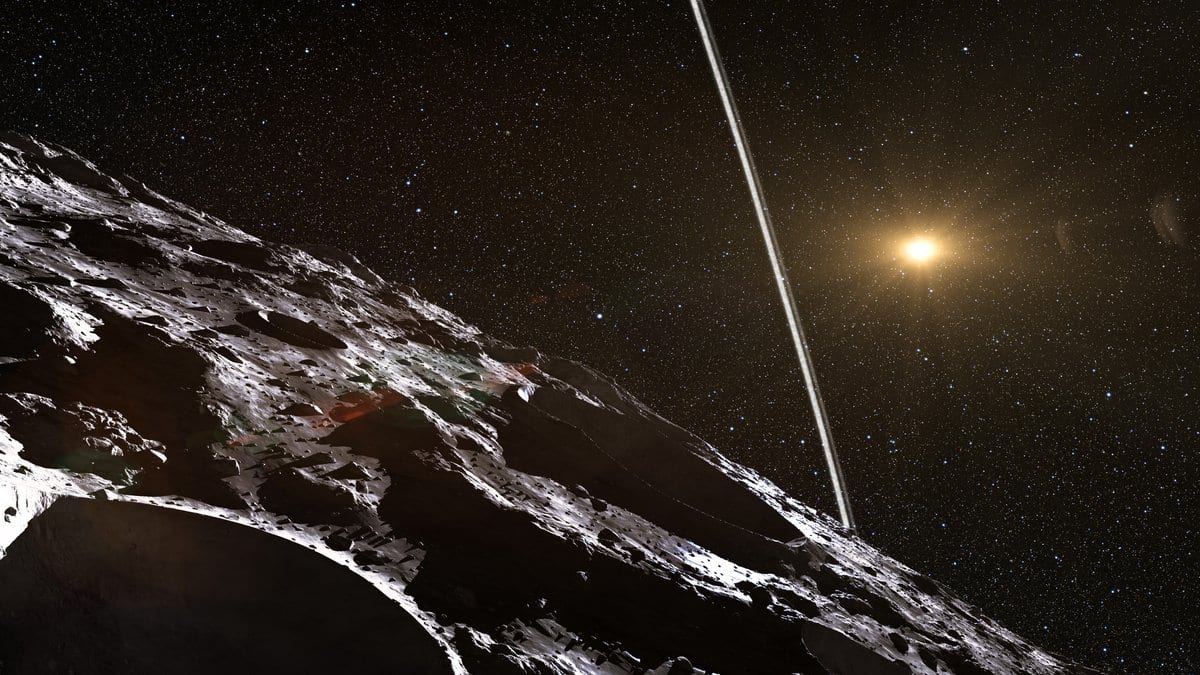
The two rings around Chariklo, an icy body that orbits between Saturn and Uranus, have changed since astronomers last watched them cross in front of a star, and they have changed in opposite ways.…

A search for a moon around a rocky planet in another star system has come up empty. Astronomer David Kipping stacked 12 James Webb Space Telescope observations of LP 890-9c, a rocky planet in the…

NASA said Hubble and the James Webb Space Telescope were pointed at the same patch of sky and picked out 27 previously unknown icy bodies orbiting beyond Neptune, the smallest of them about 3 miles…

Four astronomers have reanalyzed JWST measurements of starlight filtered through the atmospheres of 10 planets orbiting other stars, using one consistent method for all of them. They report that the…

Almost every massive star in the galaxy has a companion, and almost everything known about those pairs comes from looking at them long after they finished forming. By then the orbit has had millions…

Astronomers have identified four candidate pairs of "little red dots" in the James Webb Space Telescope's COSMOS-Web survey, and follow-up spectroscopy places both members of two of those pairs at…

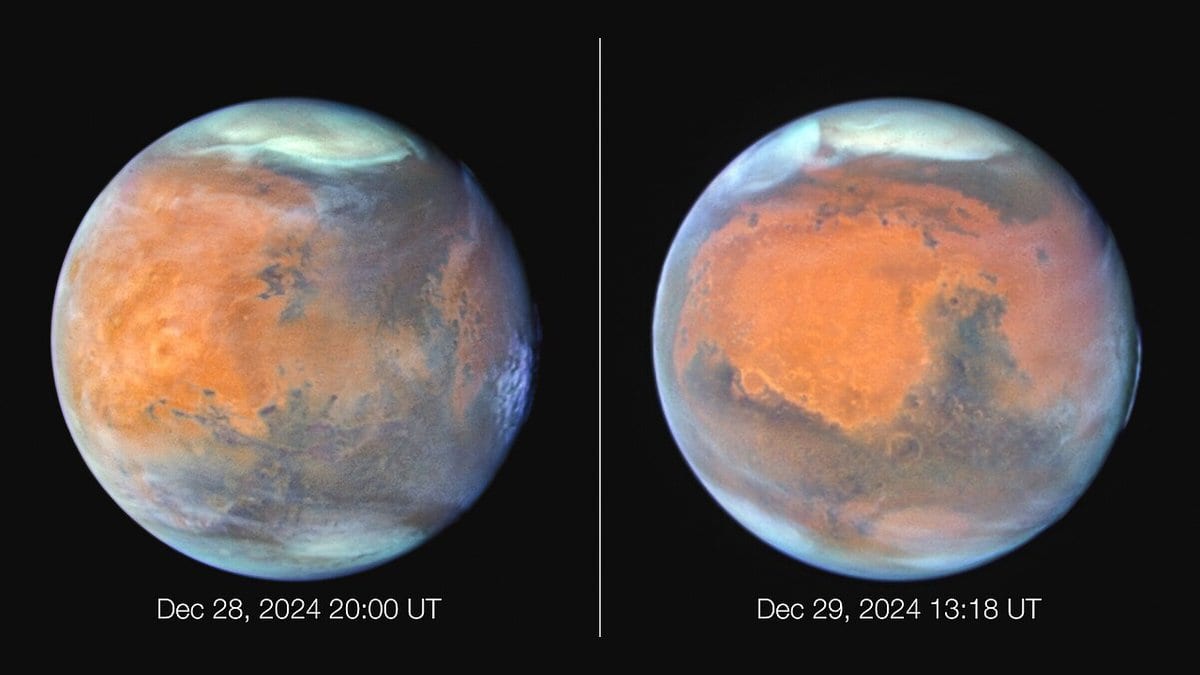
Mars has lost most of its air. Its krypton, though, is essentially where it started — a heavy noble gas still sitting in what is left of an atmosphere that a young Sun's wind spent hundreds of…

The star blew up when the universe was about a quarter of its present age, and by the time its light reached Earth it should have been a smudge: too faint to take a spectrum of, too faint to follow…