Three Earth-Size Planets Are Validated Around a Nearby Red Dwarf
Three planets a little larger than Earth have been statistically validated around TOI-789, a small, cool red star 43 parsecs away, or roughly 140 light-years, in a paper published Oct. 7, 2026, in The Astronomical Journal. The same analysis turned up a fourth object, smaller and cooler, which the paper reports as a candidate pending confirmation.
The paper makes its case on comparison. The four objects span what it calls the Earth-to-Venus transition, and two of the validated planets sit in the temperate range, judged by the starlight each receives. On that basis it describes TOI-789 as a place to compare planets of different sizes around one star, anchored on planets already established.
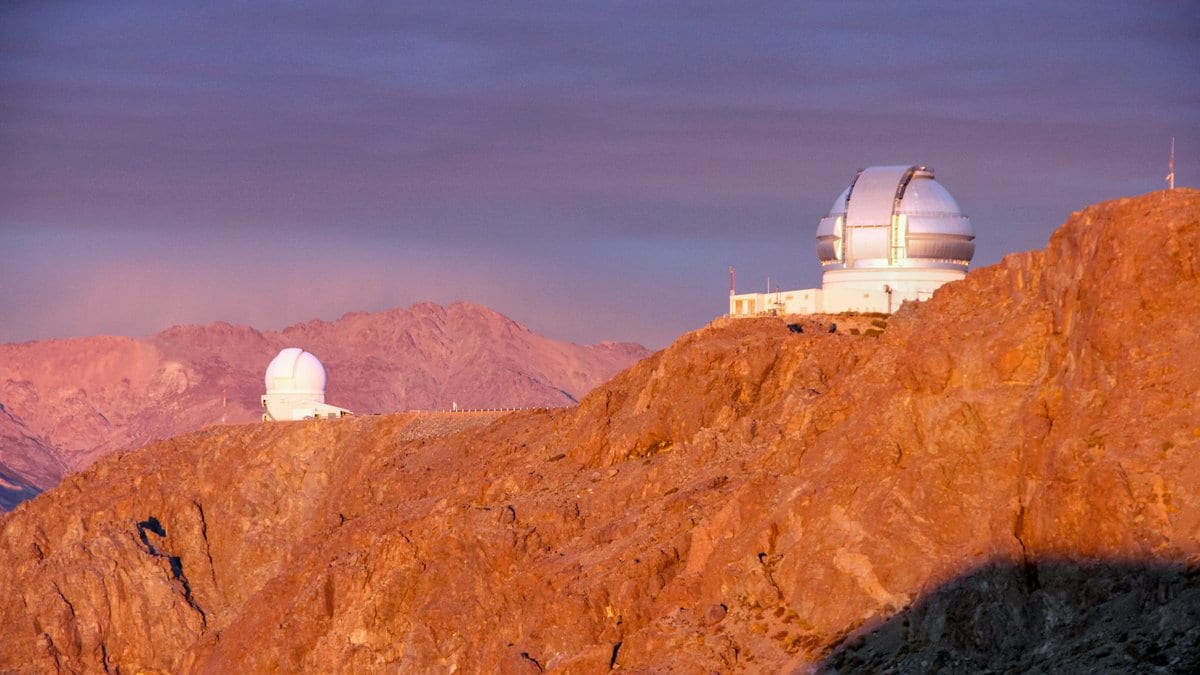
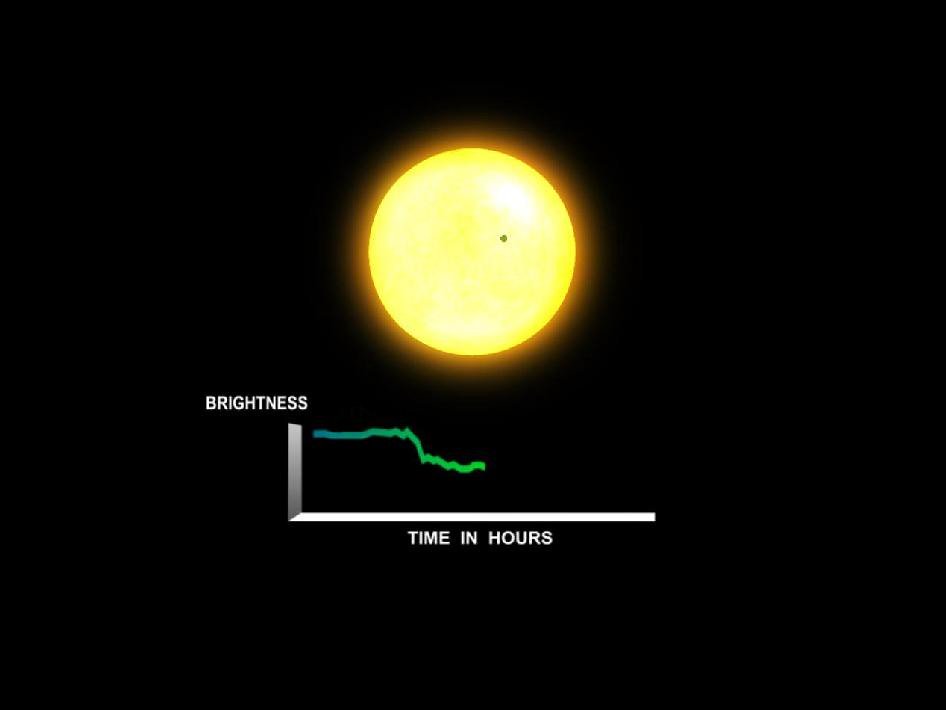
For the three validated planets, the paper reports radii of 1.18, 1.15 and 1.40 times Earth's, on orbits of 5.45, 8.04 and 12.97 days. The signals come from about seven years of observations by NASA's TESS satellite, with follow-up measurements from ground telescopes and high-resolution images from Gemini and SOAR. The validation is statistical rather than a mass measurement: a tool called TRICERATOPS put the odds that each signal comes from something other than a planet below the accepted threshold, once nearby stars that could mimic the same dips in brightness were ruled out.
The fourth object is the outermost and, at about 0.88 times Earth's radius, the smallest. It circles the star every 19.74 days, and the paper calls it the most temperate member of the system. Its signal is too weak for formal validation, so it is reported as a candidate.
A stability analysis in the paper found the system is stable only if the orbits stay close to circular, and reports that it is this, rather than the planets' masses, that limits stability. The paper also reports that the star is not bright enough for the planets' atmospheres to be studied, and that TOI-789 is an example of a large population of compact small-planet systems around red dwarfs that face the same difficulty.
Its single author, Juan F. Pagés Navarrete, is listed by the journal as an independent researcher in Málaga.
Sources
- The Astronomical JournalPeer-reviewed