Astronomers Watched a Giant Planet Stop Crossing Its Star
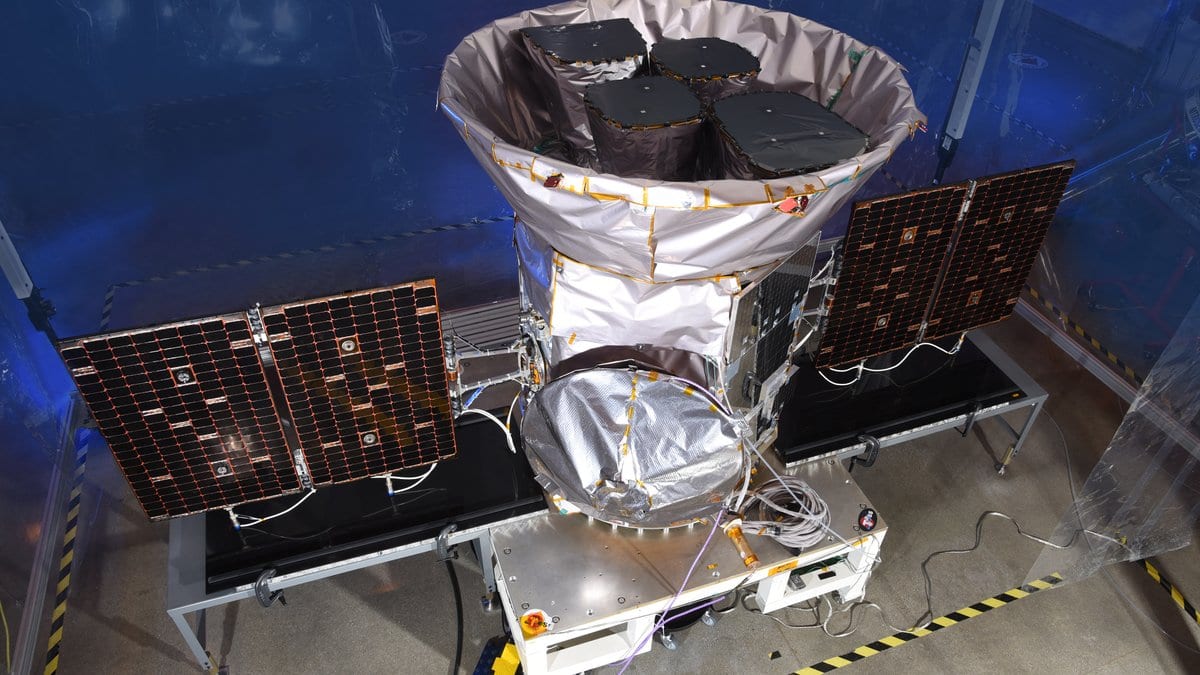
A giant planet that NASA's TESS spacecraft found by watching it cross in front of its star does not cross it anymore. Samuel W. Yee of the University of California, Los Angeles, and colleagues reported the planet, TOI-2535 b, on Nov. 9, 2026, in The Astrophysical Journal Letters, calling it "the first confirmed planet orbiting a single star whose transits have been directly observed to disappear."
Most known planets outside the Solar System were found this way: a star dims slightly each time a planet passes in front of it, which happens only while the orbit is lined up with the view from Earth. The authors write that the alignment is a lucky one, and that gravitational interactions between planets can make it temporary.
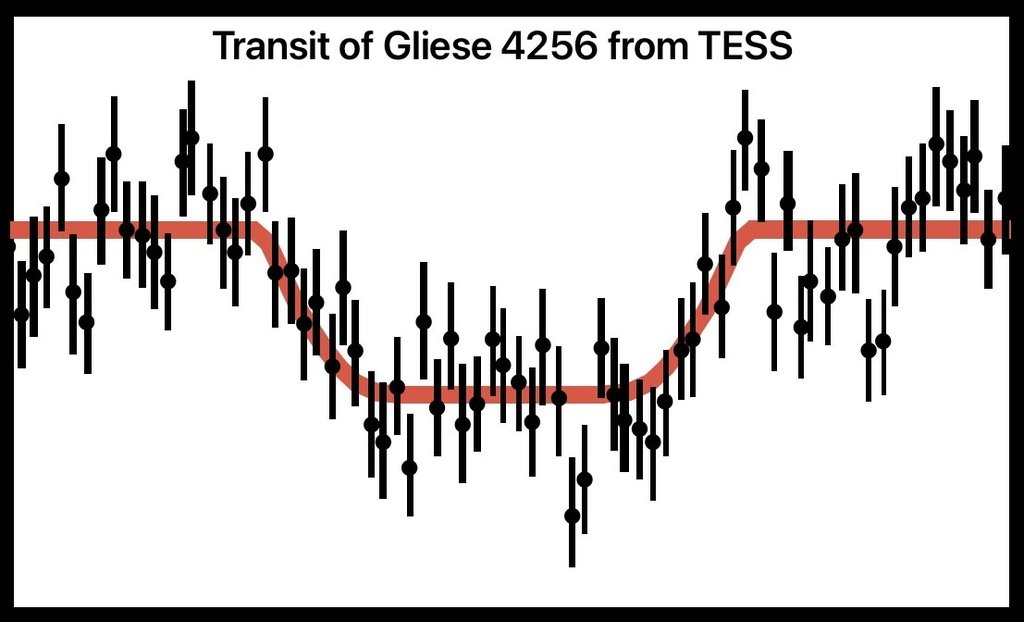
The paper reports that over seven years of brightness measurements from the Transiting Exoplanet Survey Satellite, the planet's path across the face of the star slid toward the edge and then moved off it altogether. The transits also drifted off schedule on the way out, by as much as six hours either side of a steady timetable.
Fitting those timing shifts and the changes in how long each transit lasted together with measurements of the star's motion from the NEID spectrograph, the team concludes that a second planet is tugging on TOI-2535 b from a nearby orbit, tilted at least about 5 degrees from the planet's own. That tilt swings both orbital planes around, and the swing is what carried the transit path off the star.
The companion is an inference from that modeling rather than a separate detection. The modeling makes it likely Saturn's mass or heavier and locks it into a rhythm with TOI-2535 b in which the two orbital periods keep a simple ratio, giving what the authors call "an unusual system that contains two short-period giant planets."
The paper describes the measured changes in transit duration as one of the most extreme known examples of interactions between planets driving orbital change on human timescales. It is open access under a Creative Commons license.
Sources
- The Astrophysical Journal LettersPeer-reviewed