Skip to content
See the World Through ScienceA project of ALLATRA

The FDA Approved a Daily Pill to Keep Early Breast Cancer From Coming Back
Science

Republish this story

Our work is licensed under Creative Commons BY-NC 4.0. You may republish this piece for free — with credit to ALLATRA Media and a link to the original, unedited beyond length trims, and not for commercial use.

Read the full license

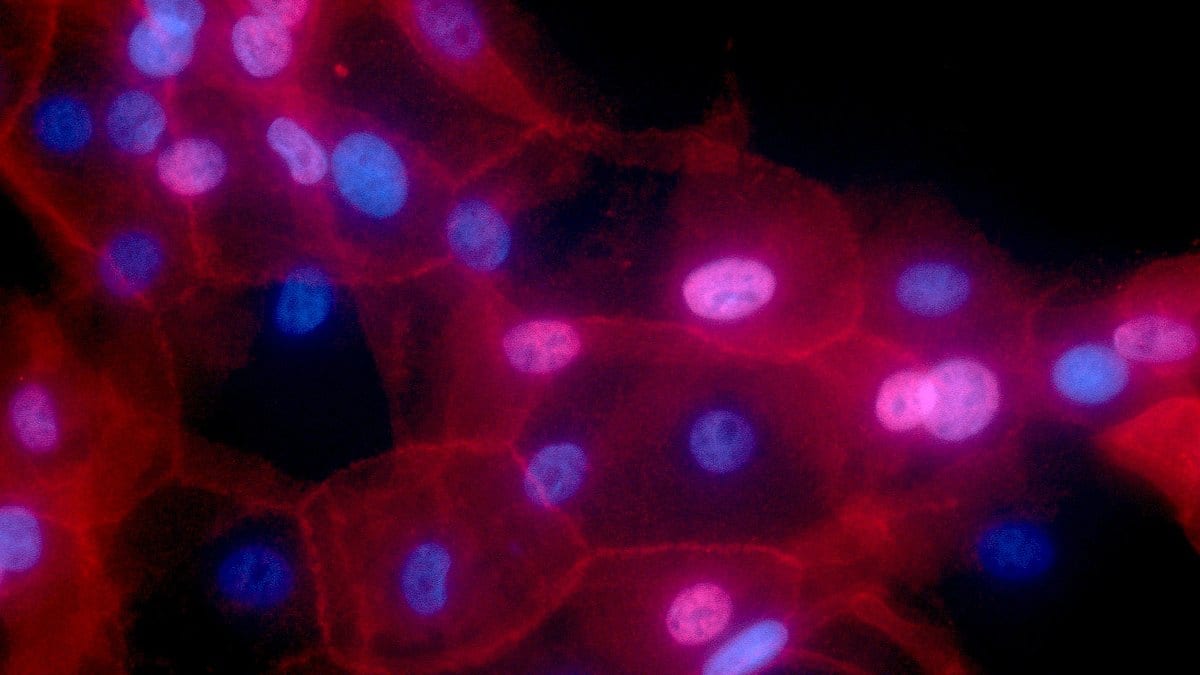
Fluorescence micrograph of cultured human breast cancer cells, blue-stained nuclei inside red-stained cell bodies
Human breast cancer cells grown in the laboratory, stained so that the nuclei show blue inside red cell bodies (illustrative). The new approval covers early-stage tumors that grow in response to estrogen."Breast Cancer Cells" by National Institutes of Health (NIH), via Flickr, CC BY-NC 2.0

The U.S. Food and Drug Administration approved the oral drug giredestrant on Nov. 23, 2026, for use on its own after surgery in adults with early-stage breast cancer driven by the hormone estrogen. The agency said the once-daily tablet, sold as Wilserdly, is the first new hormone therapy for early-stage breast cancer in more than 20 years.

Treatment after surgery is meant to keep the cancer from coming back, and the approval covers adults with stage I, II or III disease whose tumors carry estrogen receptors and lack a protein called HER2, and who face an intermediate to high risk of the cancer returning. The FDA calls that combination the most common subtype and expects about 321,910 new cases in American women in 2026.
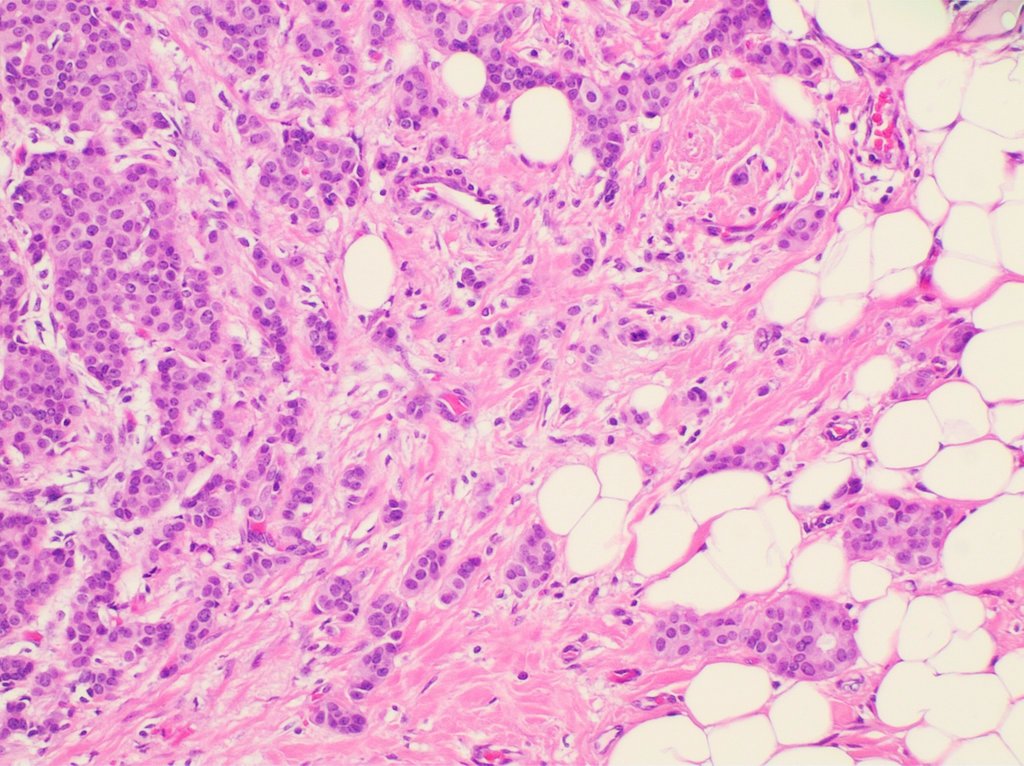
Microscope image of stained breast tissue with purple tumor cells spreading between pale fat cells and pink fibrous tissue
Tumor cells, stained purple, spread between fat cells and fibrous tissue in a sample of breast tissue (illustrative). Surgery takes out the tumor, and treatment afterward is meant to stop cells like these from coming back. "Histopathology of invasive ductal carcinoma, intermediate magnification" by Mikael Häggström, M.D. Author info - Reusing images - Conflicts of interest: None Mikael Häggström, M.D. Consent note: Consent from the patient or patient's relatives is regarded as redundant, because of absence of identifiable features (List of HIPAA identifiers) in the media and case information (See also HIPAA case reports guidance)., via Wikimedia Commons, CC0

The decision rests on the randomized lidERA trial (NCT04961996), in which 4,170 adults were assigned either giredestrant or a standard hormone drug, tamoxifen or an aromatase inhibitor, for up to five years. The FDA reported that giredestrant lowered the risk of invasive recurrence or death by 30%, a difference the agency puts at about 28 more patients out of every 1,000 alive and free of invasive breast cancer at 3 years.

"Our review focused on whether Wilserdly could reduce that risk more effectively than the hormone therapies patients already receive," said Angelo de Claro, director of the FDA's Oncology Center of Excellence.

Whether the drug helps patients live longer is not yet established — they are still being followed, and the agency said the applicant, Genentech, has agreed to submit those results as a postmarketing commitment. The FDA approved the same drug a week earlier, on Nov. 16, 2026, in combination with everolimus for advanced disease carrying a mutation in the ESR1 gene, based on a separate trial.

Muscle and joint pain, hot flashes, tiredness, headache and nausea are among the most common side effects the FDA listed, and the agency said the drug may harm a developing baby if taken during pregnancy. Women who have not completed menopause should also take a hormone-suppressing medicine.

Sources

By Olga SchmidtEditor-in-Chief, Writer

Spot an error?

Spot an error?

Report an error

Spotted a mistake on this page? Tell us what's wrong and our editors will take a look.

What kind of problem?

Only if you'd like us to be able to follow up. We won't use it for anything else.

We correct mistakes openly. Select any text to flag it. Fixes are logged under our Corrections Policy.

Report an error

Reporting on

The FDA Approved a Daily Pill to Keep Early Breast Cancer From Coming Back

What kind of problem?

Only if you'd like us to be able to follow up. We won't use it for anything else.

We read every report. Corrections are logged publicly.