Two Super-Earths Found Around a Star Dated to 1–2 Billion Years
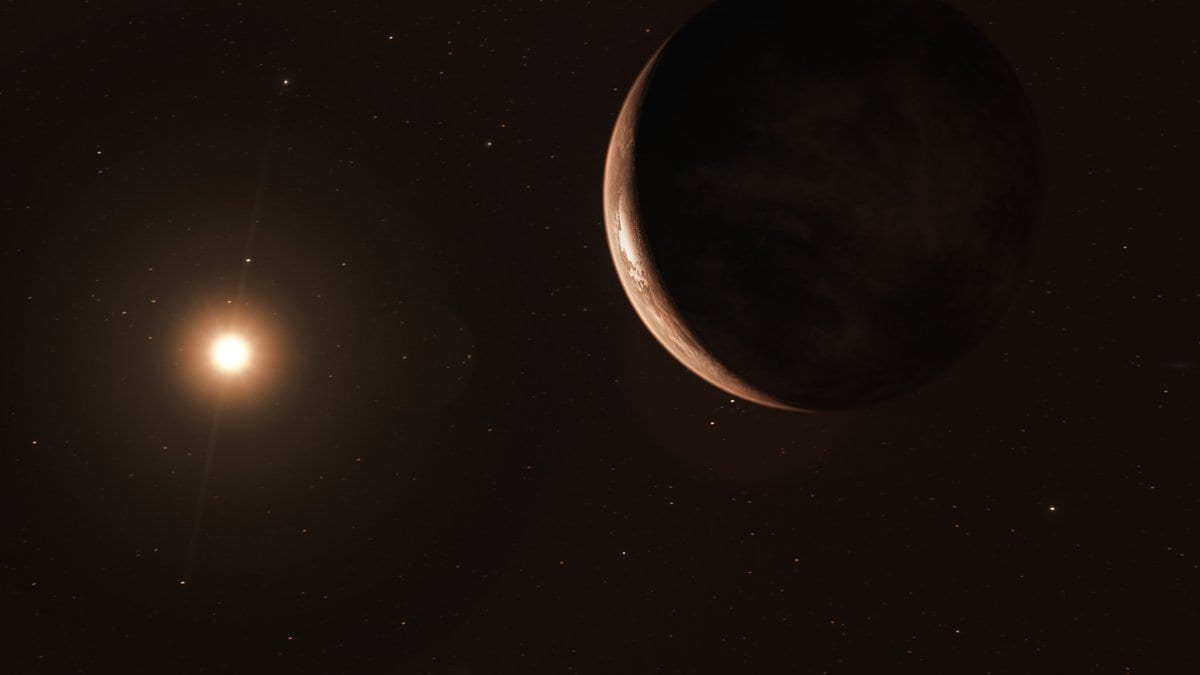
Alberto Peláez-Torres of the Instituto de Astrofísica de Andalucía in Granada and colleagues have validated two planets larger than Earth around TOI-2079, a red dwarf star whose age they put at 1 billion to 2 billion years. The study was accepted by The Astrophysical Journal Letters and posted Nov. 20, 2026.
The authors write that stellar age is key to tracing how planet populations change: small planets are thought to lose atmosphere over time, so a system of known age is a fixed point for that process. Their paper notes that only six multi-planet systems around M dwarfs, the galaxy's most common stars, have ages fixed in that range in the NASA Exoplanet Archive, and that none of the others holds a planet this size. They call their own pair the first super-Earth-sized planets found around a multi-planet M dwarf of well-determined age.
The two are validated rather than confirmed by mass. The team reports that follow-up brightness measurements from telescopes in the TESS Follow-up Observing Program, spectra of the host star and images sharp enough to show a close companion rule out other explanations for the regular dips in TOI-2079's light, and that a statistical procedure ruled out the rest.
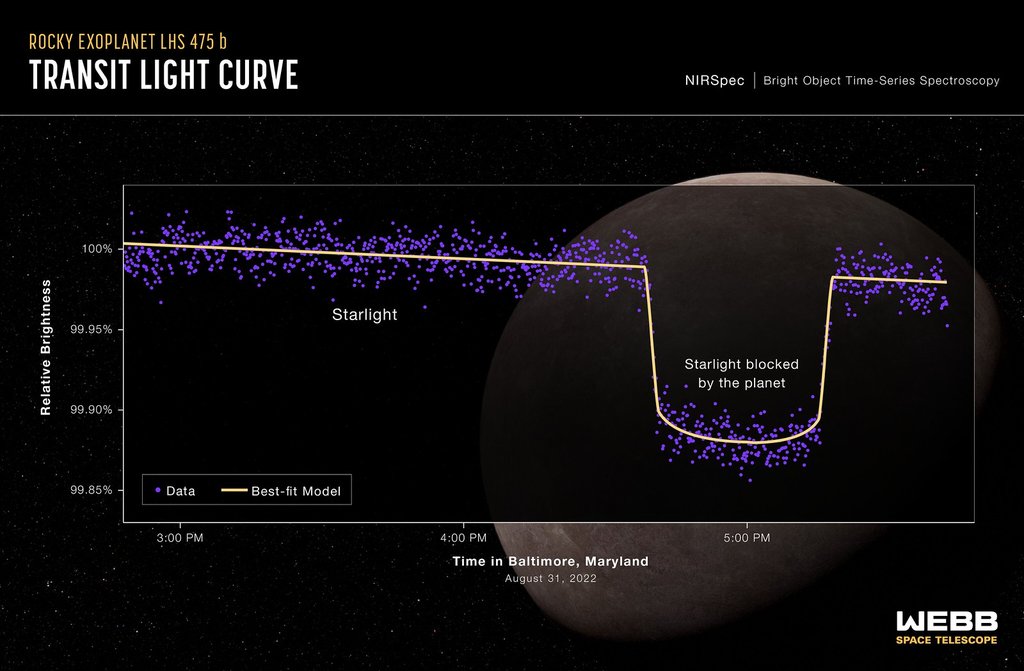
The inner planet, TOI-2079 b, circles the star once every 1.49 days and is 1.32 times the radius of Earth. The outer one, TOI-2079 c, takes 9.32 days to go around and measures 1.67 Earth radii.
TOI-2079 c falls in the radius valley, a size range where planets are scarce and where it is unclear whether one can hold on to a gas envelope. The inner planet sits below that gap. The authors describe two planets around one star apparently following different evolutionary paths, and they report that the outer one receives starlight in the range of what astronomers call the Venus Zone, which would make it a potential Venus analog.
Neither planet's mass is measured yet. The team estimates that about 55 hours of on-source time with the MAROON-X spectrograph would be enough to weigh both — the measurement that would move them from validated to confirmed.
Sources
- arXivPreprint