Fish Fed Plastic Grew Poorly, and so Did Fish Fed Clay
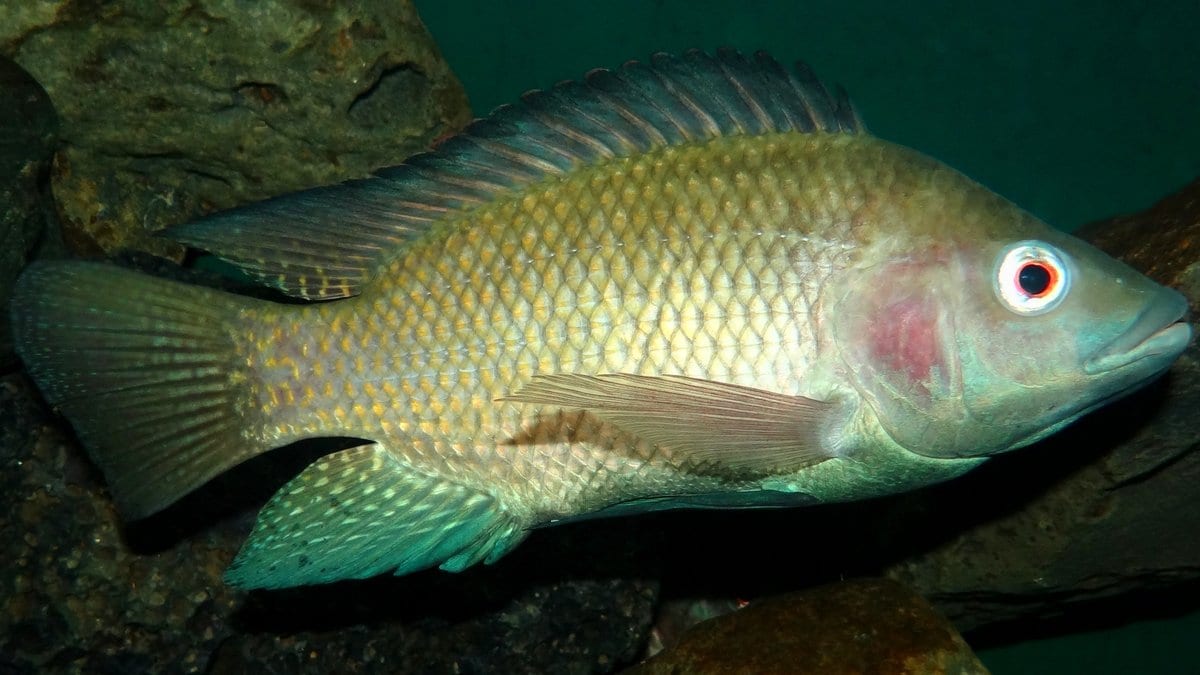
Nile tilapia fed polyvinyl chloride (PVC) microplastics for 49 days were slower to start eating, took less feed and finished with damage in the gills, gut and muscle, a team at the University of Mianwali in Pakistan reports. Fish given the same amount of inert clay in place of the plastic grew just as poorly.
The study, published Nov. 23, 2026, in Scientific Reports, set out to separate the harm done by plastic from the harm done by swallowing any hard, indigestible particle. The control was kaolin, an inert clay, stirred into feed at the same levels.
Researchers split 225 juvenile tilapia from a government hatchery in Faisalabad among five diets: plain feed, feed carrying 3% or 6% kaolin, and feed carrying the same two levels of PVC particles of roughly 50 to 90 micrometers. Both plastic levels are far above what fish meet in open water, making this a dose trial.
The authors report that 95.5% of the control fish lived to the end, against 80% to 84% in every group fed particles, plastic or clay. Growth and feed conversion were worst at the higher dose of either material; the fish on the heavier clay diet were the smallest, and body condition fell in all four particle diets.
The materials parted company under the microscope. Tissue was normal in the control fish and in those on the lighter clay diet; damage appeared at the heavier clay dose and in both plastic groups, and was worst in the fish fed the most plastic, whose gill lining had come away in places. Feed acceptance and activity also dropped in the plastic-fed groups, and the wait before they began to eat was longest on the heaviest plastic diet — though feeding attempts barely moved, so the fish still went for the pellets.
The paper reports that the plastic's chemical signature turned up in muscle from fish that had eaten it. The authors conclude that microplastics in feed may act as a stressor under laboratory conditions, and say the work should be repeated with other polymers and at environmental concentrations.
Sources
- www.nature.comPeer-reviewed