A Star's Wobble Points to an Unseen Heavyweight Beyond Six Planets
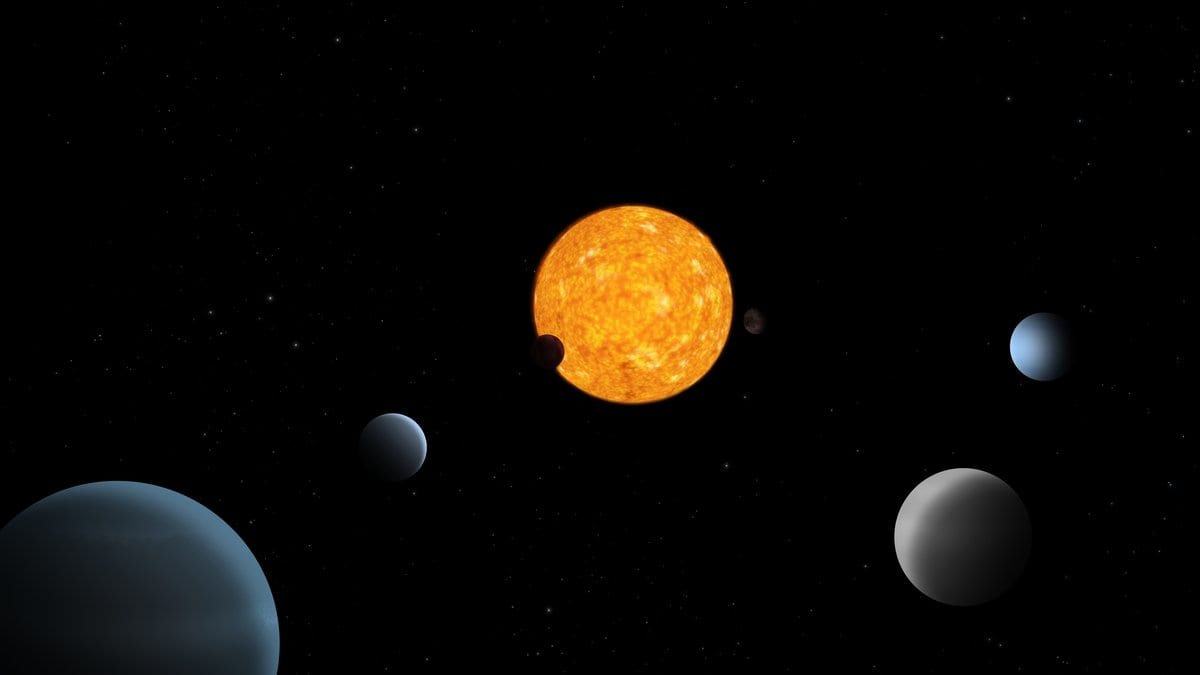
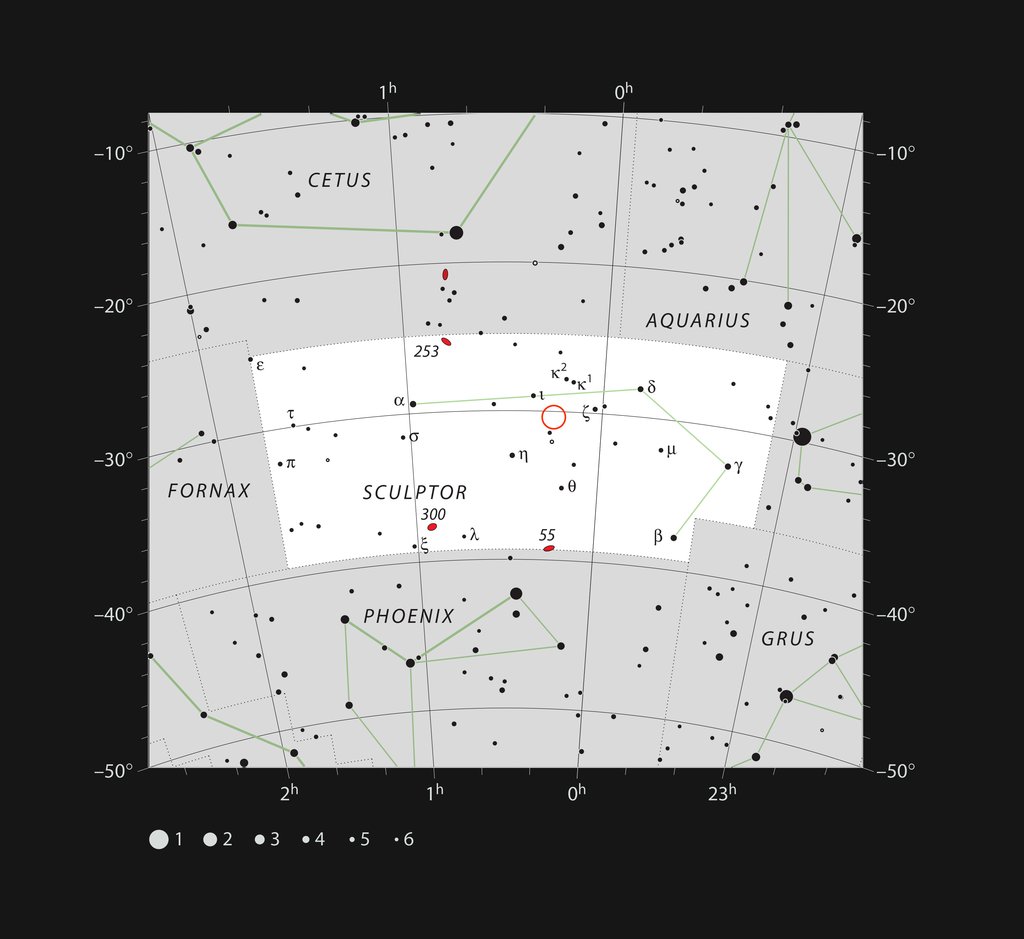
Emma V. Turtelboom of McMaster University and colleagues report evidence for a massive companion orbiting far beyond TOI-178's six small planets. Five of the six, locked into a chain of resonant orbits, circle the cool orange dwarf. The team traced the signal to slight shifts in the star's position in the combined Gaia and Hipparcos catalog and to published ESPRESSO velocity measurements. Their paper, posted Nov. 18, 2026, is a preprint submitted to Publications of the Astronomical Society of the Pacific and has not been peer reviewed.
The preprint describes such chains, where neighboring planets' orbital periods form whole-number ratios, as fossils of planet formation that have escaped disruption. A heavy companion on a wide, stretched orbit is the kind expected to break one, and the authors write that this one raises the question of how the chain held for billions of years.
Archival Keck II images ruled out orbits on which the companion would already have been seen. The final fit puts its average distance from the star at 6.9 times Earth's distance from the Sun, its mass at 21 times Jupiter's and its eccentricity, a measure of stretch, at 0.76. The authors' bounds are wide: the mass is pinned only to between about 10 and 70 Jupiter masses, and they caution that the eccentricity rests on data covering part of an orbit for most solutions tested. They call the object, TOI-178 h, likely an eccentric brown dwarf — heavier than any planet, too light to shine as a star.
The team tested whether the chain could survive such a neighbor, using stability criteria and step-by-step simulations of the planets' tugs. They report that the inner system appears robust to the companion's influence, in keeping with the star's age of several billion years, while adding that this does not rule out instability later.
The authors conclude TOI-178 h most likely collapsed out of the young star's disk, the route thought to make brown dwarfs rather than giant planets. By their count, TOI-178 is the only known system with a long resonant chain and a massive outer companion.
Sources
- arXivPreprint