Pulsar Clocks Set a Mass Limit on Black Hole Pairs in the Early Universe
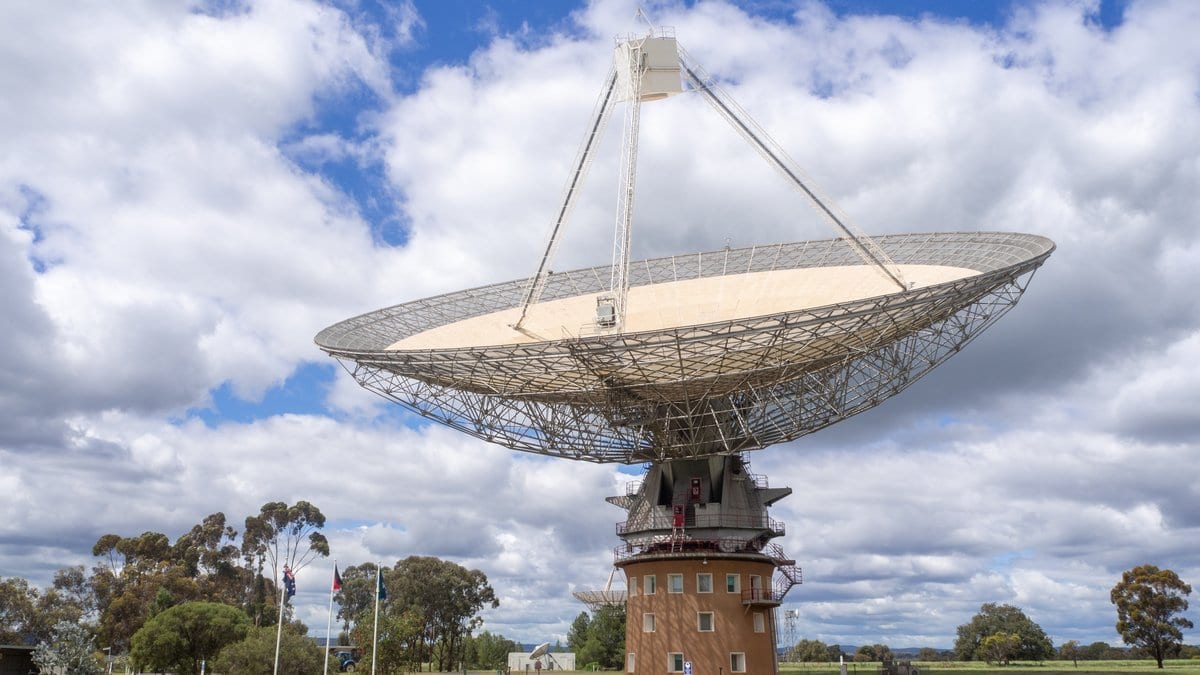
The Parkes Pulsar Timing Array has set upper limits on the mass of supermassive black hole pairs inside two of the earliest objects astronomers know of, in a paper published Nov. 2, 2026. No gravitational-wave signal turned up at either target, and the collaboration used that silence to rule out orbiting pairs above a combined mass of roughly 10 billion suns.
The method is meant to reach further back in time than this kind of search normally can. Writing in Physical Review Letters, Yiqin Chen and Shi-Yi Zhao of Beijing Normal University and colleagues in the PPTA Collaboration note that standard pulsar-timing searches leave out cosmological redshift, the stretching of a wave as the universe expands, and so apply only to the nearby universe. Their redshift-aware version, they say, gives the first direct constraints on black hole pairs at cosmic dawn, when the first galaxies formed.
Two targets anchored the search: the ultraluminous quasar J0100+2802, at redshift z = 6.327, and JADES-GS-z14-0, a galaxy found with JWST at z = 14.32 and one of the most distant ever confirmed. Running the new framework over Parkes PTA Data Release 3, the authors report that neither object can hold a pair above that chirp mass, a single figure combining the two masses, anywhere in the nanohertz band that pulsar timing covers.
Pulsar timing arrays look for gravitational waves by watching for tiny, matched shifts in the arrival times of radio pulses from fast-spinning neutron stars. A signal of a given strength would have moved those arrival times measurably, so finding none sets a ceiling rather than proving that nothing is there: lighter pairs, and pairs in wider orbits, are still allowed.
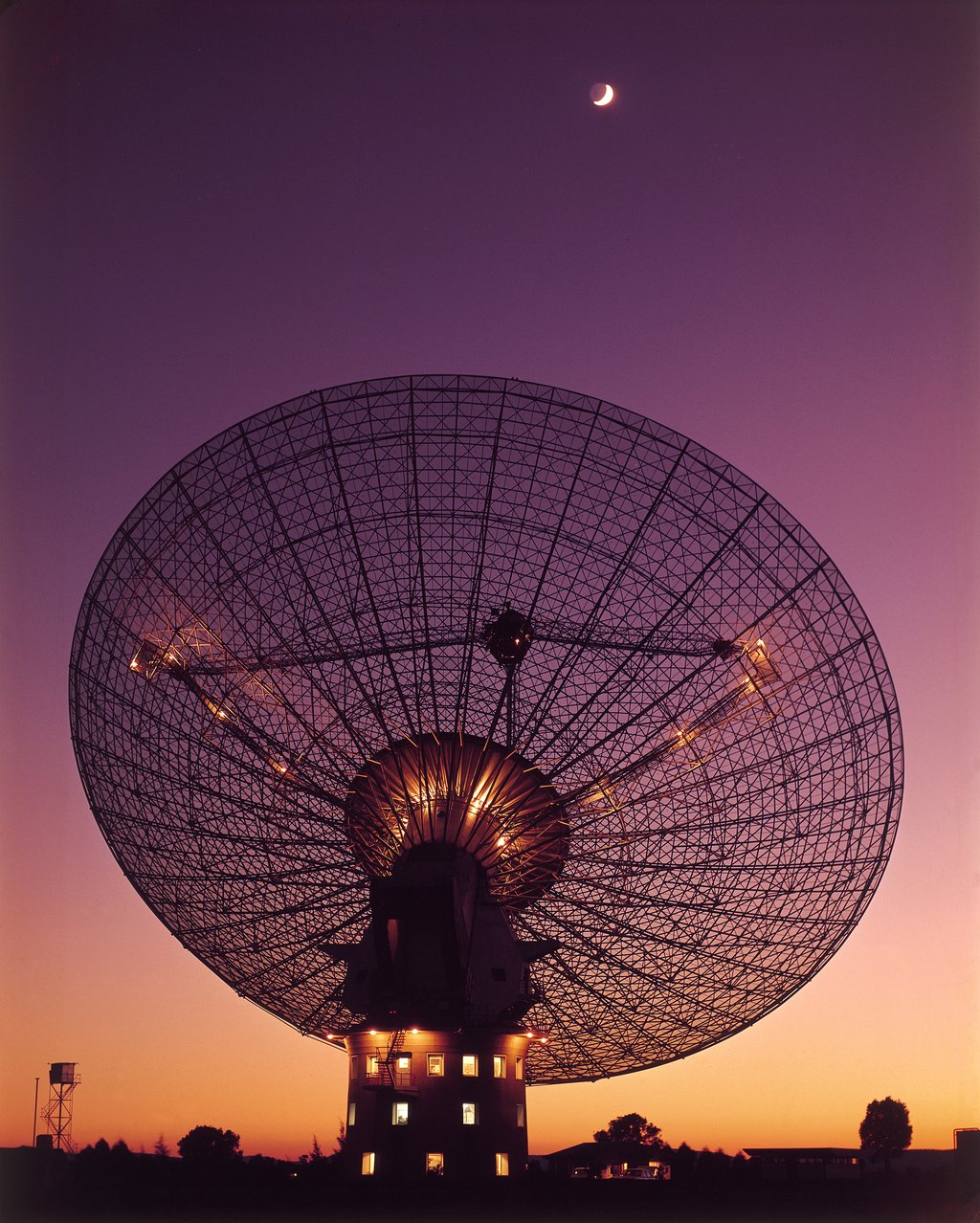
The collaboration calls the result "the tightest constraints to date" on such pairs at redshifts above 6. The same paper reports that a pair at high redshift would be detectable and locatable well enough to measure its properties, if one were ever strong enough to register.
Sources
- Physical Review LettersPeer-reviewed