The Heaviest Known Rocky Planets May Be a Measurement Error
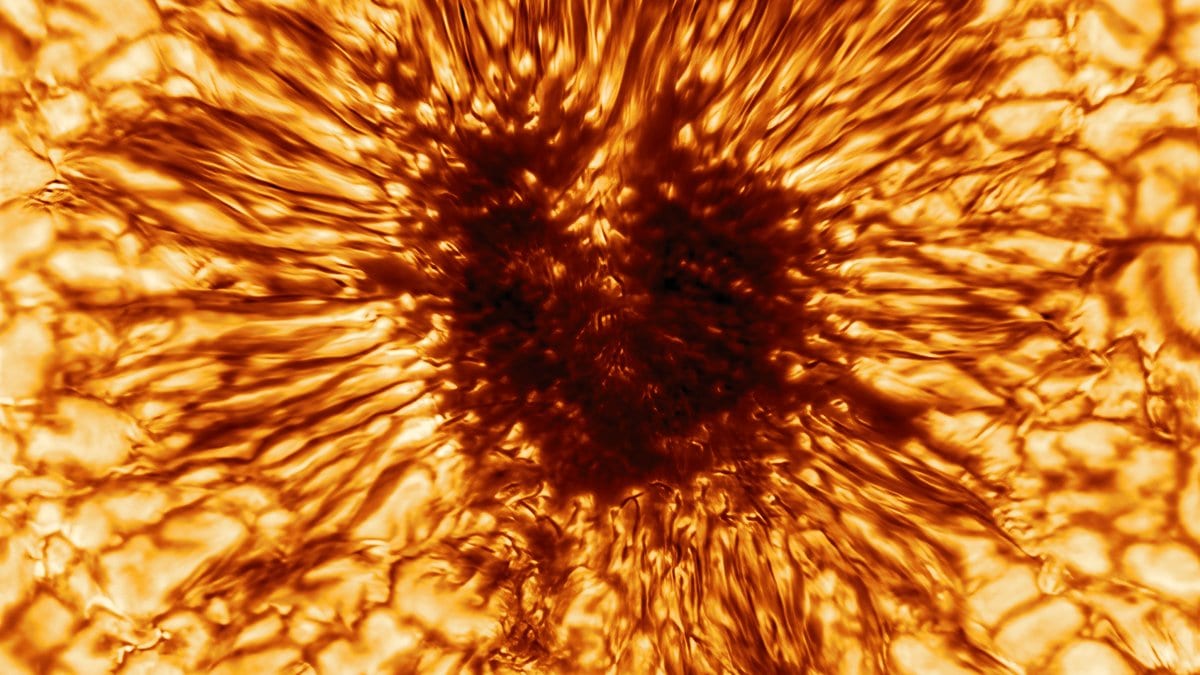
Two astronomers at McGill University report that every known rocky planet heavier than about 10 Earth masses orbits a magnetically active star, and they conclude the masses are inflated by the star rather than real.
Casey L. Brinkman and Nicolas B. Cowan published the analysis Nov. 6, 2026, in The Astrophysical Journal Letters. It questions whether the heavyweight rocky worlds nicknamed "mega-Earths" exist at all, and with them the method used to weigh them: Gaussian processes, which model a star's own restlessness so a planet's faint pull can be read out from under it.
Both formation simulations and the measured population of small planets put a ceiling near 10 Earth masses on a rocky world, the authors write, because a core heavier than that should draw in gas and finish as something closer to Neptune. A few planets have come in above that ceiling with densities that still look rocky. All of them orbit active stars, whose spotted surfaces churn and brighten as they rotate, and the authors put the chance of that coincidence at under 1%.
The preprint version of the paper, posted to arXiv on Oct. 8, 2026, puts the count at eight: four with rocky densities and four dense enough to be anomalous without being rocky. The heaviest, HD 63433 b, was measured at roughly 37 Earth masses.
In that version the authors see no reason for unusually heavy rocky planets to favor young, active stars. The routes proposed for building one, a long run of giant collisions or a gas giant stripped of its envelope, take time, which should favor older, quieter systems. Their proposal is that the star is being misread as the planet: masses like these come from the slight shift in a star's light as a planet tugs on it, and an active star's noise can be absorbed into the planet's signal by the very fit meant to remove it.
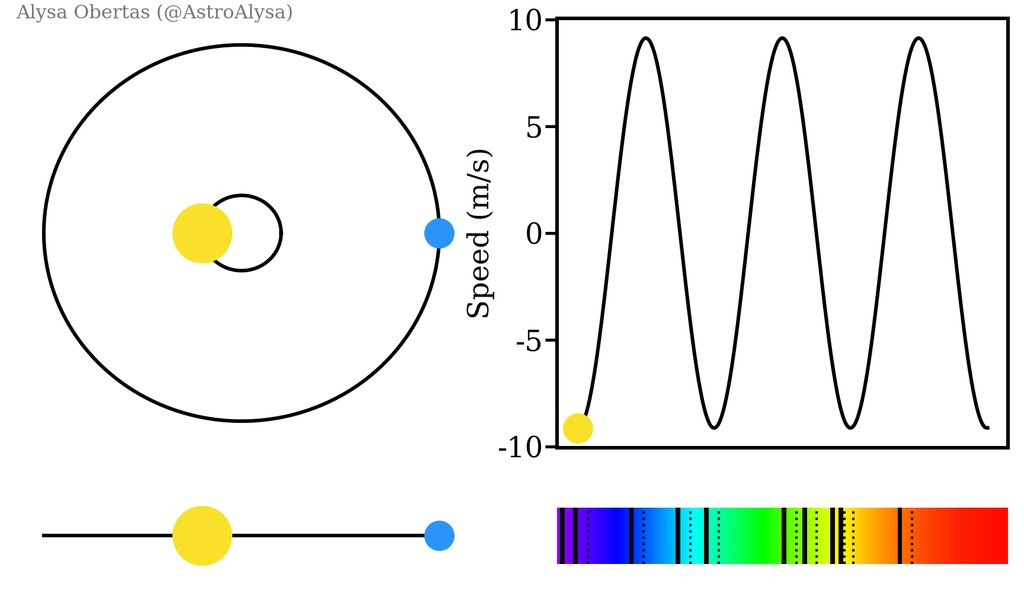
They write that masses measured around active stars deserve skepticism, and point to observing schedules timed to separate a star's rotation from a planet's orbit as the better route.
Sources
- The Astrophysical Journal LettersPeer-reviewed