A Galaxy's Bright Core Dimmed for Two Months, and a Gas Cloud Was in the Way
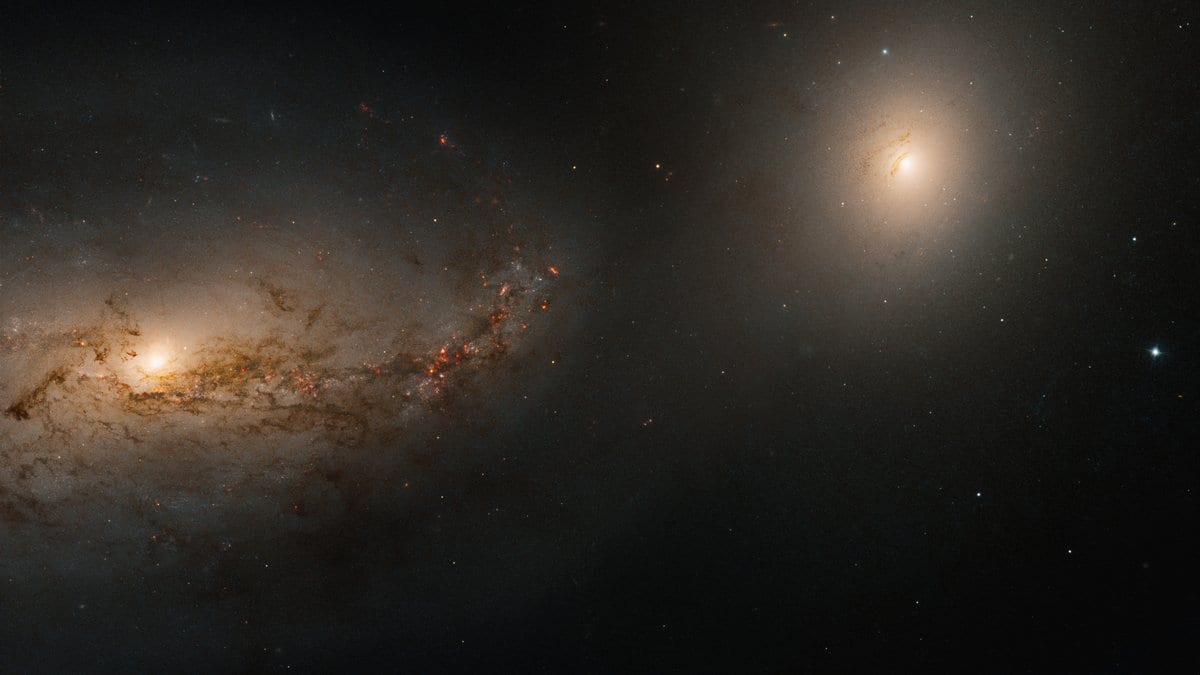
The core of the active galaxy NGC 3227 dimmed by about 70% in a matter of weeks and recovered within two months, and the team that tracked it reports that a dense cloud of gas crossing the line of sight, not a black hole switching off, is what hid it.
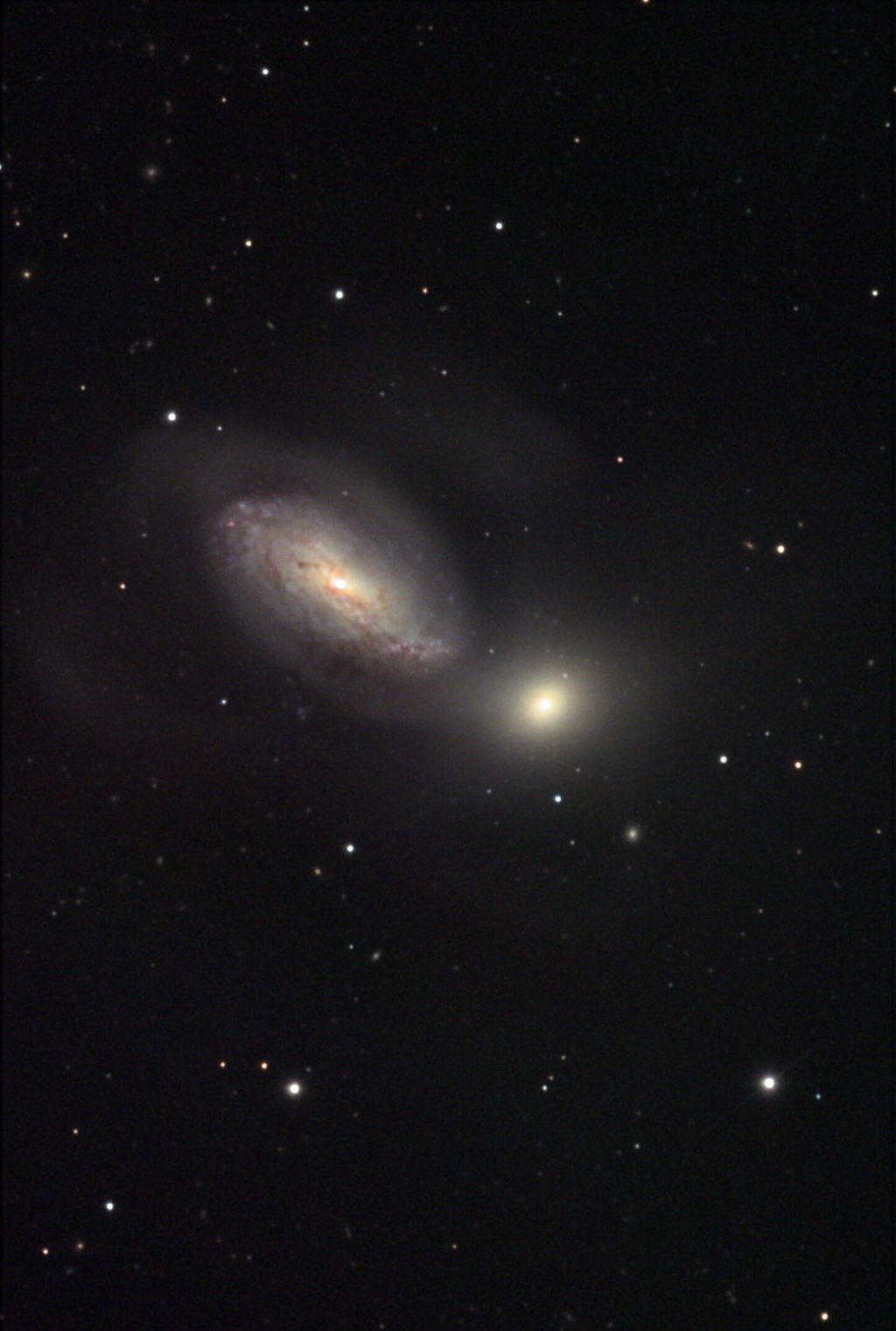
Kaiwen Zhang of the University of Wyoming, Jian-Min Wang of the Chinese Academy of Sciences and colleagues describe the episode in The Astrophysical Journal Letters, published Nov. 6, 2026, and write that it shows that compact, very dense material lying close to the black hole can produce a swing this extreme within weeks. Astronomers call that a changing-look event, meaning a galactic core that appears to change character, bright at one look and faint at the next.
The galaxy's visible light faded and its broad hydrogen emission line nearly vanished together. Simulations of the galaxy's normal random flickering make a decline that steep unlikely to be the everyday churn of gas falling inward. NASA's Swift space telescope recorded the galaxy's X-rays shifting toward higher energies over the same period, which the authors read as extra absorbing material moving into the line of sight.
The authors report that their clearest evidence comes from reverberation mapping, which times how gas farther out responds to changes in the light from the center. Even in the dim state, there was a lag of 6–8 days between the central light and the broad hydrogen line, so that gas was still being illuminated and the obscuring cloud therefore lay closer in than the gas itself. In their calculations, reproducing the dimming takes a fully ionized column of roughly 1.5 × 10²⁴ hydrogen atoms per square centimeter, which they call Compton-thick, dense enough to scatter X-rays.
The paper is open access under a Creative Commons Attribution license. The team posted a preprint version of the work in October 2026.
Sources
- The Astrophysical Journal LettersPeer-reviewed