Hubble Catches a Rocky Planet Slipping Behind Its Star
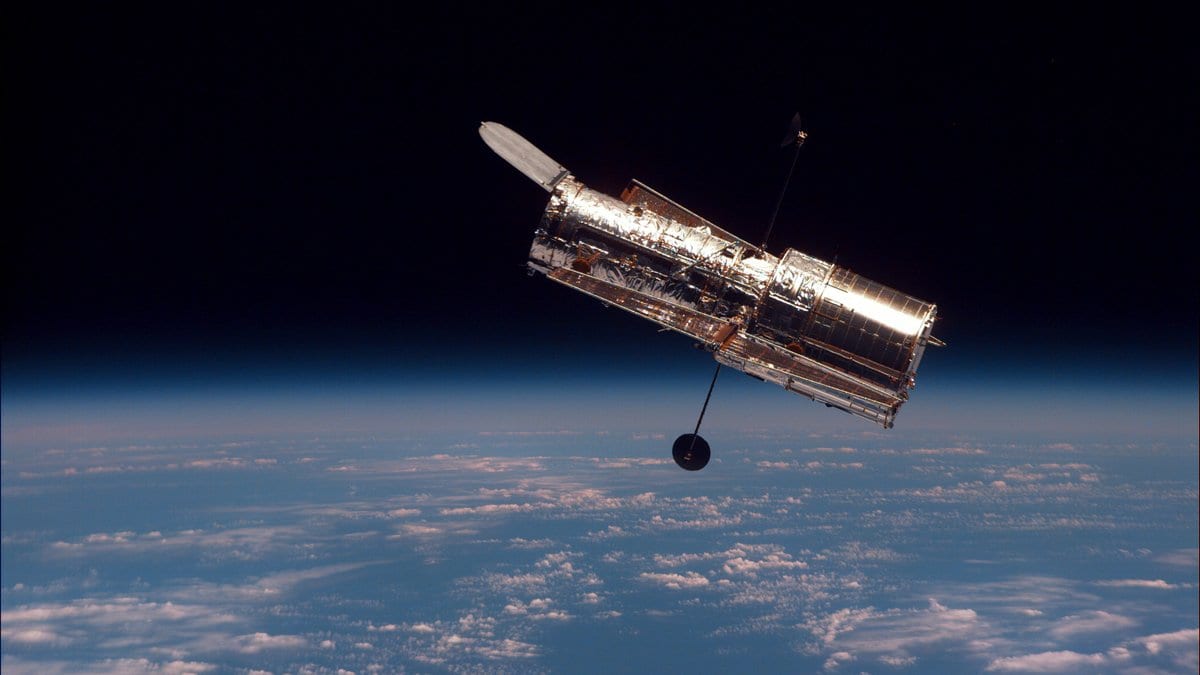
A team of astronomers reports that the Hubble Space Telescope has caught a rocky planet slipping behind its star. The planet, TOI-2431 b, circles so close in that a year there lasts 5.4 hours, and the paper's title calls the result the first Hubble detection of a secondary eclipse from a rocky exoplanet.
A secondary eclipse is the moment a planet passes behind its star, and the small dip in light it causes is one of the few ways to learn anything about the daylit face of a world too small to see on its own. The team reports that the Hubble eclipse, combined with the one NASA's TESS planet-hunting satellite had already recorded in visible light, constrains how hot the planet's day side is, how much starlight it reflects, and how much of that heat reaches its night side.
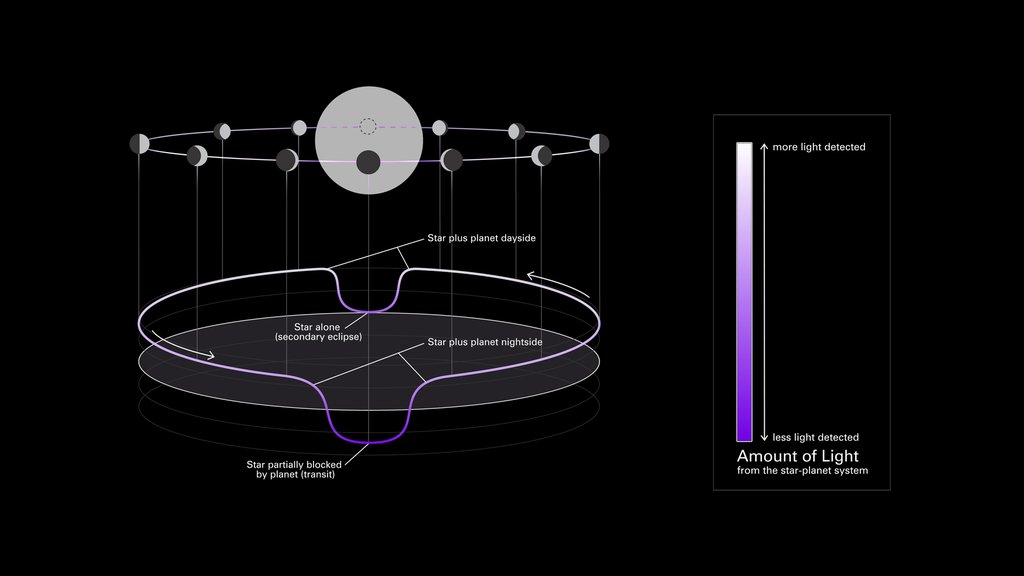
Sebastian Zieba of the Center for Astrophysics and colleagues watched a full orbit of the planet with Hubble's Wide Field Camera 3 and picked out the eclipse in near-infrared light. Their paper was published Oct. 30, 2026, in The Astrophysical Journal Letters.
The authors report that their Hubble observation of the full orbit is consistent with "zero nightside emission and no measurable hotspot offset," which on their reading means the planet moves heat poorly from its day side to its night side. They attach a caveat to their own figures: at the wavelengths Hubble and TESS observe in, "thermal emission is degenerate with reflected light," so reflected starlight could account for part of what both telescopes saw, and longer-wavelength measurements are needed to separate the two.
Observations with JWST's MIRI instrument are planned, the paper says, and the authors expect them to narrow that ambiguity and to search for "possible silicate-atmosphere spectral features," signs of rock vapor over the surface. They call TOI-2431 b a "benchmark target for studying properties of lava worlds."
Sources
- The Astrophysical Journal LettersPeer-reviewed