Two Dust Clumps Still Circle a Young Star Seven Years Later
Two compact patches of light in the disk of gas and dust around the young star DR Tau are still there seven years after the first images of them were taken, and both have drifted around the star at close to the speed a body orbiting at that distance would, according to a paper accepted for publication in Astronomy & Astrophysics.
A planet still buried in the disk it formed from is very hard to photograph directly, and the usual way to find one is by the glow of hydrogen as gas falls onto it. That is what D. Mesa of the Italian National Institute of Astrophysics in Padua and colleagues were looking for, in a visible and a near-infrared hydrogen wavelength at once. They did not confirm that glow at either feature, and they conclude the light is most likely starlight reflected off dust.
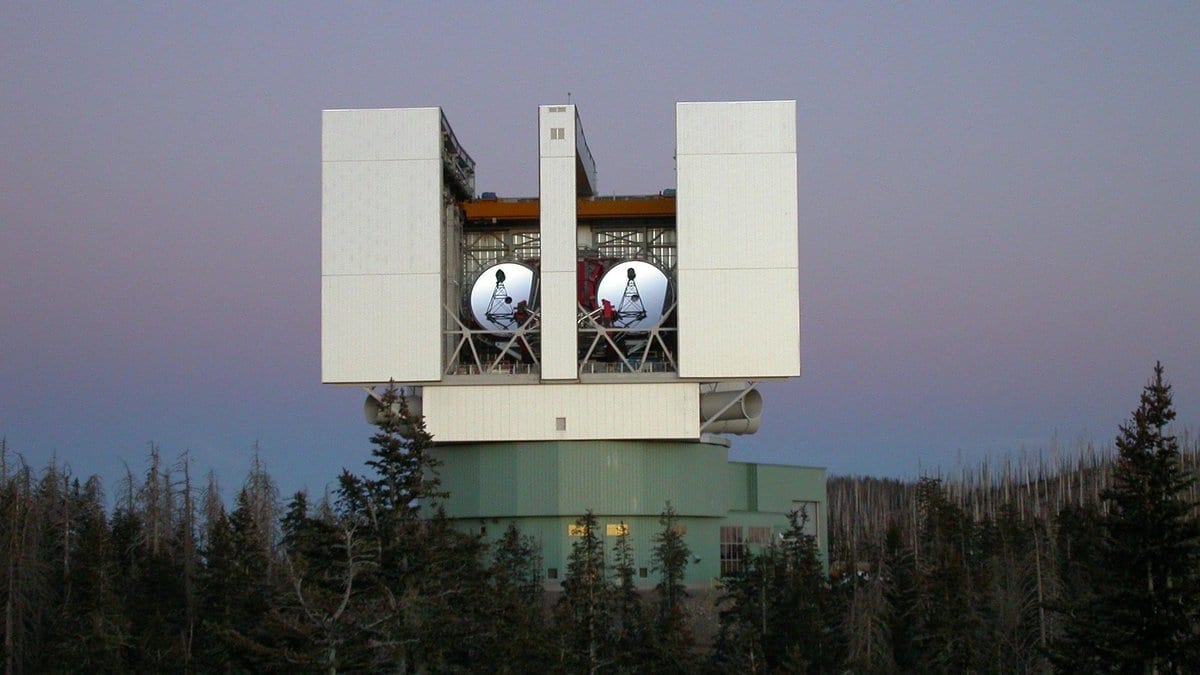
The observations were made over two nights in November 2025 with SHARK-VIS and SHARK-NIR, a pair of high-contrast cameras at the Large Binocular Telescope in Arizona. They recovered the disk's spiral arms and arc-like structure, along with two compact features the team labels S1 and S2. S2 sits about 74 times as far from the star as Earth sits from the Sun. Measured against images taken with the SPHERE instrument in 2018, both features have turned clockwise at nearly the same rate, 0.66 and 0.71 degrees a year, which is the orbital speed expected at S2's distance. The authors call that a hint of a companion of about one to two Jupiter masses at that spot, and a hypothesis their data cannot confirm.
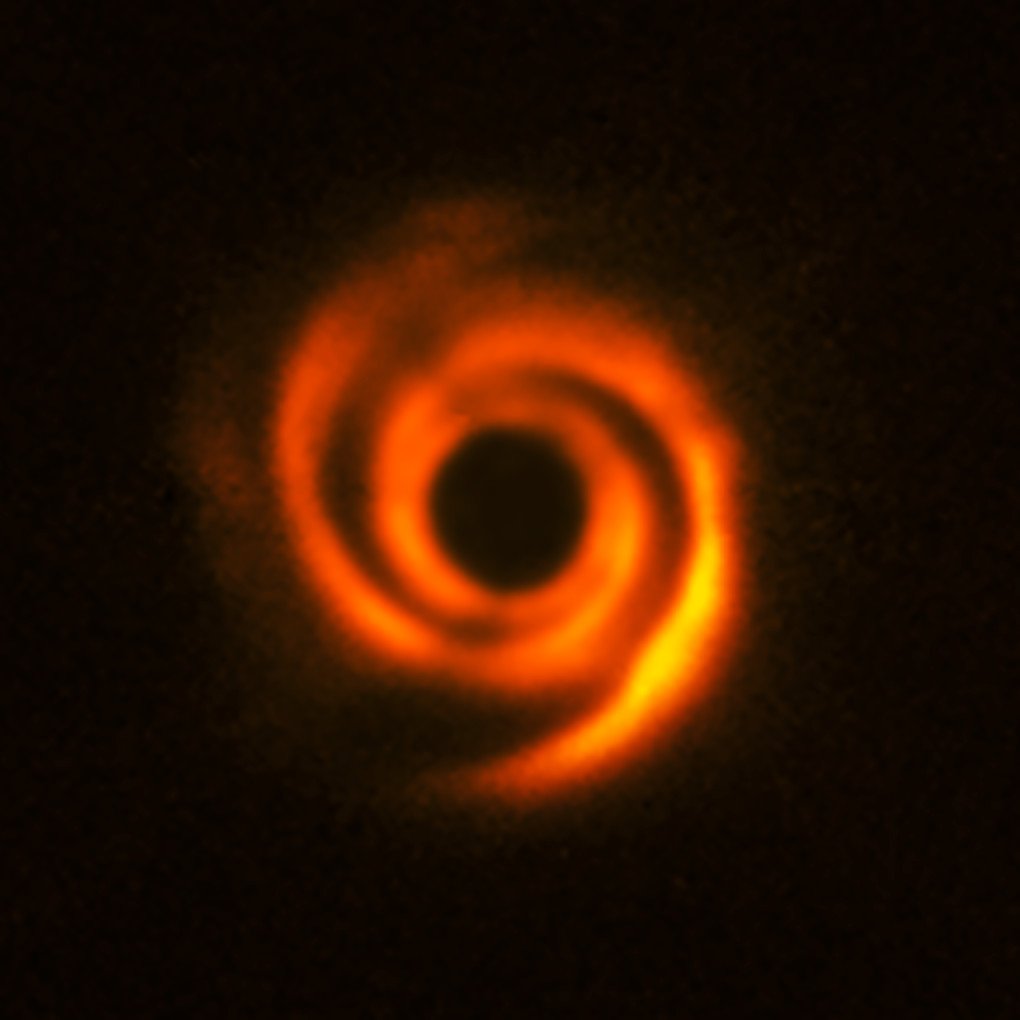
DR Tau is roughly a million years old. SPHERE first imaged its spiral arms and the elongated S1 feature, and later millimeter observations with the NOEMA array did not confirm it as a planet. The team also weighed two other causes for the spiral pattern and judged both unlikely — a disk heavy enough to coil under its own gravity, and the close passage of a neighboring star.
Sources
- arXivPreprint