Sunlight's Push Shows Earth's Newest Companion Is an Asteroid, Not Space Junk
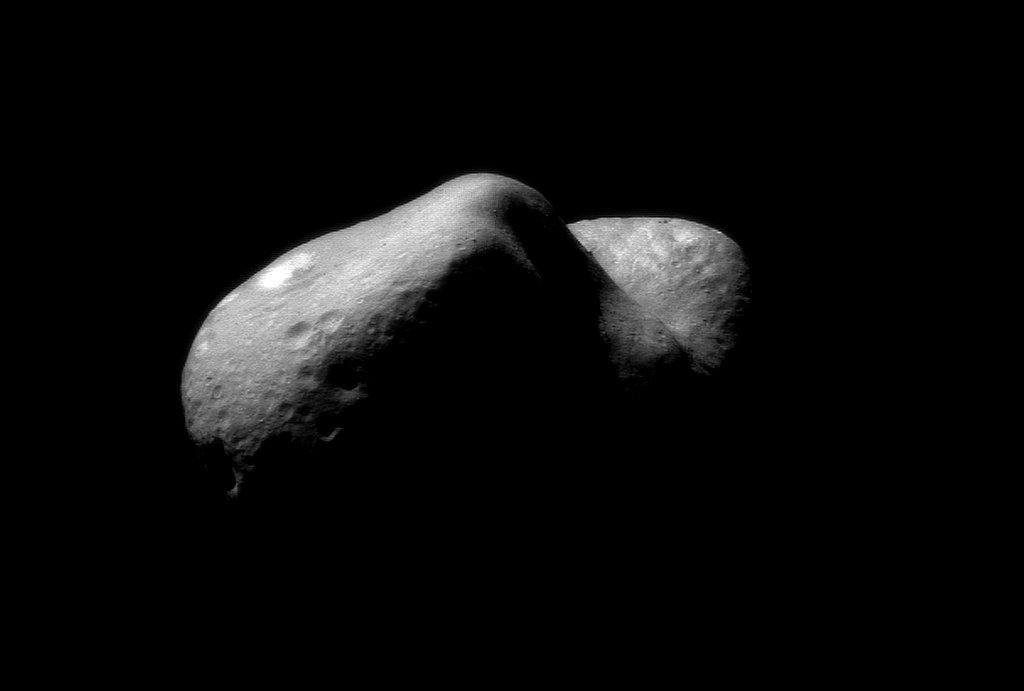
Asteroid 2026 QQ8, a small body now traveling with Earth, is a natural rock rather than a piece of discarded space hardware, a team led by Grigori Fedorets of the University of Turku reports in a paper submitted to the journal Astronomy & Astrophysics. Fedorets and colleagues find the object is gravitationally bound to Earth for 225 days, until Dec. 7, 2026 — the third such flyby companion on record and, as the authors put it, the first long-duration one.
The authors say the capture was a chance to study a class of object that is rarely found, and that how often Earth picks one up is an early indicator of how many meter-sized asteroids pass close by. The preprint was posted Nov. 20, 2026, and has not been peer-reviewed.
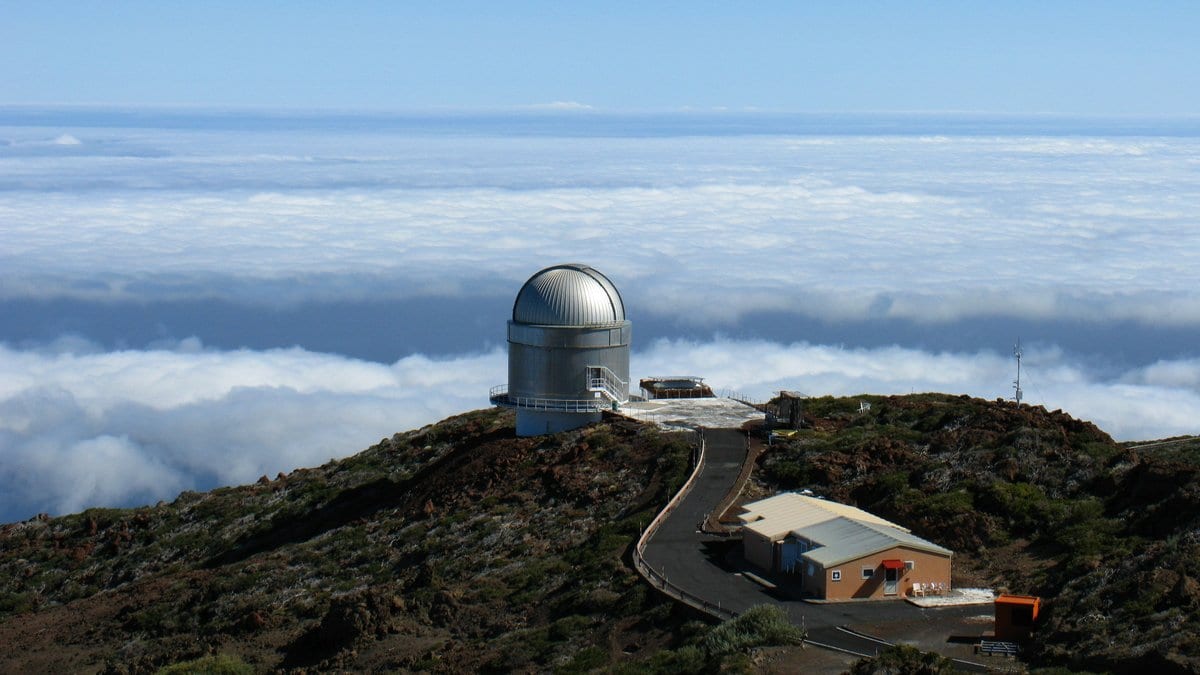
To tell a natural body from a spent rocket stage, the team measured the push of sunlight on the object, which grows with the surface it has for its mass. The ratio came out at 0.5 square meters per metric ton, well under the lowest published estimate of 6 for an artificial rocket booster. Colors from the Nordic Optical Telescope best match an S-type, or stony, asteroid, which implies a diameter of 1.3 to 1.9 meters.
The authors write that the object's path closely matches the so-called orbit of maximum lunation, proposed in 1878, on which a body can sit near Earth for up to three months, and that this is the first observational evidence such orbits exist. The two earlier flyby companions stayed about a month each.
Krisztián Sárneczky found the asteroid on Aug. 19, 2026, at the Konkoly Observatory's Piszkéstető station in Hungary. Because nearly everything on an Earth-centered orbit is artificial, the Minor Planet Center's software twice dropped it from the page where new candidates are confirmed, and it was not given its provisional designation until late October. The paper asks the center to flag suspected natural objects and keep them listed while they are checked; one sign it gives is a sunlight-pressure signal that weakens over weeks.
Sources
- arXivPreprint