A Giant Planet That Does Not Fit the Standard Story of How Planets Form
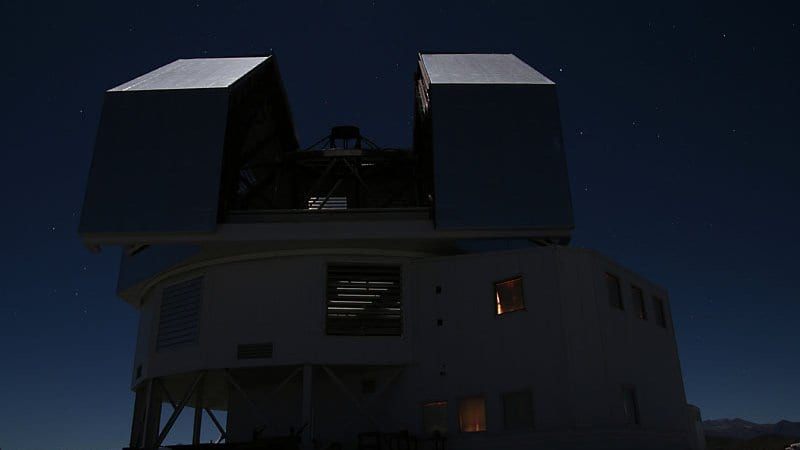
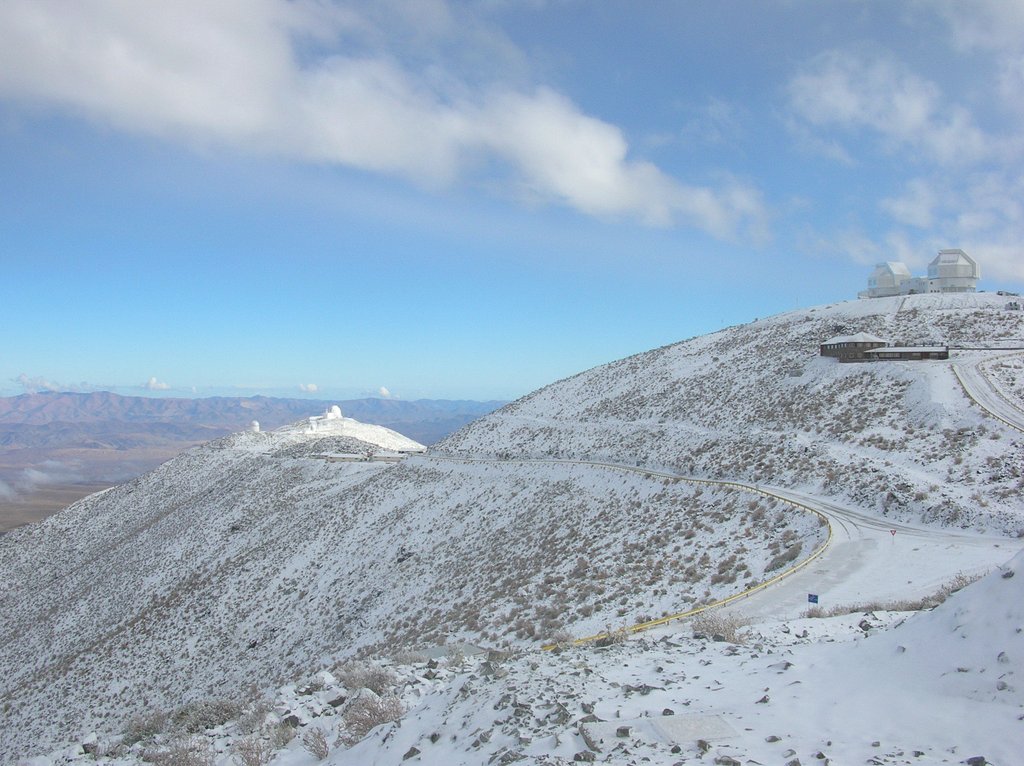
Alan P. Boss of Carnegie Science and colleagues report the discovery of a cold gas giant several times the mass of Jupiter on a 19.3-year orbit around HIP 88962, a cool orange dwarf with 0.62 times the Sun's mass. The planet emerged from 16 years of measurements with the Planet Finder Spectrograph on the Magellan Clay Telescope at Las Campanas Observatory in Chile, which tracks the slight to-and-fro motion of a star tugged by an unseen companion.
Boss and colleagues write that the planet does not fit the standard account of how giant planets form: published models build a giant by core accretion, a solid core of dust and ice that then pulls in gas, and they do not yield a planet this heavy this far out from a star this small. In their reading it suits the alternative instead, gravitational instability, where a patch of a young star's disk becomes dense enough to collapse under its own gravity into a planet.
The paper's two mass figures are different measurements. Velocity data alone give only a minimum mass, because they cannot separate mass from the tilt of the orbit, and the authors put that floor near five times Jupiter's mass. Combined with position measurements from the Hipparcos and Gaia satellites, the data give a nearly edge-on orbit and a true mass of 4.83 times Jupiter's. The paper appeared Nov. 17, 2026, in The Astrophysical Journal Letters.
The orbit is wide and lopsided. The authors put the planet's average distance from its star at 6.15 times the Earth's distance from the Sun, and its orbital eccentricity, a measure of stretch, at 0.718. At that value its distance from the star swings widely over each circuit, unlike the near-circles of the solar system's planets.
The authors also report that the scatter left by their single-planet fit is larger than the spectrograph records for quiet stars, which they say hints at a second planet. The star's calcium emission is about twice that of stable comparison stars, so some of that scatter may be activity on the star rather than another world.
Sources
- The Astrophysical Journal LettersPeer-reviewed