Colorado River Drought Cut Southwest Hydropower to a Record Low
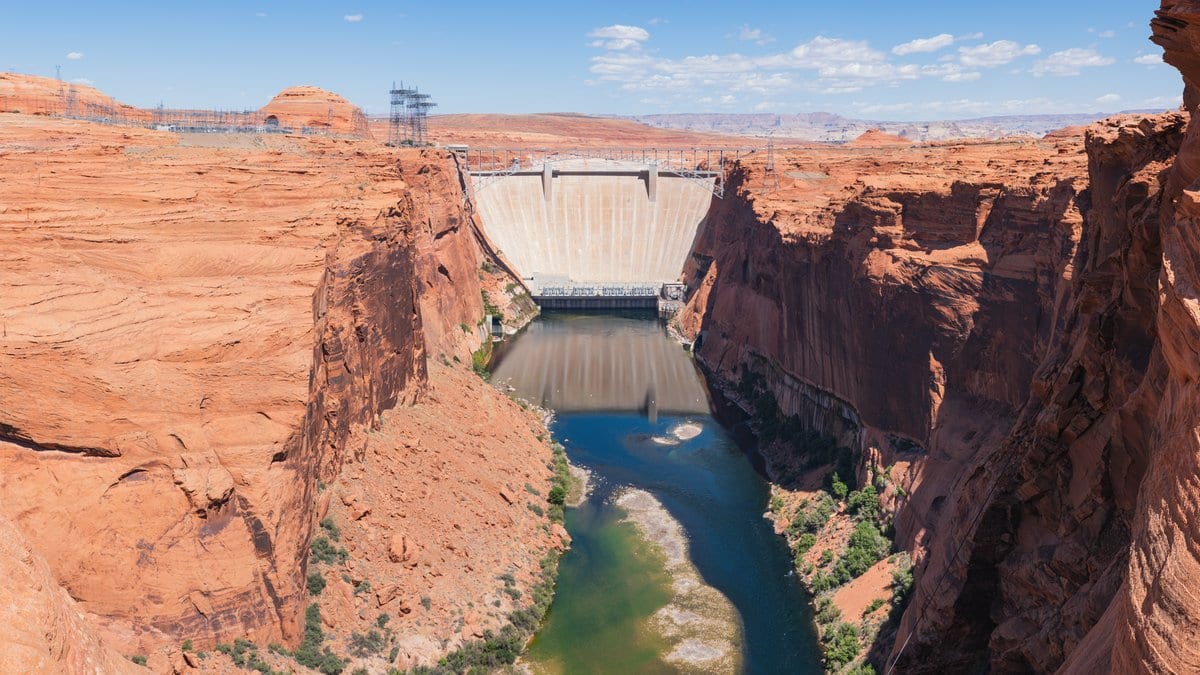
Hydropower generation in the U.S. Southwest fell to a record low over the summer, the U.S. Energy Information Administration reported Nov. 13, 2026. In the agency's Form EIA-923 power plant survey, generation from April through August 2026 ran 19% below the same months of 2025 and 28% below the 10-year average.
The region covers Arizona, New Mexico and small parts of Nevada and California. Its hydropower comes from dams on the Colorado River, which seven states draw on for electricity and for water supply. EIA ties the drop to prolonged drought in the Colorado River Basin, which also pushed Lake Powell and Lake Mead to record-low water elevations.
Lake Powell ended September 2026 at 3,518 feet, less than 1% above the level Glen Canyon Dam needs to generate power at all. Lake Mead, behind Hoover Dam, also set a record low, but stayed further above the level that dam needs.
To keep Lake Powell from falling through its limit, water was released from Flaming Gorge, a reservoir upstream in the basin, and releases from Lake Powell itself were reduced. Lower releases leave less water downstream for Lake Mead and for generation at Hoover Dam. EIA said the Department of the Interior decided to cut the combined water use of California, Arizona and Nevada by 1.25 million acre-feet a year over the next two years.
EIA's forecast for the full year, in its November Short-Term Energy Outlook, puts Southwest hydropower at 6.13 billion kilowatt-hours in 2026, 9% below 2025. The agency expects the 2026 El Niño to bring more precipitation than normal and some drought relief. It adds that one good water year is unlikely to erase the effects of several years of water scarcity. In that outlook, hydropower supplies about 4% of the region's electricity, down from a peak of 8% in 2011.