The Ground Under Wind Farms Is Warmer at Night, a Global Study Finds
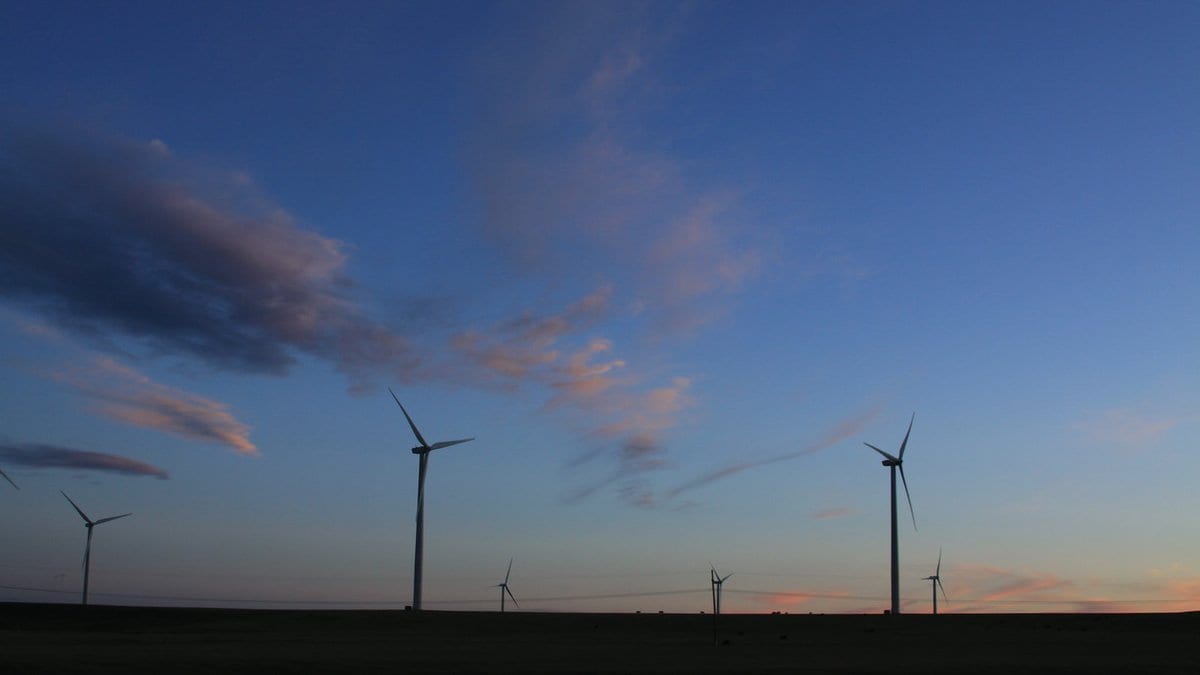
Wind farms are associated with slightly warmer ground beneath them at night and with slightly less plant growth around them, a global analysis published Nov. 13, 2026, in Communications Earth & Environment reports. Xinhao Du, Jianren Fan and colleagues at Zhejiang University in Hangzhou, China, drew the pattern from decades of observations covering tens of thousands of wind farms.
The authors call wind farms crucial for cutting carbon emissions and say their effects on the atmosphere and on ecosystems are still unclear. The paper points to the value of choosing sites by land type: what changes around a wind farm depends on whether the turbines stand on forest, cropland or bare ground.
According to the analysis, nighttime ground surface temperature at wind farm sites was 0.041–0.125 °C higher, and the rise leveled off once installed capacity reached about 300 megawatts. The carbon that plants capture and store, measured as net primary productivity, averaged 1.75 grams per square meter lower across wind farm areas.
Which way the effect runs tracks the land cover. At forest sites the analysis links wind farms to less water moving into the air from soil and leaves, and to lower plant growth. At croplands and barren land the association runs the other way: shifted moisture flows and cooling rather than warming.
The team describes the result as an association rather than a cause: the work compares wind farms that already exist instead of testing one. Its machine-learning step is built to show which inputs drove each result. A second statistical model of the links between wind farms, plant response, water loss and land use supports the pathways the team had proposed.
The paper is open access. The version online now is the accepted manuscript, shared early by the journal and due to be replaced by the final Version of Record. The National Natural Science Foundation of China and two provincial funds in Zhejiang paid for the work.
Sources
- Communications Earth & EnvironmentPeer-reviewed