Warm Droughts and Cool Droughts Left the River Equally Short

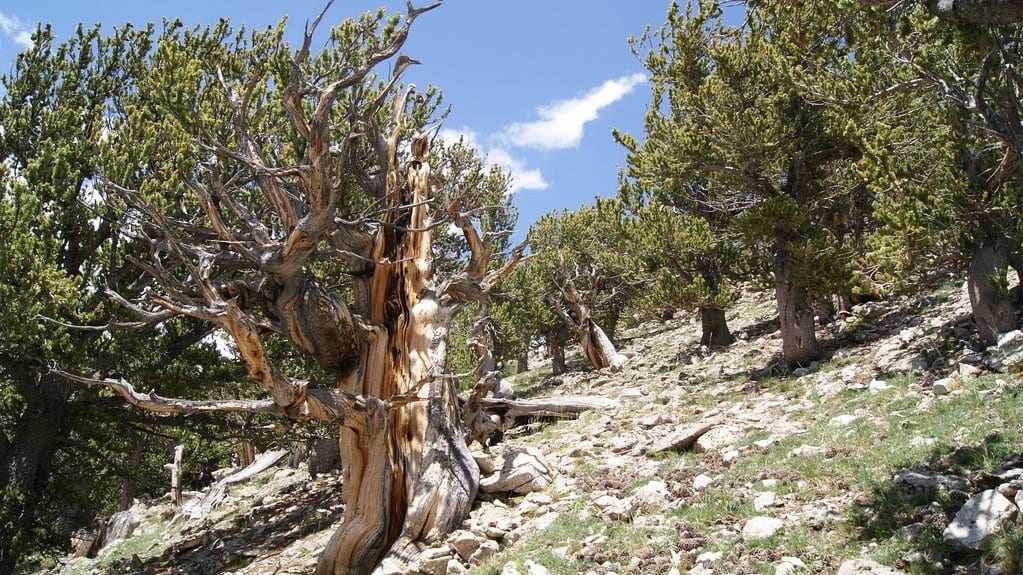
A drought, in the usual telling, arrives with heat. The reservoirs fall, the air bakes, and the two feed each other. Tree rings from slow-growing pines high in the southern Colorado Rockies now say it does not have to work that way. Alexandre F. Nolin and Connie A. Woodhouse of the University of Arizona, with Cody C. Routson of Northern Arizona University, report that the most severe and persistent drought of the Common Era in the upper Colorado River record developed under a cool spell rather than a hot one. Their paper was published Oct. 5, 2026, in Proceedings of the National Academy of Sciences.
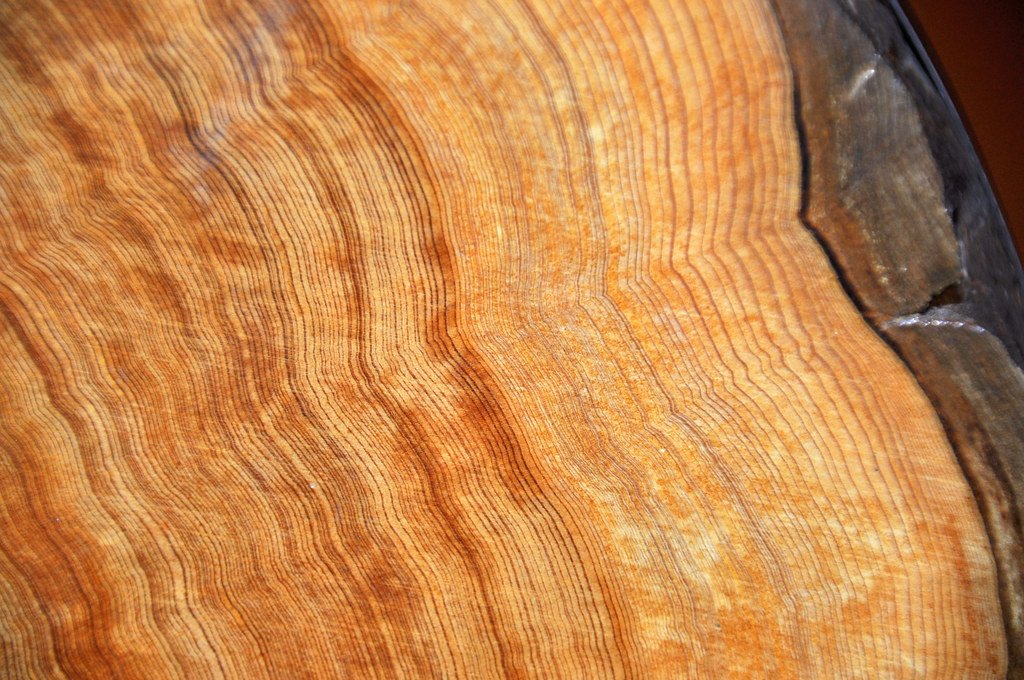
The reconstruction behind that claim covers 2,623 years of June to September minimum temperature in the southern Colorado Rocky Mountains, running from 600 BCE to 2022 CE. The target is the daily low, not the daily average. It is built from the rings of Pinus aristata, the Rocky Mountain bristlecone pine. The authors note that regional temperature records of this kind are scarce, which is why the long-term role of temperature in severe and persistent drought has stayed poorly understood.
To see what the temperature was doing while the river ran short, the authors paired that record with a separate continuous 2,000-year reconstruction of upper Colorado River streamflow. The most severe and persistent drought in it falls in the 2nd century CE, and it developed under a persistent cool anomaly, a long run of years colder than average. The authors read that as evidence that extreme water deficits can arise from a shortfall in precipitation alone.
The superlative is bounded, and both bounds matter. It belongs to the Common Era, the period counted from year one, so the earliest centuries of the tree-ring record sit outside it. And it belongs to one river's flow, reconstructed for the upper Colorado, rather than to the Southwest as a whole.
That event was not an outlier in kind. Over the last two millennia, the window the streamflow record covers, warm droughts outnumbered cool ones, 56 percent to 44 percent. Both kinds left the river comparably short over the length of the drought. Heat, on this reading, was the more frequent companion to drought and not a required one.
The same record carries a second result, and it runs the other way. Across its full span the reconstruction shows swings that last decades, and only limited trace of the sustained warm or cool phases that span a whole hemisphere. The warming of the late 20th and early 21st centuries stands outside all of it: unmatched in size, unmatched in how long it has held, and unmatched in how consistently it appears across western North America.
Both findings belong to the same paper, and the second sets the terms for reading the first. The study does not say that the present drought in the upper Colorado basin is natural, and it does not test that question. The authors make the opposite point explicitly: the paper opens by describing recent drought in the US Southwest as having occurred under exceptional warming, which has deepened water deficits in the Colorado River and Rio Grande basins. What that ancient drought adds is a second route to extreme drought, one running through precipitation alone, alongside the warming-driven one.
The authors keep the conclusion narrow: extreme droughts developed under both cool and warm regimes, and that suggests natural variability in this region can produce extremely persistent drought without the added influence of anthropogenic warming. It is a statement about what the climate here is capable of, not a forecast of what it will do.
The work is a peer-reviewed research article. The reconstruction and the tree-ring measurements behind it were deposited publicly at NOAA's National Centers for Environmental Information in August 2026, so another group can rebuild the record or test it against a different one.
Sources
- Proceedings of the National Academy of SciencesPeer-reviewed