The Largest 3D Map yet of Galaxies Growing up Alone in the Cosmic Void

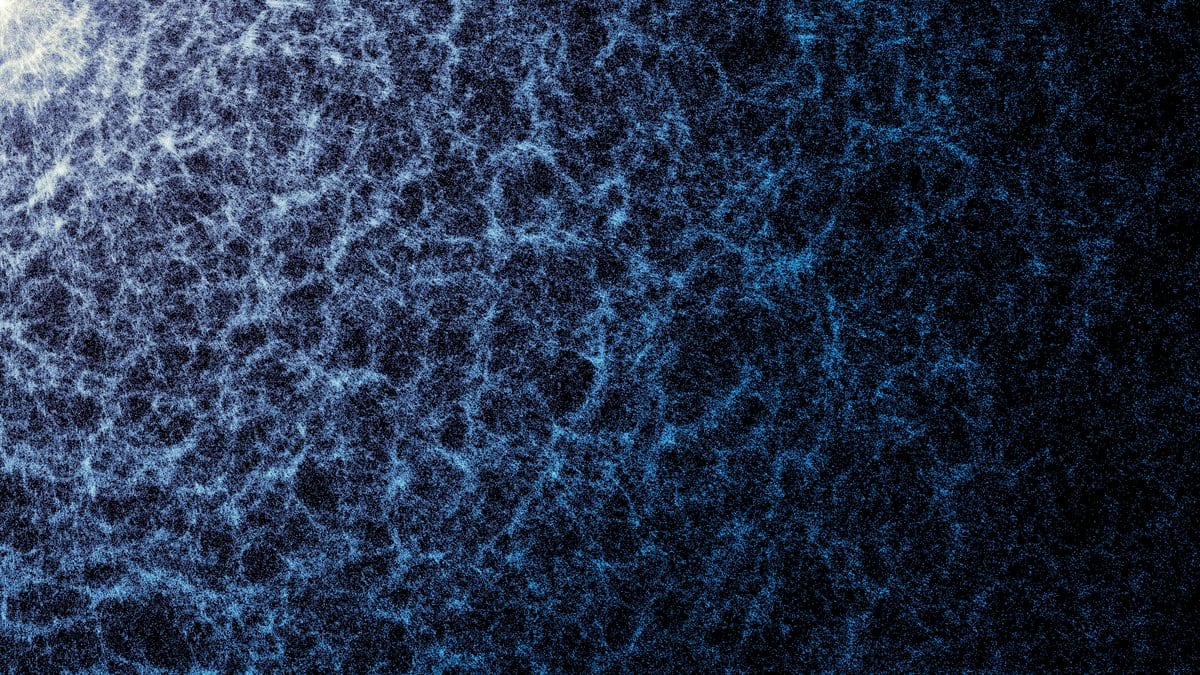
Most of the galaxies we know live in company. They cluster along luminous filaments, tug on their neighbors, merge, get stripped of gas, and are shaped as much by their surroundings as by anything that happens inside them. But the cosmic web is mostly holes. Between its filaments lie enormous, nearly empty regions called voids, and the handful of galaxies scattered through them live something close to a life apart, so far from any neighbor that the outside universe barely touches them. If you want to know how a galaxy evolves when environment is taken out of the equation, these are the galaxies to watch.
That is the premise behind CAVITY, a survey led by Isabel Pérez at the University of Granada in partnership with the Instituto de Astrofísica de Andalucía and the Calar Alto Observatory in Almería, Spain. On July 17 the project released its second batch of data, and it is not a set of ordinary photographs. Each of the 200 galaxies in the release comes as a three-dimensional datacube, built with the PMAS/PPak integral-field spectrograph on Calar Alto's 3.5-meter telescope. Integral-field spectroscopy captures a full spectrum at every point across a galaxy's face, so instead of one averaged measurement per galaxy, researchers get a spatially resolved map of how stars, gas, and chemistry vary from a galaxy's core to its edges. Doing that for 200 void galaxies at once makes this, by the team's own description, the largest homogeneous set of 3D observations of galaxies inside cosmic voids to date.
The early science pulled from the data lines up with a coherent story. Void galaxies, the project reports, evolve at a noticeably slower pace than their counterparts in denser regions. They go on forming stars over longer stretches of time, they host younger stellar populations, and they show distinct chemical and metallicity patterns. In other words, cut off from the mergers and gas-stripping and gravitational jostling that drive galaxies in crowded environments, a void galaxy seems to take the scenic route through its life, aging gently and keeping its star-forming machinery running long after busier galaxies have quieted down. Isolation, on this evidence, does not just slow a galaxy down; it sends it along a different trajectory.
A few caveats keep this from being a closed case. This is a data release rather than a single headline discovery, and the strongest claims about slower evolution come from the project's own analysis of its own sample. The survey design and methods rest on a peer-reviewed foundation, published in Astronomy & Astrophysics (10.1051/0004-6361/202449749), but the DR2 science is based on one project's analysis of a single, albeit large, dataset. The interpretations therefore still need to be tested against results from other surveys as they become available. The primary announcements are also Spanish-language institutional releases, which is worth noting for readers who want to consult the original sources.
The lasting value here may be less any one finding than the map itself. The team has made the full dataset freely available, and Pérez has framed it as an open scientific legacy meant to fuel discoveries "extending well beyond CAVITY's original objectives." Void galaxies are faint, rare, and easy to overlook, which is exactly why a large, uniform, publicly accessible 3D catalog of them is useful. It hands the field a controlled sample of what galaxies look like when they are left almost entirely to their own devices, and that is a comparison the study of galaxy evolution has long been short of.