Google's Quantum Chip Wins a Game That Cannot Be Won by Planning Ahead
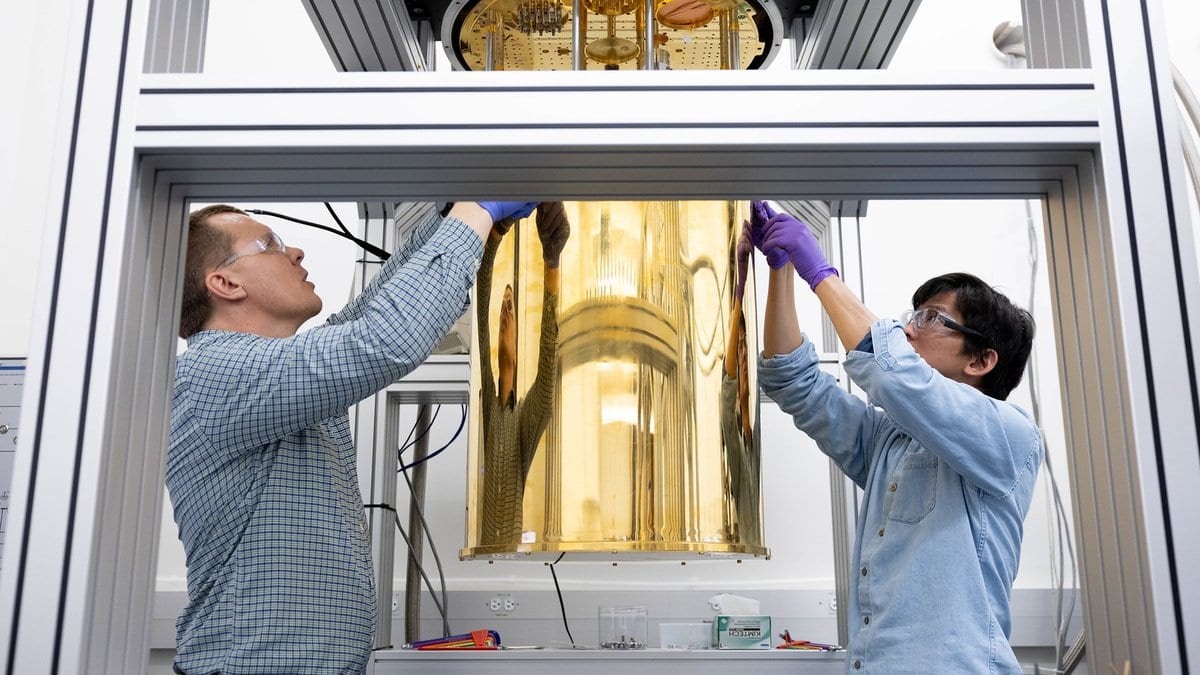
Google Quantum AI says its Willow superconducting processor won a two-player game 98.3% of the time, above the 88.89% ceiling on any plan the players could agree in advance. The result was published Nov. 19, 2026, in Science.
The company presents the game as a way to grade quantum hardware. Most benchmarks ask whether a machine can clear a bar set by classical computers; this one sets a ceiling fixed by physics instead — the score is the distance between what the processor did and what nature allows. Google says in its own account of the work that the tasks also exposed slight off-target rotations that random-circuit benchmarks average away.
The task is called the magic square game. Two players who cannot communicate each fill one row or one column of a square grid with plus and minus entries, under rules no single grid can satisfy, and win when their entries agree where row and column cross. Google's players were entangled qubits, and the property being tested is contextuality: what a measurement returns can depend on which other measurements are made beside it.
The Science paper also puts a number on how contextual the machine is: a test combining the grid's row and column results into one value came out at 5.590, where outcomes fixed in advance cannot exceed 4 and quantum mechanics permits at most 6. Both that score and the win rate are the company's own measurements of its own hardware.
Google reports the advantage held as qubits were added. In a group version played with one qubit per player, the win rate stayed above the best classical plan out to 71 players, and the team solved a hidden-pattern problem on grids of up to 105 qubits. Google says that algorithm had never been run at that scale on real hardware.
The post is signed by Google Quantum AI research scientists Shashwat Kumar and Rodrigo Cortiñas. It ties contextuality to the magic states an error-corrected machine would need, which the team reported producing on Willow in October 2026 through magic state cultivation.
Sources
- SciencePeer-reviewed
- research.google