Craters in the Moon's Permanent Shadow Are Shallower Than Those in Sunlight

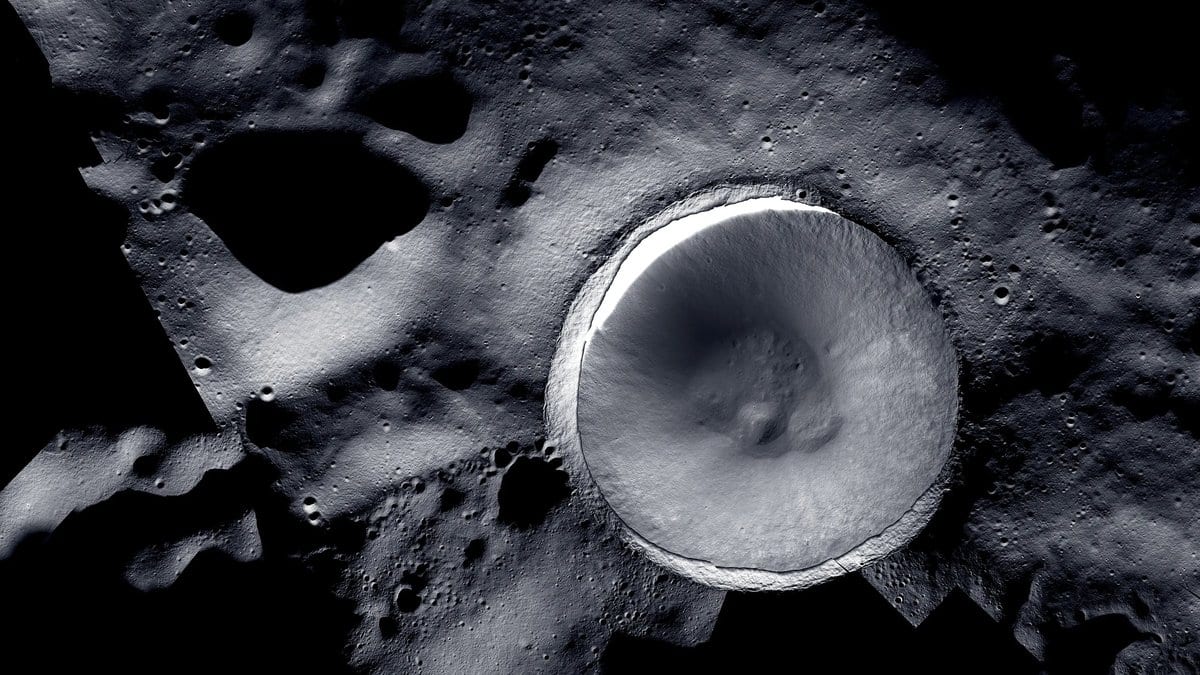
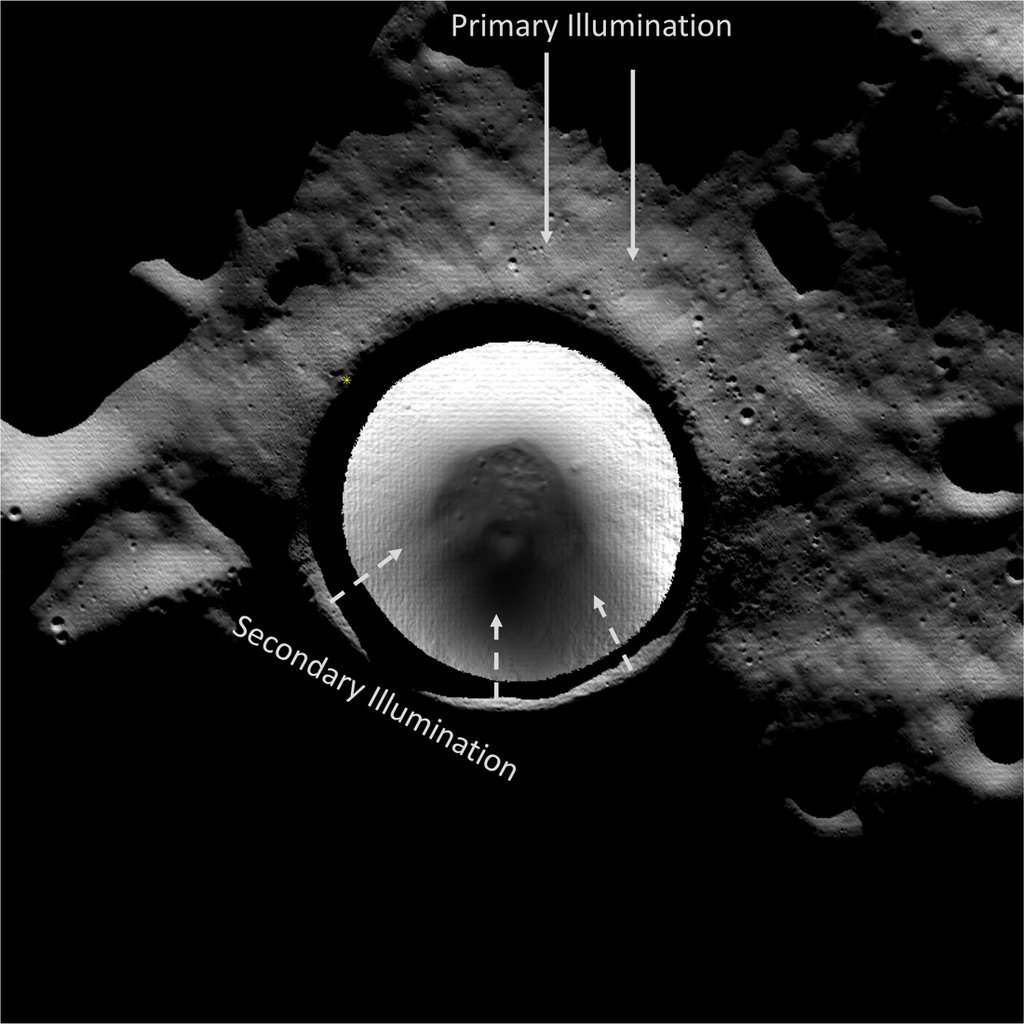
The floor of Faustini crater has not seen the Sun in billions of years. It lies close enough to the Moon's south pole that the Sun never climbs over its rim, and the only light reaching it is whatever scatters in from nearby sunlit peaks and crater walls. Ground like that cannot be photographed with an ordinary camera, which is why it remained, in effect, unmeasured.
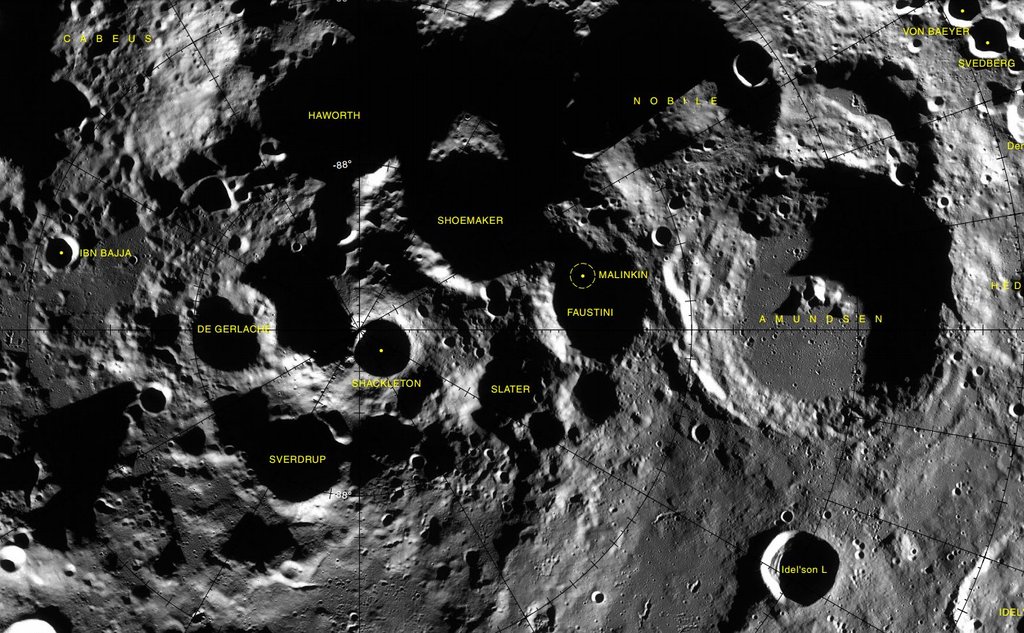
ShadowCam was built for this purpose. The NASA instrument on KARI's Korea Pathfinder Lunar Orbiter, Danuri, works with light reflected from nearby sunlit walls and peaks. Its stereo pairs yield terrain models of ground no camera can see in direct sunlight. A team has now used those images to measure the small craters on the shadowed floors and found that they are unusually shallow.
In a study published Nov. 18 in The Planetary Science Journal, A. J. Sonke and M. S. Robinson of Intuitive Machines, with colleagues at the University of Hawai'i at Mānoa and the Johns Hopkins University Applied Physics Laboratory, report that craters 60 to 250 meters across inside three south polar cold traps, permanently shadowed regions cold enough to preserve ice, are systematically shallower than craters of the same size at lower latitudes. Small craters matter out of proportion to their size: the authors call their formation "the most significant geologic process on the lunar surface," the process that creates the loose surface layer and keeps turning it over.
The measure is a ratio of depth to width. Inside Faustini, Sverdrup and Shoemaker, 1,913 craters gave a median ratio of 0.04, so a bowl 100 meters across is about 4 meters deep. On the plains at the Apollo 16 and Apollo 17 landing sites, 2,567 craters of the same sizes gave a median ratio of 0.07. All three polar basins yielded the same value. Both counts include only craters that passed a filter excluding the flattest ones, so they represent the comparison set rather than every crater visible in the images.
The darkness was the first suspect
The obvious objection is the lighting. Inside a permanently shadowed floor, the light arrives from a broad arc of distant sunlit terrain rather than from one direction, so shadows inside a small crater are soft. A deep crater lit that way could therefore appear shallow. The team tested this against ordinary sunlight at Lohrmann crater, far from the pole, whose interior shadow serves as a stand-in for a polar crater. They had images of the same ground from ShadowCam and the Lunar Reconnaissance Orbiter's Narrow Angle Camera, one taken under reflected light and the other under direct sunlight. In the overlapping area, craters in that size range are equally visible in both.
A published result initially appeared to point the other way. In February 2024, A. T. Basilevsky and Yuan Li compared the floor of Shoemaker with sunlit ground and found no statistically significant difference in crater depths. Sonke's team remeasured craters within the earlier study's area and obtained much the same result. They then widened the range of sizes, and the two studies turned out to agree: the depth gap grows as craters get smaller. At 150 to 400 meters, the size range examined in the earlier study, there is little difference. Below that, the gap opens.
One of the three basins does not fit
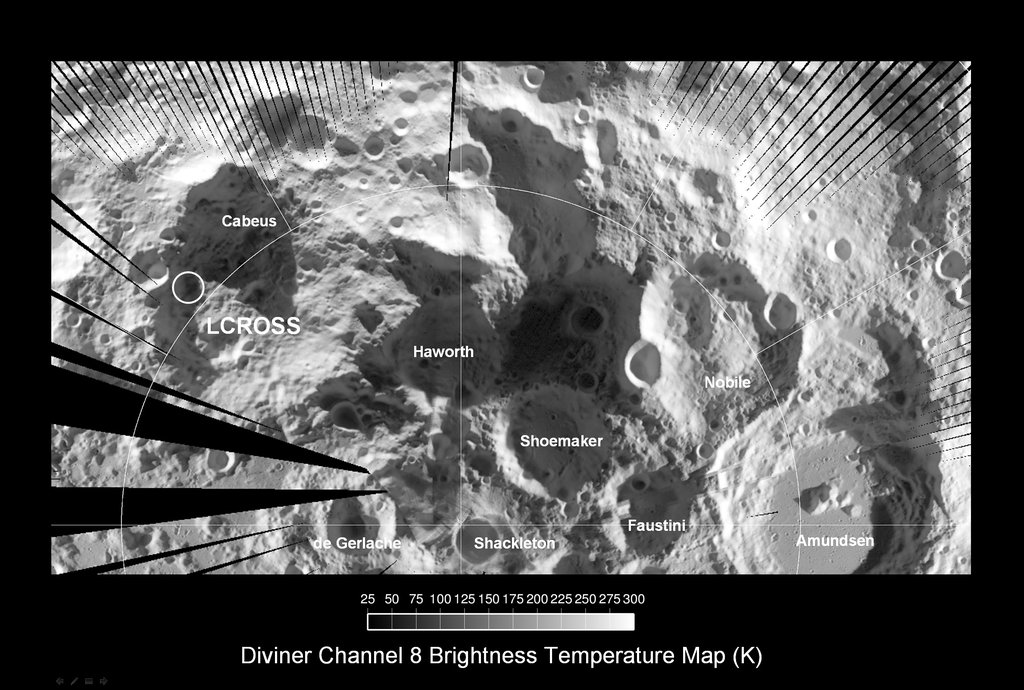
Sverdrup is the exception, and it is also the one on the farside. Its overall median matched those of the other two basins, but among its larger craters, the ratio rose to 0.06, close to that of the Apollo plains. The authors tie this to temperature: the warmest parts of Faustini reach about 105 K and those of Shoemaker about 110 K, while parts of Sverdrup exceed 120 K, making it harder for ice to persist on the surface. They offer the hypothesis that volatiles have had less time to accumulate there.
Shallow is not the same as icy
The reason anyone measures crater depth at the poles is ice, and this is where the paper slows down. The authors' interpretation is that the upper few meters of polar soil behave differently from soil at the equator, perhaps because frozen volatiles, including water ice, are mixed into it. They go no further, and one of their own observations helps explain why. A crater formed in weak material overlying something much harder tends to end up with a flat floor or develop a second rim inside the first. These craters do neither. Whatever difference in strength exists between the surface layer and the material beneath it, the authors argue, is small, less than a factor of two. That fits porous or volatile-rich ground better than a boundary between soil and pure ice.
The ice interpretation is contested in the same journal. A study published Sept. 22 by Sachana Sathyan, Megha Bhatt and colleagues found no distinct crater-depth signal attributable to water ice across polar craters. The authors inferred that lunar polar ice deposits are "not sufficiently thick to significantly alter crater morphology." That study examined much larger craters, the size difference being the distinction this measurement brings into focus, so the two findings can both hold.
What the ShadowCam measurement gives the people planning the next landings is a new fact about the ground at sites shortlisted for their potential ice resources, where how much ice is usable remains an open question. The authors' recommendation is modest and specific: consider small-crater depth ratios when deciding where and how to dig for volatiles. Three of the paper's authors work at Intuitive Machines, which leads the NASA ShadowCam investigation, so members of the instrument team are reporting on their own data. The paper is open access and peer-reviewed.