The Moon Does Not Have the Water for a City, Two Astronomers Calculate
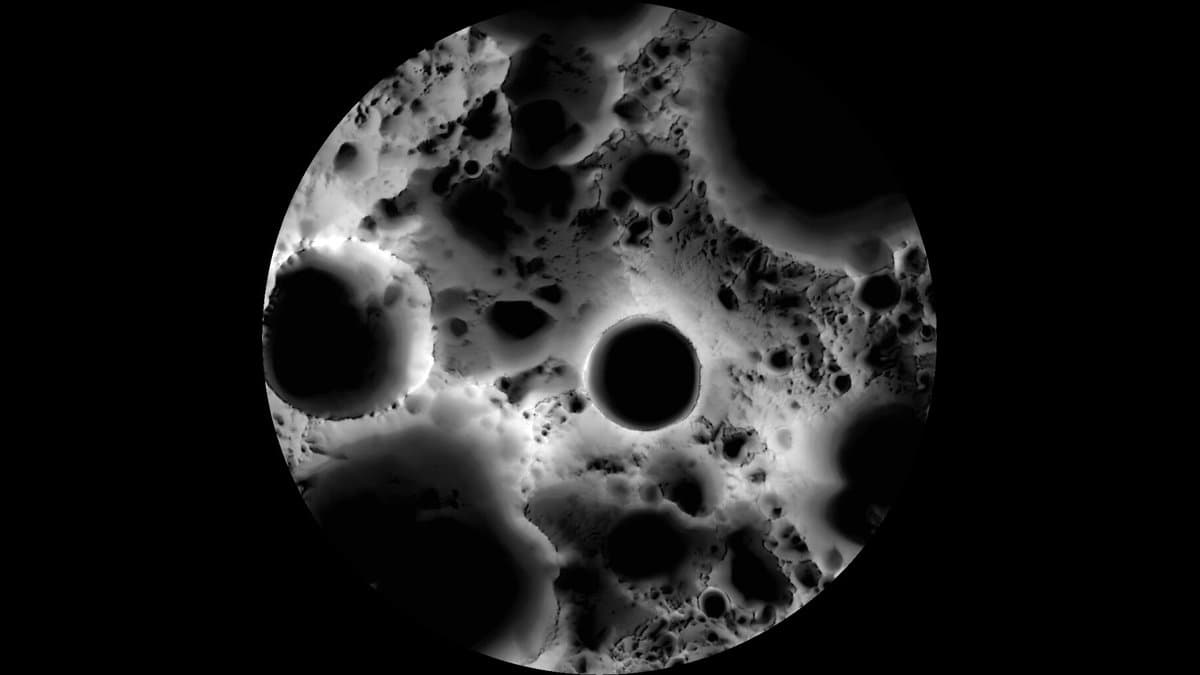
Two astronomers have put a number on how long the Moon's polar ice could support a city of a million people, and their answer is about a century.
Martin Elvis and Jonathan C. McDowell of the Center for Astrophysics, Harvard and Smithsonian, compared the water needs of a lunar settlement with the ice believed to sit in the permanently dark craters near the poles. Their paper, published Sept. 14 in Frontiers in Space Technologies, says its purpose is to ground plans for settlement "in the realities of the available lunar resources."
The calculation begins with roughly 1 billion tons of ice, a figure the authors call a generous baseline, and assumes water is recycled as efficiently as on the International Space Station, which reuses 98% of it each cycle. Most of the demand is not drinking water: growing food dominates the budget, and what leaks out of the system each cycle is never recovered.
The baseline is deliberately higher than anything measured so far. A meta-analysis the authors cite puts the likely water content of the richest ice-bearing craters at about 34 million tons, and the paper adds that the estimates are uncertain and that water lying deeper than current instruments can see would not show up in them. Smaller settlements are not squeezed the same way: water, the paper concludes, imposes a long-term limit of a few hundred thousand people.
Power is not the binding resource, on their accounting: solar arrays near the poles or fission reactors could supply a large settlement. Water is, and Elvis and McDowell conclude that unless recycling improves about tenfold, or a much larger supply is found, the figures rule out large-scale, long-term habitation of the Moon. They argue lunar water will need to be planned and regulated rather than taken first come, first served.

Sources
- Frontiers in Space TechnologiesPeer-reviewed