A Spanish Telescope Read a Dying Comet's Chemistry Before the Sun Destroyed It

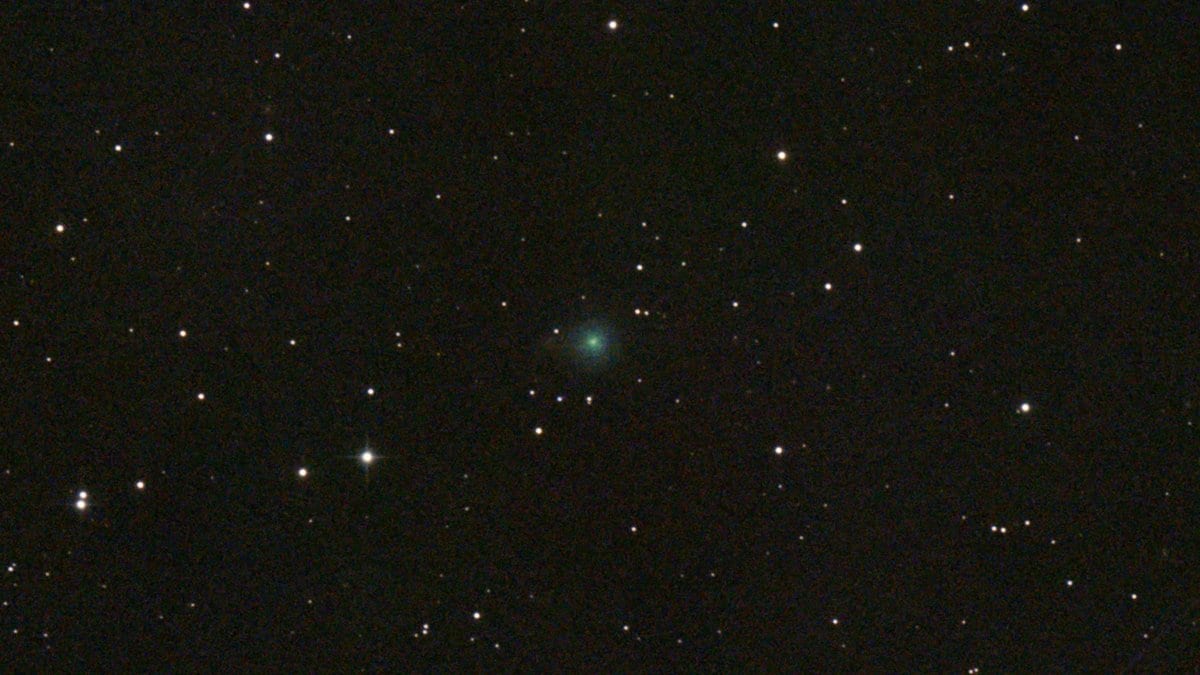
For three days at the start of April, the IRAM 30-meter telescope in Spain's Sierra Nevada did something few large dishes can: it observed a comet at a solar elongation of only a few degrees. The comet had less than a day left to exist when the final observations were made.
That target was comet C/2026 A1 (MAPS), a Kreutz sungrazer, one of a family of fragments on orbits that take them extremely close to the Sun. It was due to reach perihelion, its closest point to the Sun, on Apr. 4. That point lay 0.006 astronomical units from the Sun, roughly 900,000 kilometers, or a little more than twice the Earth-Moon distance. It did not survive the approach. About two hours before perihelion, it disintegrated completely.
During those three days, Amélie Godard Palluet of the Centro de Astrobiología in Madrid, Dominique Bockelée-Morvan of the Observatoire de Paris and six colleagues used director's discretionary time on IRAM to observe the comet's hydrogen cyanide emission. They detected it. Their paper, posted on arXiv on Nov. 2, reports the first molecular detection at millimeter wavelengths in a Kreutz comet. It has been accepted for publication as a Letter in Astronomy & Astrophysics, although the journal version is not yet available.
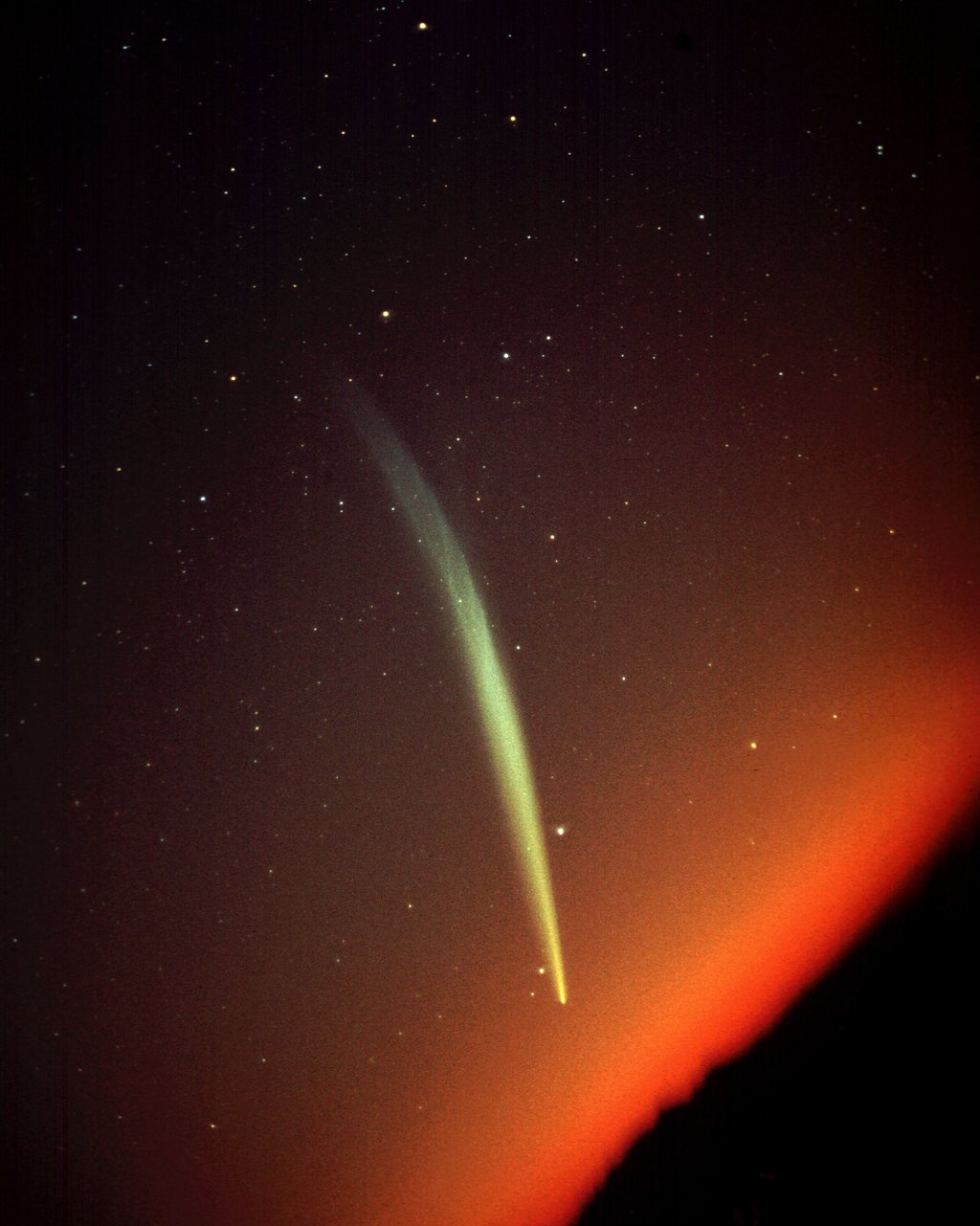
That first needs its qualifier, and the paper supplies it one sentence later. Molecules had been detected in a Kreutz comet before: four species, CH, CN, C₂ and C₃, were identified in optical spectra of the sungrazer Ikeya-Seki in the 1960s. What had never been done was millimeter-wavelength observing. A millimeter line offers a different kind of measurement: by modeling its intensity and profile, researchers can estimate how much hydrogen cyanide is being released, how fast the gas is expanding and how the activity changes over time.
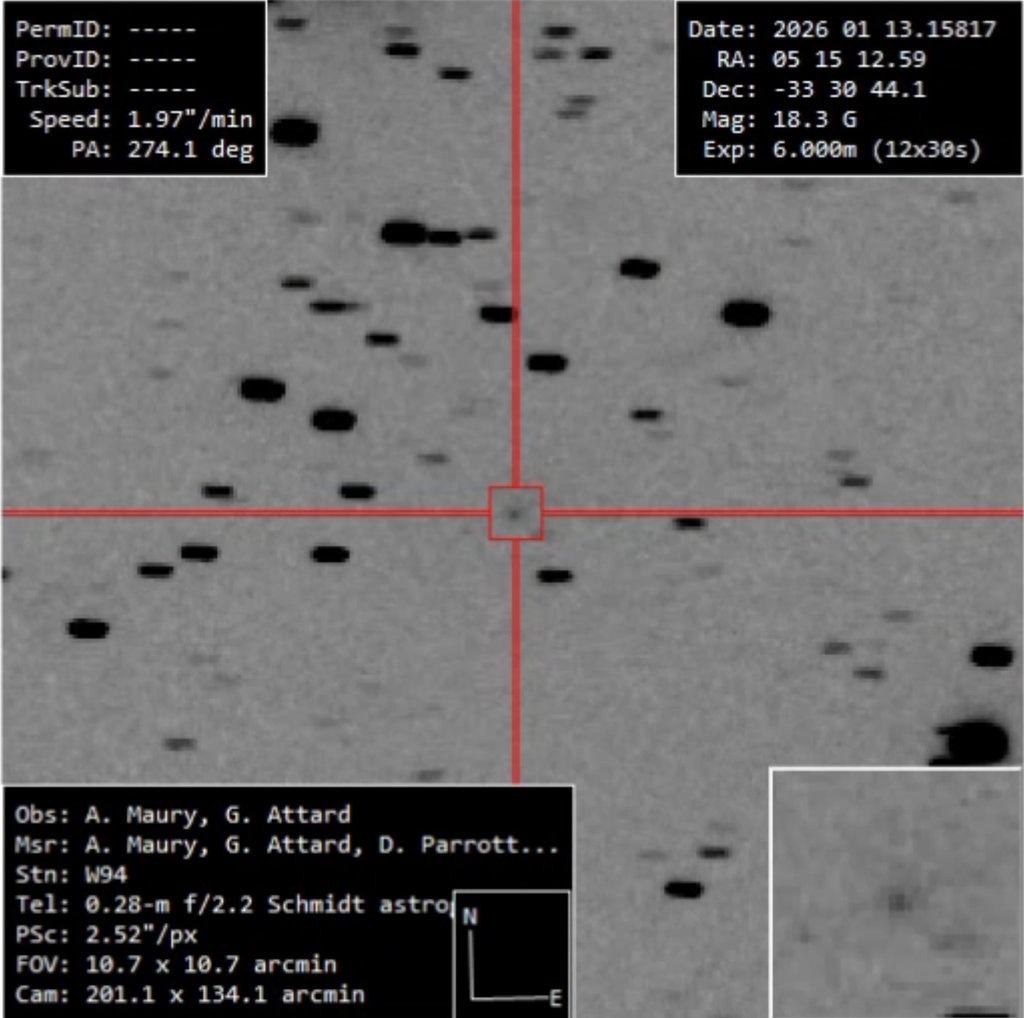
Nobody had done it because Kreutz comets are usually discovered too late for such observations. Many are first spotted in solar coronagraph images only shortly before perihelion, and only three have been detected from the ground in the 21st century. C/2026 A1 was the exception. The amateur-run MAPS survey discovered it in January, about three months before perihelion and at a greater distance from the Sun than any previously recorded Kreutz sungrazer. That left time to arrange telescope observations. IRAM can observe at solar elongations as small as 5 degrees, while ALMA and SOHO's SWAN instrument face more restrictive Sun-avoidance constraints.
The output jumped, and then jumped again
The three days caught a comet in an unstable state. Hydrogen cyanide production rose modestly from the first day to the second, then by more than 350% from the second to the third, and within that third day it climbed and fell again over less than half an hour. That resolution is possible because hydrogen cyanide does not last long at those distances: sunlight breaks the molecule apart in about 12 minutes. The short lifetime means the detected emission traces gas released from the nucleus only shortly before it was observed.
A number that was calculated, not weighed
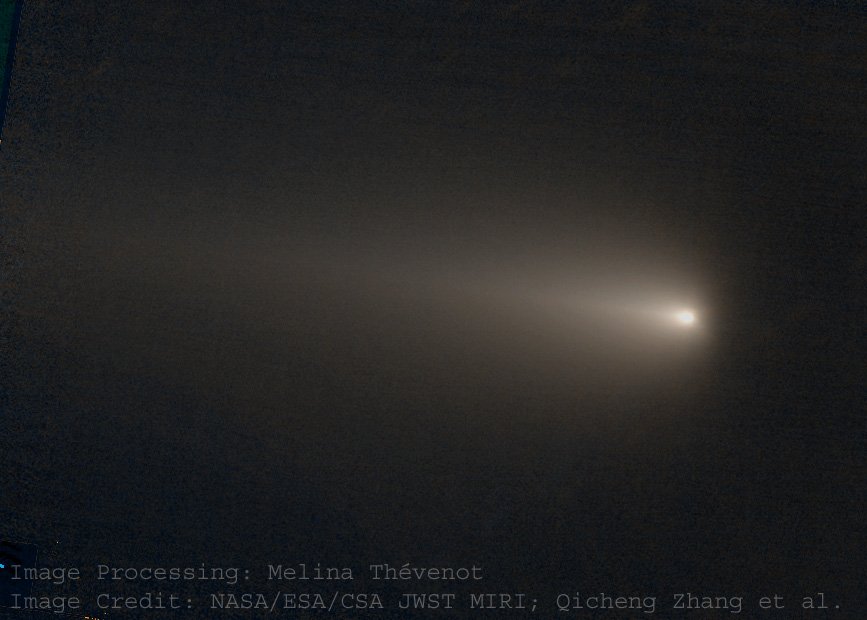
From the third day's outburst, the team estimated how much material the comet shed. The telescope measured the brightness of one line. Turning that into a mass took several steps, none of them a direct measurement of the comet's total mass loss. The gas around the nucleus was modeled at a fixed temperature, with the comet's water production rate assumed rather than measured. The hydrogen cyanide production rate was scaled to water using the average ratio between the two in other comets. The resulting estimate of the outburst's mass loss was then compared with a nucleus mass calculated using a typical cometary density and the 0.4-kilometer diameter measured by the James Webb Space Telescope during the comet's approach.
On those assumptions, the outburst carried off an estimated 0.4% to 1.2% of the comet's total mass.
The paper is open about where that chain is weakest. Using the same assumed nucleus size, the authors calculate what fraction of its surface would have to be actively releasing gas to supply what they observed, and reach figures as high as 683%. A bare nucleus cannot have more than 100% of its surface active. The authors interpret the excess as evidence that ice was carried away in grains and turned to gas in the surrounding cloud rather than directly at the surface, a standard explanation for this kind of result. The calculation also leaves the nucleus mass as the softest link in the chain: a larger nucleus would make the estimated mass-loss fraction smaller.
Less than 24 hours after that outburst, the comet disintegrated. The paper does not claim that one event caused the other. It says the outburst may have triggered the disintegration, and that the sequence supports an older idea, proposed by Sekanina and Kracht and by Steckloff and colleagues in 2015, that uneven outgassing can spin up and stress a nucleus until it fails. Tidal forces, then, are not the only way to break a comet. The abstract puts the point more sharply: losing that much mass the day before suggests the comet had begun to come apart before solar tides could have dominated.
What survived the Sun was the ice, not the comet
The finding the paper leads with, though, is about the ice. If the comet's history is what Sekanina and Krolikowska argue it is, that ice was very old. On their reading, C/2026 A1 is a second-generation fragment of the comet Aristotle described in 372 B.C. and of comets recorded in A.D. 363, which would mean it had already made two passes inside the distance at which the Sun's tides can disrupt a body. Take the lineage away and the argument loses its premise. It is a hypothesis this paper cites, not something these data show. With that lineage assumed, the authors write that the detection provides "direct evidence that cometary volatiles can survive extreme perihelion passages."
The volatiles, not the comet. C/2026 A1 did not survive this pass; it broke up about two hours before perihelion. What the IRAM data show is that some of the comet's volatile material had survived earlier close passages by the Sun and was still being released on the way in.
Nobody can independently check the molecular result. One instrument, one team, three days of data, and the object is gone, so these are the only millimeter-wavelength observations this comet will ever yield. The independent evidence covers the disintegration, not the molecular finding: NASA's SOHO and STEREO spacecraft recorded the event from different angles, and Karl Battams of the U.S. Naval Research Laboratory, who leads the SOHO coronagraph team, said at the time that the comet had clearly been destroyed. Those spacecraft can track the comet's dust, but they cannot detect its molecules.
The other molecules the team searched for, including carbon monoxide and methanol, were not detected. Whether that says anything about Kreutz comets in general depends on the next one, and on somebody finding it three months before perihelion rather than three days.
Sources
- arXivPreprint
- science.nasa.gov