Tumor DNA Helped Predict Which Children With Brain Tumors Might Need Less Radiation
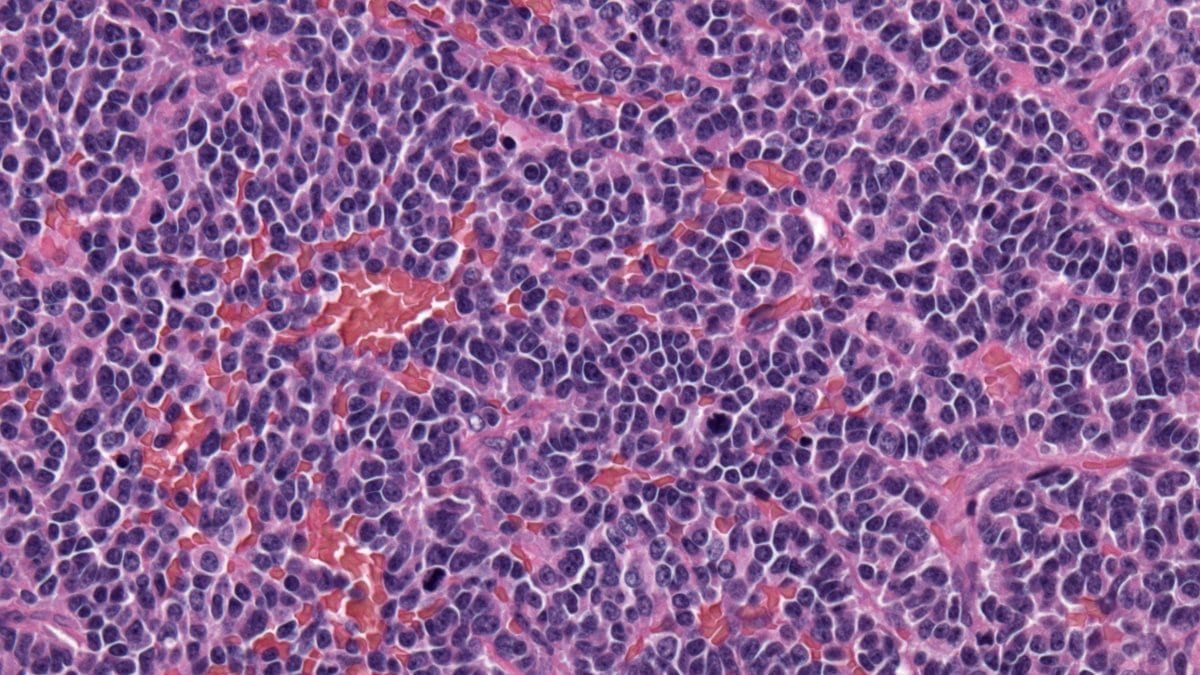
A neural network trained on tumor DNA from 2,786 children with brain tumors predicted how long individual patients would survive more accurately than the risk criteria clinics use today, researchers at the Dana-Farber Cancer Institute and St. Jude Children's Research Hospital report in a study published Nov. 3, 2026, in Nature Genetics. Their tool, called MANTIS, reads the pattern of chemical tags on tumor DNA, a test many of these children already receive at diagnosis, and returns a survival probability for each patient across 10 years.
The authors' stated aim is to help decide how hard to treat. The paper says medulloblastoma and ependymoma are two of the most common brain tumors in children and leading causes of cancer death at that age, and that the radiation used to control them harms a developing child: radiation to the brain and spine is tied to cognitive decline that depends on the dose and on the child's age. Extended to weigh a dose change patient by patient, the model picked out about 60% of medulloblastoma patients classed as average risk, meaning their cancer had not spread. In that group, the authors report no association between worse survival and the lower radiation dose tested in a completed randomized trial, 18 Gy against the standard 23.4 Gy.
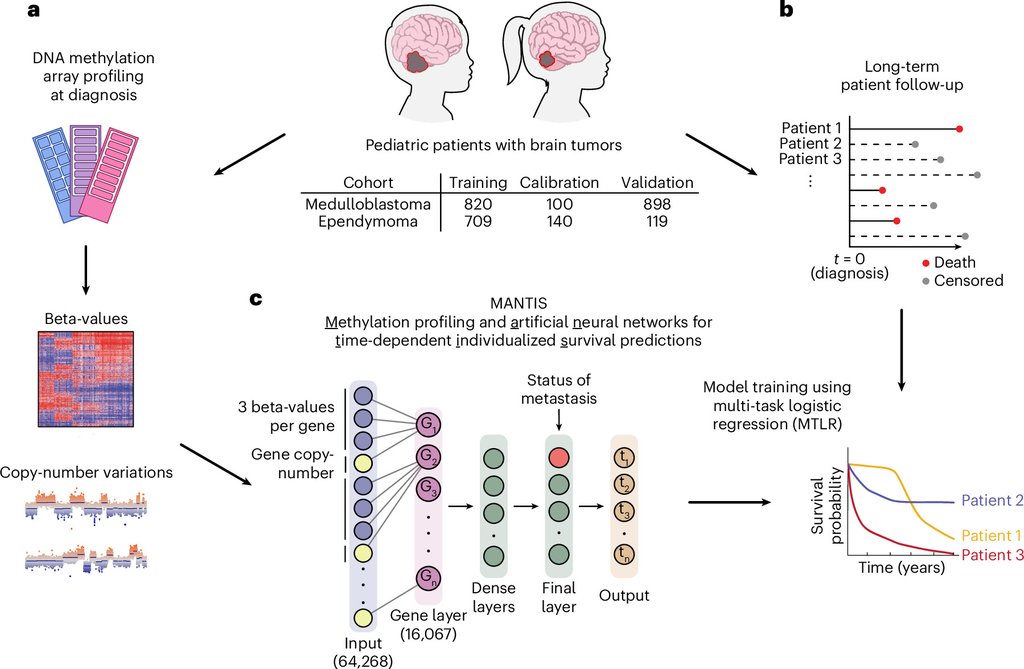
That is the model's estimate over data from a trial that has already closed, not a result from a new trial. On independent trial cohorts, the team reports a concordance index as high as 0.80, a measure of how closely the predicted order of outcomes matched what happened, where 1.0 would be a perfect order. First author Sabina Stefan, senior author Volker Hovestadt, and colleagues write that prospective trials are needed to establish clinical utility, and that the tool does not account for late effects such as second cancers caused by the treatment itself.
The group reports the same approach also predicted survival for children with ependymoma, and describes the study as a foundation for this kind of prediction and a blueprint for other cancers.
Sources
- Nature GeneticsPeer-reviewed

Medical Disclaimer: This content is provided for general informational and educational purposes only. It is not medical advice and should not be used as a substitute for professional medical advice, diagnosis, or treatment. Always consult a qualified healthcare professional regarding any medical condition, concern, symptom, or treatment decision.