Physicists Catch a Hint of a Particle Decay 40 Years in the Making
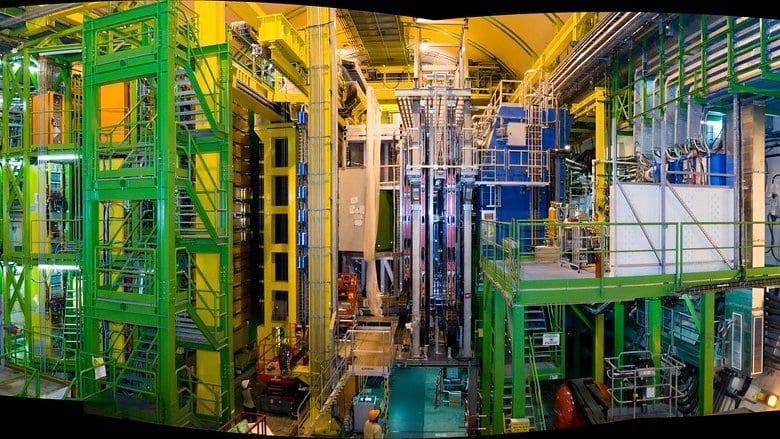
The LHCb experiment at CERN's Large Hadron Collider has found what the University of Manchester, one of its member institutions, calls the first evidence of an extremely rare particle decay: a particle carrying a beauty quark breaking apart into two muons, the heavy cousins of the electron. Manchester announced the result Nov. 3, 2026, and says the signal counts as evidence but not as a discovery.
The university's release says the measurement lets physicists test the Standard Model, the current best theory of fundamental particles and their interactions, with more precision and look for particles or forces that lie outside it. The rarer a decay is, the more sensitive it is to unknown particles that could change how often it happens.
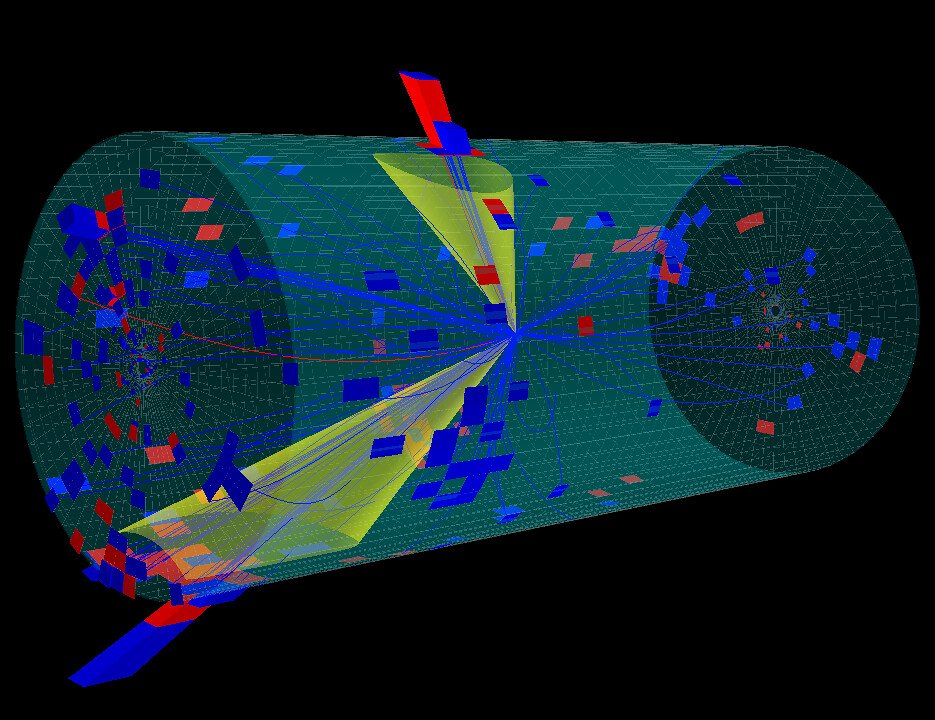
The release puts the measurement at 3.2 sigma, which it says is enough to describe the result as evidence but short of the five-sigma threshold a discovery claim requires in particle physics. Reaching that will take more data. Theory predicts the decay only around once in every 10 billion beauty particles, and physicists have been looking for it for more than 40 years. Until now, the release says, no single experiment had found solid evidence of it. The measured value agrees with what the Standard Model predicts.
Manchester researchers helped build the LHCb upgrade, which can now collect data at up to five times its previous rate, and developed detector hardware used in the new measurement. Chris Parkes, head of the university's Department of Physics and Astronomy, led the collaboration through that construction and its approval of the result. "This decay is remarkably unlikely, the chance of it happening is roughly like going on a romantic date and, on your very first try, finding the one perfect match for you among everyone on Earth," Parkes said in the release.
The upgraded experiment is expected to collect a much larger dataset into the early 2030s, which the release says will allow more precise study of the decay. The UK part of the collaboration is funded by the Science and Technology Facilities Council.