Planting Forest on Open Land Came With More Fire, Except on Grassland
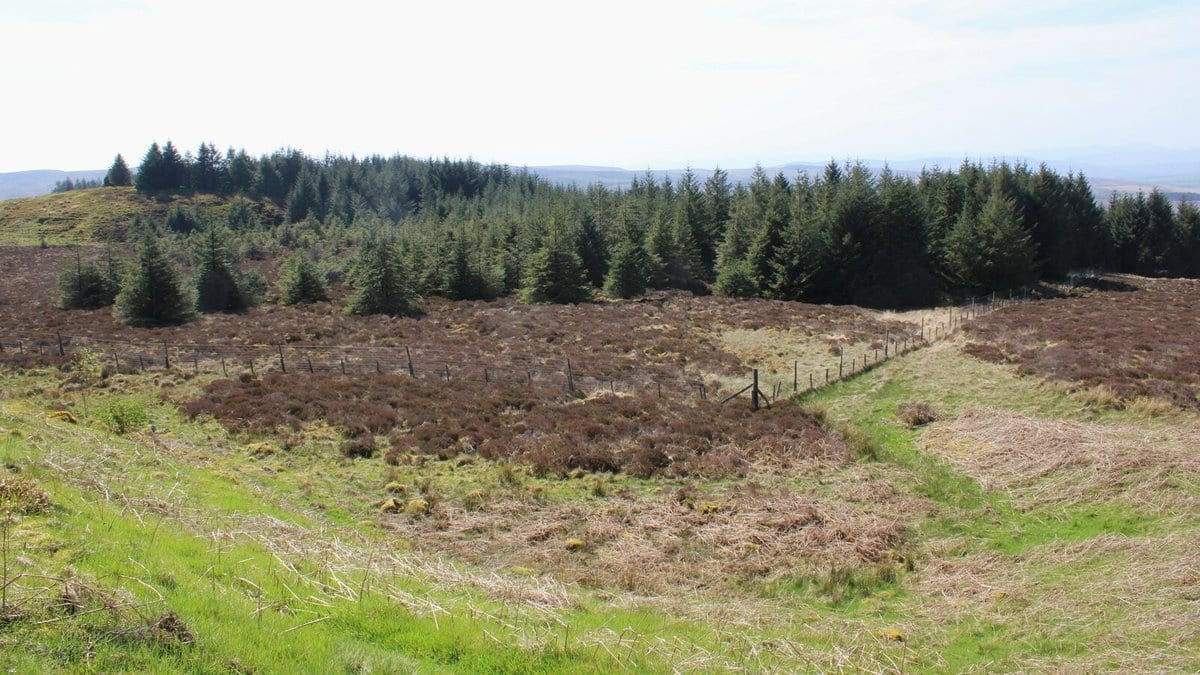
Converting nonforest land to planted forest increased wildfire occurrence by 26% and burned area by 23% on average across the world's temperate zones, according to an analysis published Nov. 2, 2026, in the Proceedings of the National Academy of Sciences.
Afforestation is expanding quickly in temperate ecosystems as a climate measure, the authors write, even though its effect on wildfire has stayed poorly measured. Their subject is narrow and practical: what happens to burning when open country such as grassland or shrubland is turned into forest, rather than how forests that were already standing behave.
For the PNAS analysis, the team combined land-use change data, fire activity records and climatic and human-activity measures across 67,248 patches of land in global temperate biomes, using satellite records starting in 2001. Irene Repeto-Deudero and Susana Gómez-González, both of the Universidad de Cádiz in Spain, led the work with colleagues in Chile and Finland.
The average hides wide differences between biomes. Fire occurrence rose nearly threefold in temperate conifer forests and by 38% in Mediterranean woodlands, but fell by 18% in the temperate grassland, savanna and shrubland biome. In temperate broadleaf and mixed forests, planting cut how often fires started but increased the area they burned, which the authors describe as a shift toward less frequent but larger wildfires.
Variation of that size questions the premise that tree planting provides consistent climate mitigation benefits across all landscapes, and that afforestation projects need to be judged alongside the fire and other disturbances of the region where they are planted. Wildfire risk should be explicitly accounted for in judging how effective afforestation is over the long term.
The paper is open access, and a public deposit of the study's data is available on Zenodo. Funding came in part from the European Union's Horizon Europe program and from national research agencies in Spain and Chile.
Sources
- Proceedings of the National Academy of SciencesPeer-reviewed