Who Built Shimao? Ancient DNA Reads the People Behind a 4,000-Year-Old Chinese Megacity

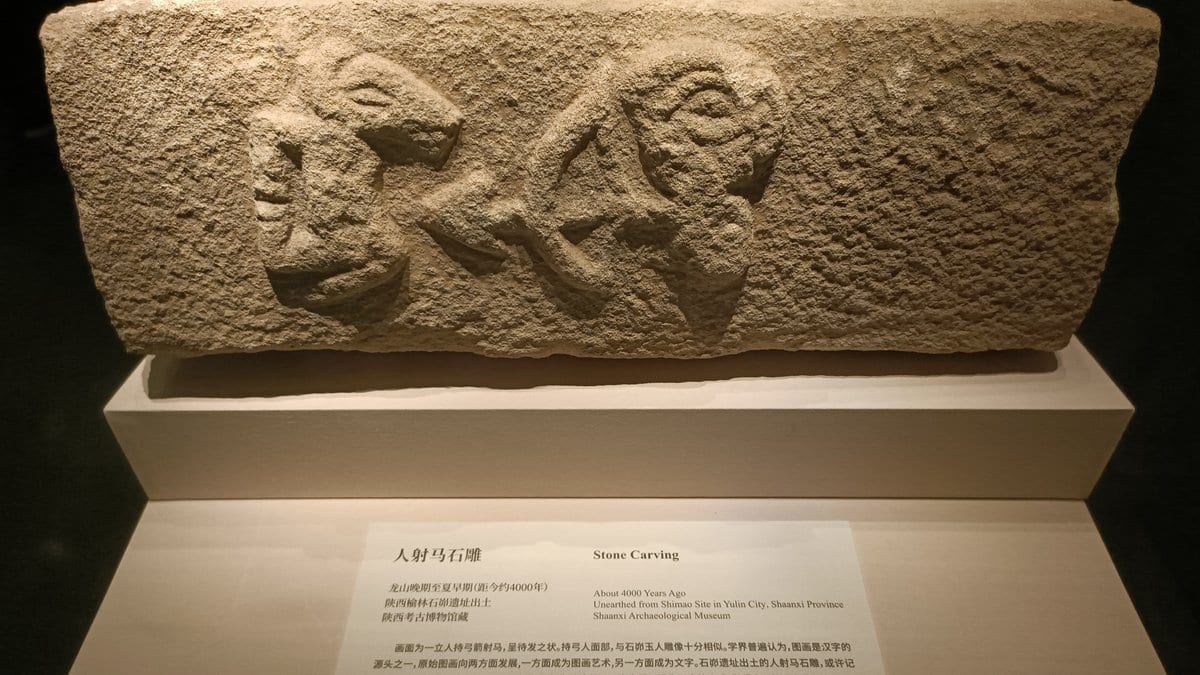
For a long time, Shimao was a puzzle sitting in plain sight. Rising in what is now northern Shaanxi Province about 4,000 years ago, it sprawled across roughly four square kilometers behind massive stone walls, sorted into distinct districts and topped by a stepped stone structure that hints at real political muscle. Everything about it says organized, stratified, powerful. What the stones could not say was who these people were, and where they came from.
A new genetic study sets out to answer that, and its approach is to let the dead speak. According to a report of the work, researchers led by Qiaomei Fu of the Institute of Vertebrate Paleontology and Paleoanthropology at the Chinese Academy of Sciences recovered nuclear DNA from 169 ancient samples, resolving to 144 unrelated individuals (drawn from Shimao itself, nearby sites, and locations in southern Shanxi). That is a substantial genetic census for a single ancient center, and it lets the team ask not just who lived there, but who they were connected to.
The core answer is one of deep local roots. The population descended mainly from Yellow River farming communities with Yangshao cultural origins reaching back roughly a thousand years earlier. Shimao, in other words, was not a city dropped into the landscape by newcomers. It grew out of the farmers who had long worked that stretch of the river, an indigenous society that scaled itself up into something monumental.
But the genomes did not stop at the Yellow River. Woven through the ancestry were connections to southern rice-farming populations, to the Taosi Culture communities of southern Shanxi, and to steppe groups related to the Yumin. A city that reads at first as intensely local turns out to carry, in its DNA, the traces of long-distance ties running north toward the pastoral steppe and south toward the rice paddies. The genetic evidence, as the study frames it, points to extensive contact and exchange among farming and herding communities across a wide swath of prehistoric China.
That is the part that reshapes the picture. Archaeology had already shown Shimao was grand; genetics suggests it was also connected: a node in networks spanning northern, central, and southern China rather than an isolated fortress on the frontier. The mixing hints at how a complex society can come together in the first place, drawing people, and presumably goods and ideas, from far beyond its own walls.
The caution here is about the evidence itself as much as the story. This is a single study, reaching the desk through a press release, and the underlying paper was not independently confirmed at the point of review. Ancient DNA is powerful but delicate work: contamination, small or uneven samples, and the statistical models used to sort out ancestry all leave room for revision, and the finest-grained conclusions about exactly which distant group contributed what are the ones most likely to be refined by later analyses. The broad shape (local Yellow River ancestry plus long-reach southern and steppe ties) is the sturdier claim; the precise proportions are for the full paper and independent replication to settle.
Read at that level, it is a genuinely satisfying result. One of the first great cities of East Asia, long known only through its architecture, is starting to reveal the flesh-and-blood community that raised it. They were homegrown, and at the same time bound by blood to peoples hundreds of kilometers away. The walls told us Shimao was important. The DNA is beginning to tell us how it came to be.