Deep-Sea Mussel Cells Kept a Daily Rhythm in Constant Darkness

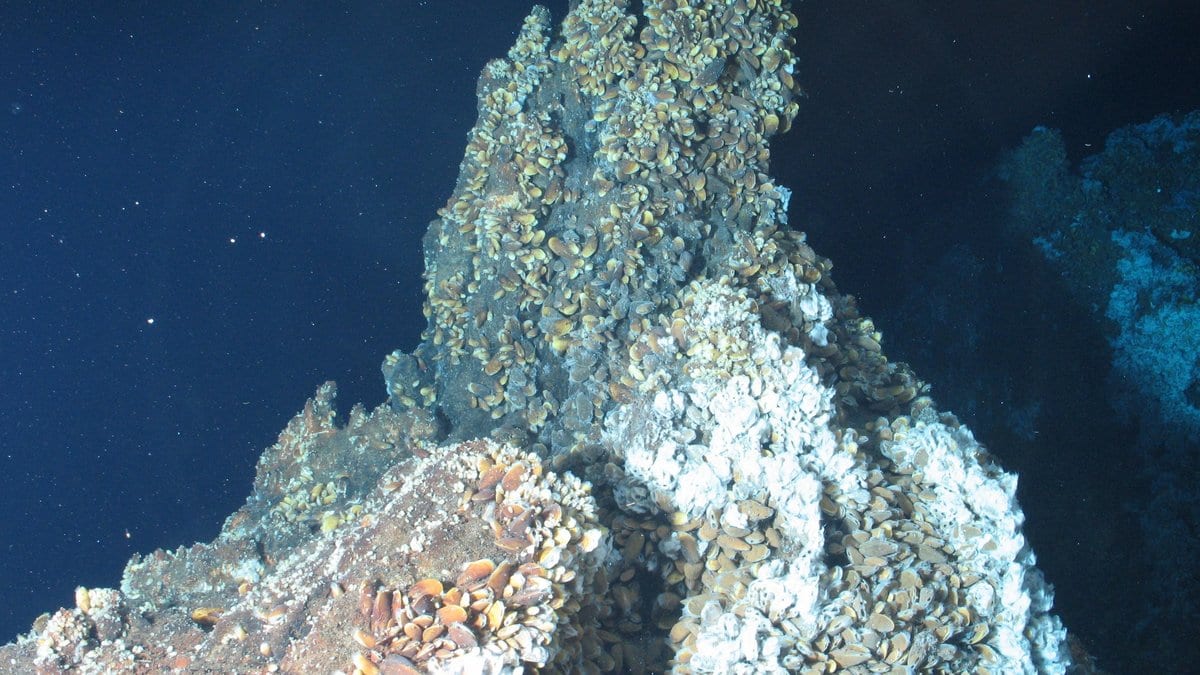
Seventeen hundred meters down on the Lucky Strike vent field, south of the Azores, there is nothing to set a clock by. No daylight reaches the Mid-Atlantic Ridge at that depth, and no moonlight. What the mussels clustered around the vents have instead is the tide. It presses on the seafloor and swings the flow of vent fluid past them, so the water around them keeps alternating between cold ordinary seawater and a hot, acidic, metal-rich brine with no oxygen in it.
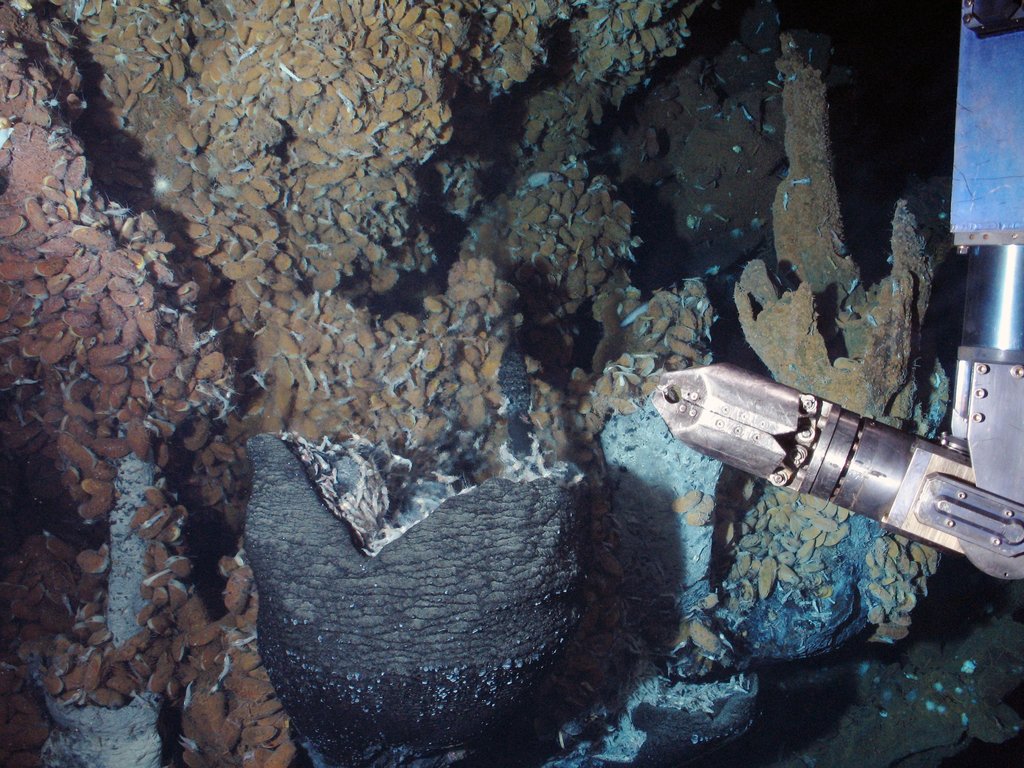
Audrey Mat of the University of Vienna and colleagues at Ifremer, the University of Oldenburg and the Alfred Wegener Institute grew cells from those mussels and left them alone in the dark. The rhythm their own fieldwork pointed to was the tide's. What they found instead, published Nov. 2, 2026, in EMBO Reports, was a day. Gene activity in cells cultured from the mussels' foot tissue cycled on a roughly 24-hour schedule of its own, in constant darkness, in an incubator held at 4 °C.
Two things that rhythm is not. It is not the behavior of a living mussel, and it is not something recorded on the seafloor: the animals came up from the vent field, and the cells sat in a laboratory cold room. The cycling is in transcription, the copying of a gene, counted across the whole set of genes these cells were using.
Thirteen months at the wrong pressure
Getting that far was animal husbandry more than any single experiment. Pressure is the reason: bringing a deep-sea animal to the surface is usually lethal, and the team's first batch of mussels died within two weeks. The second batch went into a large, filtered aquarium, shielded from room light by red filters. Half of those animals were dead within a month. Then the dying stopped, and the survivors lived 13 months, which the authors call unprecedented for this species. Foot cells proved the most durable of the tissues they tried, and two of those cultures are still going beyond three and a half years, at refrigerator temperature. Kept at room temperature instead, cultures were quickly overrun by fungi and other contaminants.
It is not the first cell culture from a deep-sea animal. The authors' own Methods section cites earlier successes with shallower species and a comparable-depth culture of a deep-sea clam that lasted only a few days. What is new here is duration and temperature. The authors are also plain about what working this way costs. Keeping the mussels and the cultures at surface pressure affects their physiology to an unknown extent.
What the shuffled data could not reproduce
The experiment that found the rhythm was small: five cell cultures, one from each of five mussels, and it was performed once. After filtering, 5,616 transcripts were left to analyze, and a rhythm-detection method flagged 157 of them as cycling on something close to a day. To see whether that could be chance, the team shuffled its time points and re-ran the analysis 10,000 times. Not one of the shuffled datasets produced as many day-length transcripts as the real data, with the same previously known rhythmic genes among them. The blunter version of that test, the raw count on its own, beat the shuffles in 70.3% of cases.
The results that came back empty are the other half of the story. The same analysis looked for cycling at the tide's period and found no more than chance would give, which the authors decline to read as proof that no tidal clock is there. Transcripts of the core clock genes did not show up in the sequencing at all, most likely because there was so little RNA to read. A targeted test found one of them, a gene called BazCry2, in eight of 11 culture samples, and the mussel's period gene in none. Both were present in every piece of foot, gill and mantle tissue tried.
A clock borrowed into fly cells
The mechanism had to be tested somewhere else entirely. The team cloned the mussel's clock genes, along with a stretch of mussel DNA sitting just upstream of its period gene, and put both into Drosophila S2 cells. That fly cell line was the point: it carries none of clock, period or timeless, so the loop under test starts out missing. In that empty background the mussel's CLOCK and BMAL proteins switched on a test gene that glows when it is read. One short motif in the mussel sequence turned out to be the one that mattered: mutating it silenced the glow. BazCry2 shut the signal down in proportion to how much of it was present. BazPer, which does nothing on its own, deepened that repression when BazCry2 was scarce, and the mussel's copy of the fly gene timeless blocked the deepening.
Out of that comes a working model, not a demonstration. Because period transcripts in this mussel cycle with the tide while cry2 does not, the balance between the two could in principle tip a single clock between a tidal period and a daily one. That could happen either inside one cell or across different cells in the same tissue. The verbs in the paper are careful. The authors write that reporter assays in fly cells suggest a feedback loop of this kind contributes to circadian timing even in the deep sea. Whether it runs that way in a mussel on the seafloor is not a question fly cells can answer.
One question the cultures do settle is practical. Experiments like this cannot be run at a vent. The authors argue that lab tools of this kind reduce the need to keep taking animals from an ecosystem that is hard to reach and easy to damage, and that the work spotlights the highly time-sensitive biology of a part of the planet still barely explored.
Sources
- EMBO ReportsPeer-reviewed
- idw-online.de