Jumping Spiders Really Sleep, and Their Sleep Has Two Stages
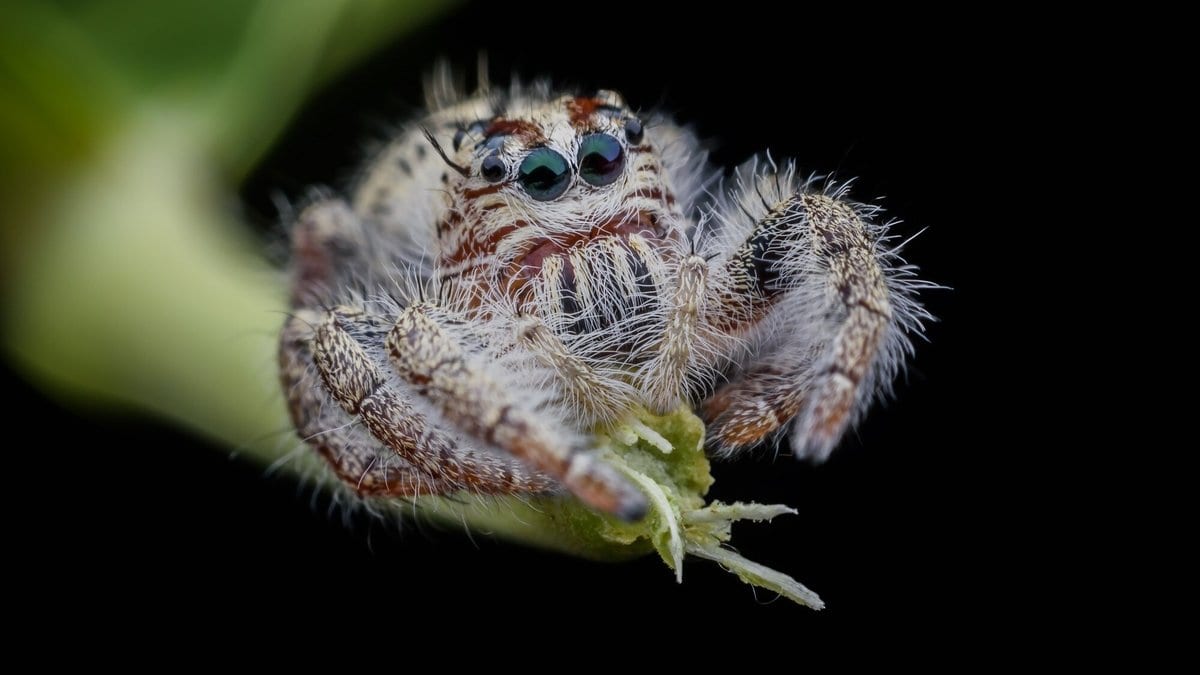
A team led from the University of Bonn reports experimental evidence that a jumping spider truly sleeps, and that its sleep includes recurring bouts resembling REM, the phase of vertebrate sleep named for its rapid eye movement. The study of the spider Portia fimbriata was published Oct. 26, 2026, in Proceedings of the National Academy of Sciences.
The paper describes the gap it set out to fill. Most of what is known about sleep comes from vertebrates, and studies are scarce or absent in all but a few invertebrate groups. An earlier report had described REM-like behavior in a jumping spider and parallels to vertebrate sleep, but experimental evidence that those behavioral signs really represent sleep was lacking in spiders.
Nadja Geiger and Daniela C. Rößler of the Bonn Institute for Organismic Biology led the work, with six co-authors in Germany, Italy, Australia and the United States. They report that the spiders were active by day and kept a free-running circadian rhythm, a daily cycle that holds without light cues. Their rest had a regular structure, the REM-like bouts recurred at intervals rather than at random, and the animals were harder to rouse while a bout lasted. A rebound effect, or catch-up sleep, followed when their sleep was disrupted.
The authors conclude that what they observed is behavioral sleep, which is sleep established from behavior rather than from recordings of the brain, and that it is evidence for an REM-like stage within sleep in a land invertebrate. They present the work as a contribution to open questions about how sleep evolved across animals and what it is for.
The German Research Foundation funded the study. The paper is open access, and the behavioral data behind it are deposited in the Zenodo repository.
Sources
- Proceedings of the National Academy of SciencesPeer-reviewed