Skip to content
See the World Through ScienceA project of ALLATRA

A Safe Warming Limit for Earth's Ice Is Closer to 1.0 Degrees Celsius
Environment

Republish this story

Our work is licensed under Creative Commons BY-NC 4.0. You may republish this piece for free — with credit to ALLATRA Media and a link to the original, unedited beyond length trims, and not for commercial use.

Read the full license

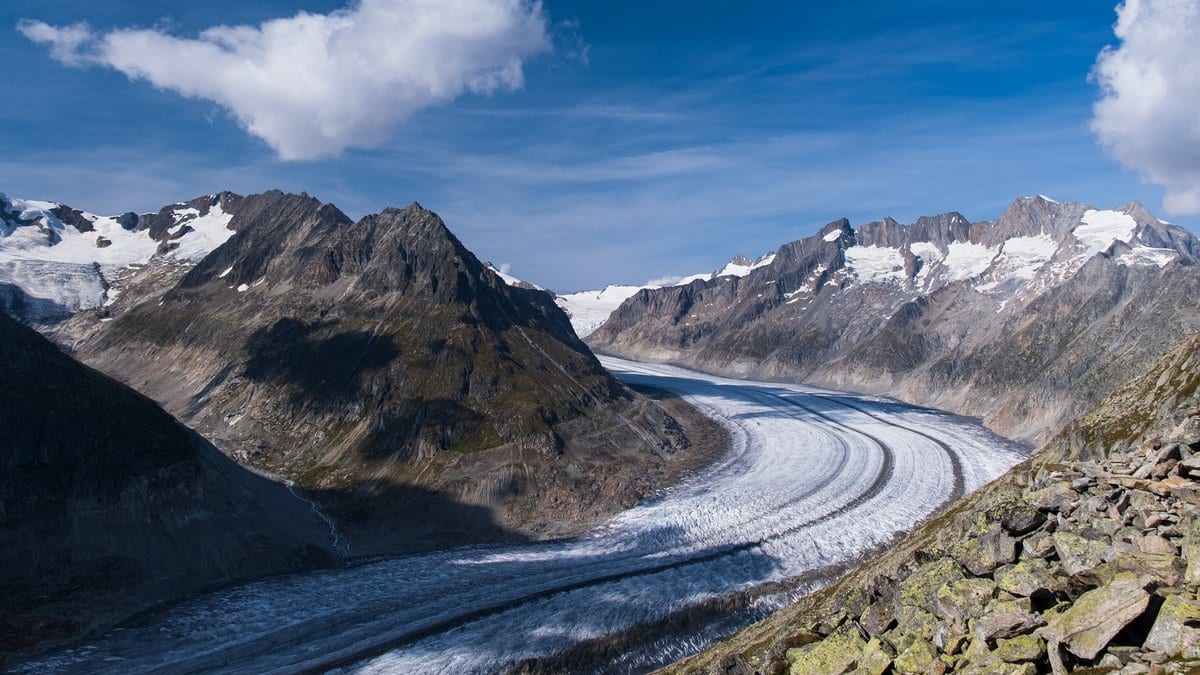
A long glacier curving between dark rock ridges in the Swiss Alps, its surface marked by parallel dark bands of moraine debris.
The Great Aletsch in the Bernese Alps, photographed Sept. 7, 2021. Switzerland has lost 20 percent of its glacier ice in the past five years, the International Cryosphere Climate Initiative reports."Glacier d'Aletsch - 2021" by Christian David, via Wikimedia Commons, CC BY-SA 4.0

The International Cryosphere Climate Initiative released its annual assessment of the planet's snow and ice on Nov. 2, 2026. ICCI states that a truly safe temperature for Earth's ice is now thought to be closer to 1.0 °C of warming, or even below, over the coming centuries, and that a return to the Paris Agreement target of 1.5 °C would slow ice loss without reaching that level.

The group released State of the Cryosphere 2026: The Cost of Overshoot alongside a companion volume it wrote with the UN Environment Programme, Overshoot and the Cryosphere: Averting Global Meltdown. ICCI says the two reports set out the global impacts of ice loss under overshoot, showing which of those impacts are already locked in and which can still be stopped or slowed.

Among the new observations the assessment draws from the past year is Switzerland's loss of 20% of its glacier ice in the past five years. The report also describes accelerating sea-level rise from rapid ice loss, and growing water shortages and mountain hazards as glaciers disappear and snow drought, a lasting shortfall of snow, spreads.
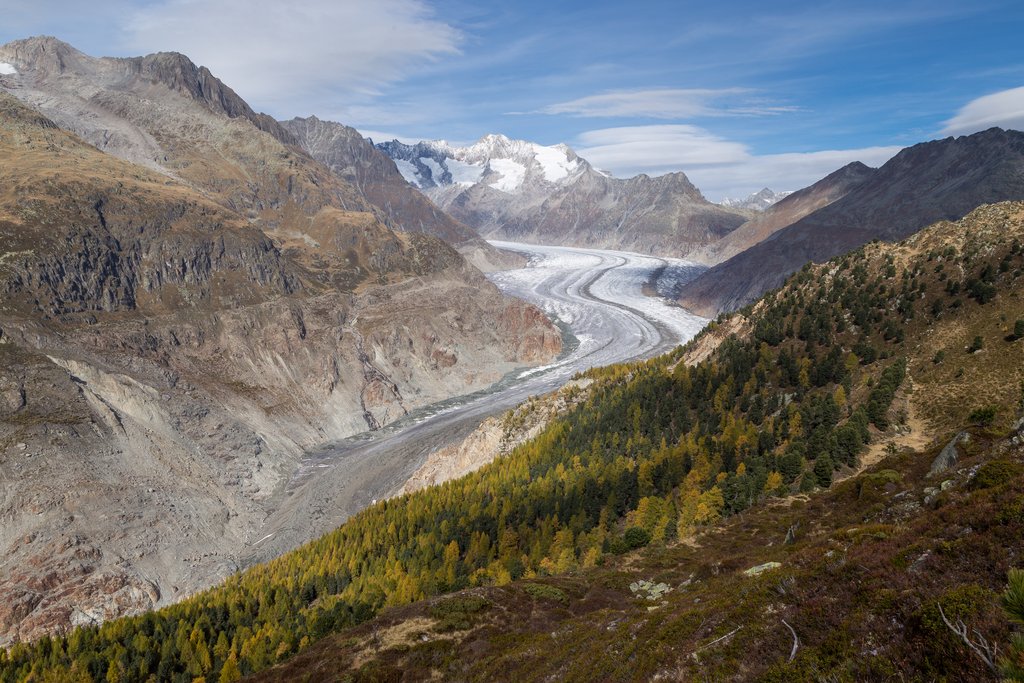
A glacier running down a valley past a slope of larch forest, with bare gray rock and scree between the trees and the ice.
The lower glacier above the Aletsch forest, photographed Oct. 7, 2017, with a band of bare rock and scree between the tree line and the ice. "Blick vom Moränenweg auf Alteschgletscher und -wald (2017)" by JoachimKohler-HB, via Wikimedia Commons, CC BY-SA 4.0

By ICCI's account, current levels of warming are already unsafe for the Arctic, the Antarctic, mountain glaciers and the polar oceans, and overshoot must be kept to the absolute minimum because many of the consequences of ice loss would be irreversible.

The assessment is the latest in ICCI's annual State of the Cryosphere series, with more than 50 leading cryosphere scientists having reviewed and supported it. It is deposited under the DOI 10.5281/zenodo.23478059, and ICCI has posted a copy for download on its own page.

Sources

Spot an error?

Spot an error?

Report an error

Spotted a mistake on this page? Tell us what's wrong and our editors will take a look.

What kind of problem?

Only if you'd like us to be able to follow up. We won't use it for anything else.

We correct mistakes openly. Select any text to flag it. Fixes are logged under our Corrections Policy.

Report an error

Reporting on

A Safe Warming Limit for Earth's Ice Is Closer to 1.0 Degrees Celsius

What kind of problem?

Only if you'd like us to be able to follow up. We won't use it for anything else.

We read every report. Corrections are logged publicly.