Calves Were Born Without the Pregnancy Signal Biology Called Indispensable

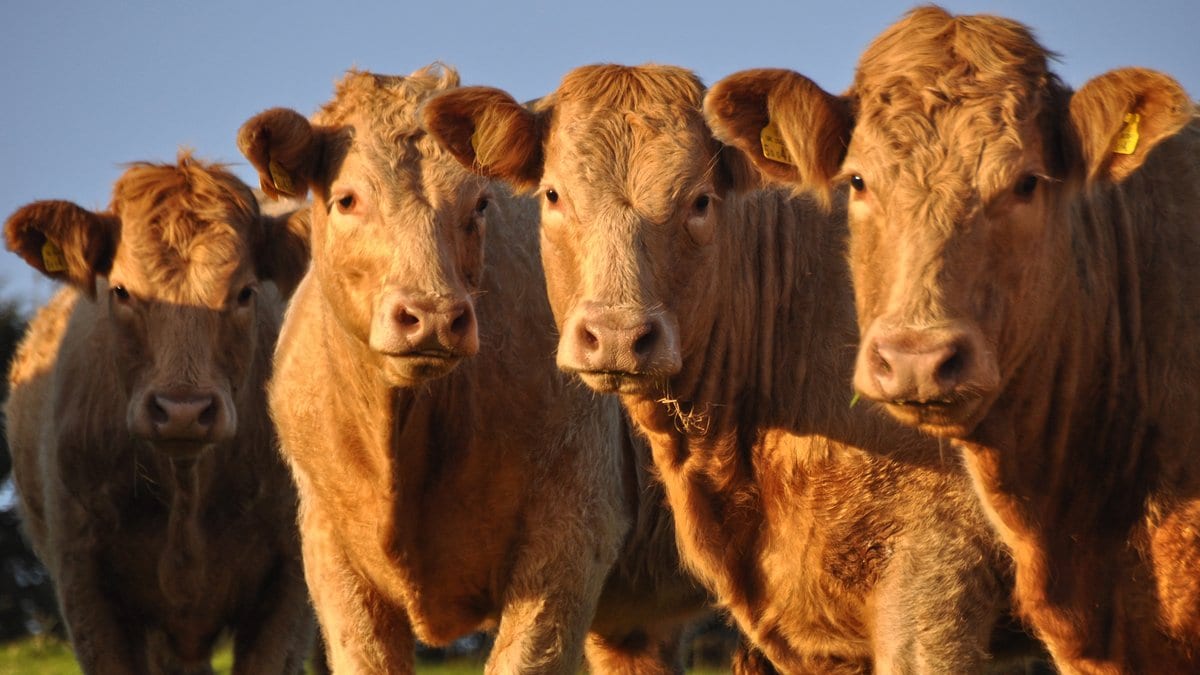
For decades, the story of how a cattle pregnancy survives its first three weeks has had one hero. The embryo, by then a flat sheet of cells stretching itself along the inside of the uterus, pours out a protein called interferon tau, and that protein talks the mother out of ending her cycle. Take the protein away, and there should be no pregnancy at all. On Feb. 26, 2026, twin calves were born without it, from one of three pregnancies that had been established.
The calves are the work of a group at the Gene Center of LMU Munich, with Asghar Ali as first author and Eckhard Wolf as senior author, reported Oct. 8, 2026, in Nature Communications. The team used CRISPR-Cas9 to cut all six copies of the three working interferon tau genes out of cells taken from a single female Limousin fetus, then built embryos from those cells by somatic cell nuclear transfer, a cloning method. Proving the protein was truly gone took genetics plus three other tests: no band on a Western blot, no antiviral activity in a bioassay that any interferon would have produced, and no trace of the protein's own peptide fragments under mass spectrometry.
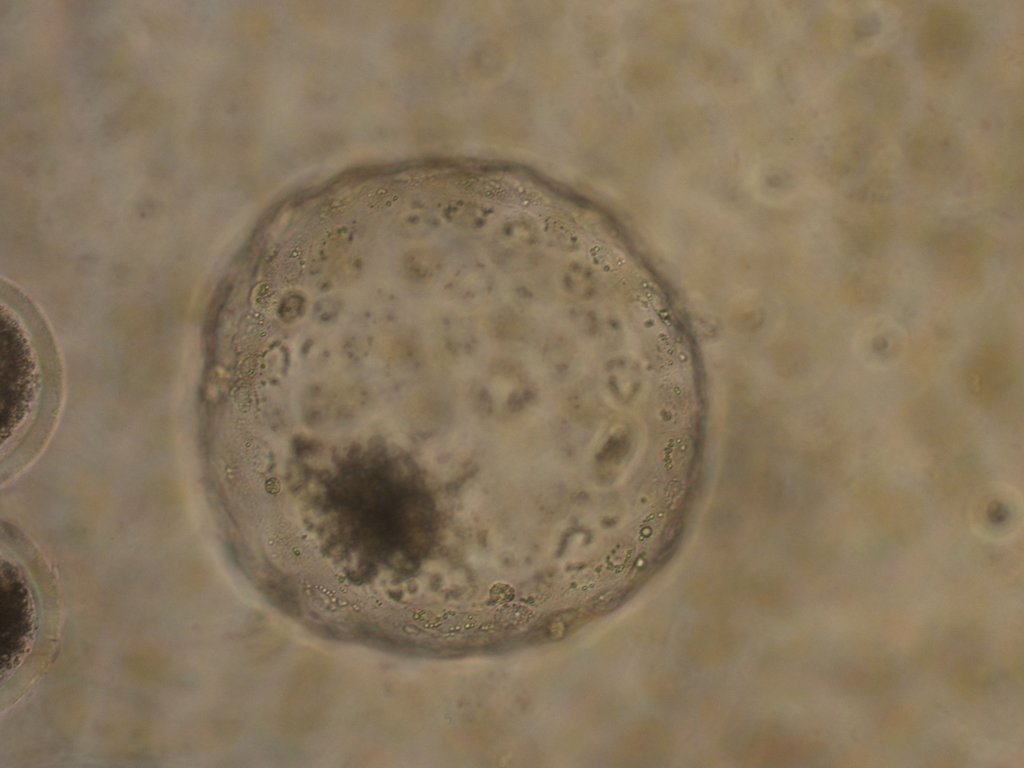
Those embryos went into recipient heifers, young cattle that have not yet calved, whose cycles had been brought into step first. Eighteen days later the team recovered the embryos and their membranes and found them stretched to roughly the same length as the ones with the gene intact. The uterus around them, meanwhile, was silent. In a normal pregnancy the lining of the womb lights up with interferon-stimulated genes, the readout the accepted model treats as the message being received. In these recipients that response was missing altogether, and the proteins it produces were suppressed across the board.
The next question was whether the pregnancies would hold. Eight of 10 recipients kept the corpus luteum going, the hormone-producing body on the ovary that a failing pregnancy loses, and ultrasound confirmed three twin pregnancies. Two were ended deliberately, at days 50 and 75, so the fetuses and the placenta could be examined. The third went to term.
On Feb. 26, 2026, it delivered twin female calves, both confirmed by genotyping to carry no interferon tau genes at all. The authors call them healthy, by which they mean physiological measurements within normal ranges in two clinically normal newborns; the paper reports no follow-up beyond that, and both animals are clones. They are candid about what the cloning cost elsewhere. Two of the four fetuses examined carried abnormalities attributable to nuclear transfer rather than to the missing protein, and across all transfers only 4 of 14 recipients were confirmed pregnant by ultrasound, a rate they call high for a cloned knockout model. These embryos did not sail through.
Two calves are enough for the claim the paper actually makes. One living animal with no interferon tau falsifies the word indispensable, and that is the whole argument. What two calves cannot carry is any of the comparisons. The early development rates that look equal rest on five cloning sessions per group, and the matching lengths on four knockout embryos against three controls. Those are failures to find a difference, not evidence that there is none. A later round put a single knockout embryo into each of four heifers, to rule out twins pooling their signal; one pregnancy took, and it is still under way rather than delivered.
The paper does name a replacement, and labels it speculation
Ali, Wolf and colleagues nominate prostaglandin E2, a small signaling molecule the embryo makes, as a compelling mediator of the alternative conversation, and they have data behind the choice. The molecule accumulated strongly in the recovered embryos, at levels indistinguishable between knockouts and controls, and the enzymes that make it were expressed equally in both. It is also already known to travel from the uterus straight to the ovary by a countercurrent route, where it tips the local balance away from the signal that ends a cycle, and older work showed that infusing it alone extends the life of the corpus luteum in sheep, cattle and pigs.
They stop short of claiming it and describe it as speculation. Tracking the molecule over time and knocking out its pathway genetically remain essential before anyone can call it obligatory.
Sheep got there first, from the other end of the signal
Cattle were not the first livestock to embarrass the model. On Aug. 18, 2026, Davies and colleagues at Utah State University reported in Biology of Reproduction that two female sheep lacking IFNAR2, one half of the receptor interferon tau has to bind to, were bred naturally and gave birth to healthy lambs. That is the same paradigm attacked from the receiving end rather than the sending end, and the two results are independent on every axis that matters: different lab, different species, different gene, and natural mating instead of cloning.
The Munich team draws its own boundary around that. Those lambs' embryos still had their own interferon tau genes, so the sheep work could test only what the mother and the embryo can hear, not what the embryo sends. Deleting the protein itself, in cattle, is the first direct evidence at the level of the signal rather than the receptor, and that is how tightly their claim of a first is drawn.
What this costs decades of fertility work
Interferon tau has had a long run. It was first picked out of cultured sheep embryos in 1979 and named trophoblastin; the gene behind it was not cloned until the late 1980s, and everything after that fitted the protein into the center of the picture. Early pregnancy loss is the biggest drag on reproductive efficiency in cattle, and most of it happens in the first three weeks, so the stakes are commercial as well as academic. The interferon-stimulated genes these embryos never switched on are used as markers of pregnancy, and supplementing interferon tau has been a line of attack on early loss. The authors' reading of their own result is blunt: that work has been aimed at a parallel pathway which is not required, rather than at whatever actually drives recognition.
What the knockout leaves behind is a tool. A line of cattle that cannot send the usual signal is a clean background for testing candidates for the real one, prostaglandin E2 first among them. The textbook chapter is not rewritten yet. Two calves and a pregnancy in progress are what it would have to be rewritten from.
Sources
- Nature CommunicationsPeer-reviewed
- Biology of Reproduction