The Upwind Lakes Held More Plastic, Which Is the Puzzle in a New Arctic Study

Plastic shows up in Arctic snow, Arctic air, Arctic seawater and Arctic fish, and the explanation usually offered is distance. Particles ride winds and currents north from the places where plastic is made and thrown away, and they settle at the top of the world because that is where the air and water go. It is a clean story. It also has a gap: people live in the Arctic too.
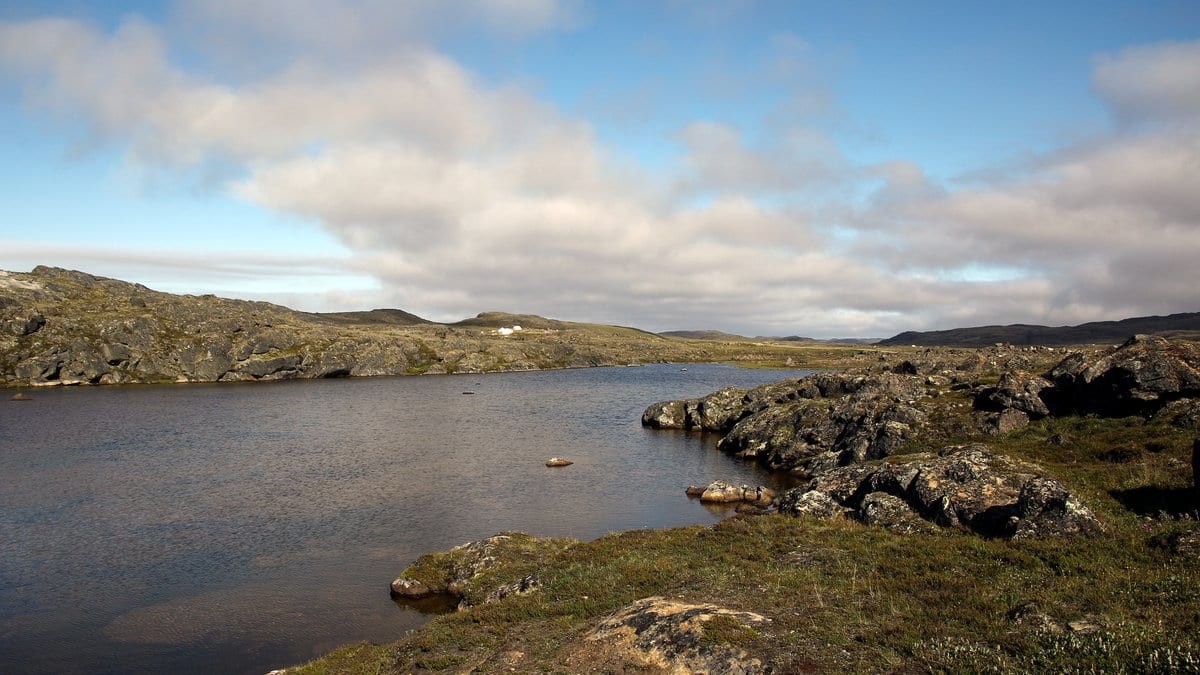
Iqaluit sits on the south coast of Baffin Island. It is the largest community in Nunavut and still a small town, home to roughly 7,400 people. It has a road network, a landfill, construction sites and a port, and hundreds of small lakes lie scattered around it. Kelly Evans and Julian Aherne of Trent University, working with colleagues at the University of Western Ontario and at Environment and Climate Change Canada, sampled 19 of those lakes. Nine lie east of the town and ten to the north. From each they took water, lakeshore sediment and handfuls of a common feather moss. The results were published Oct. 8, 2026, in Arctic Science.
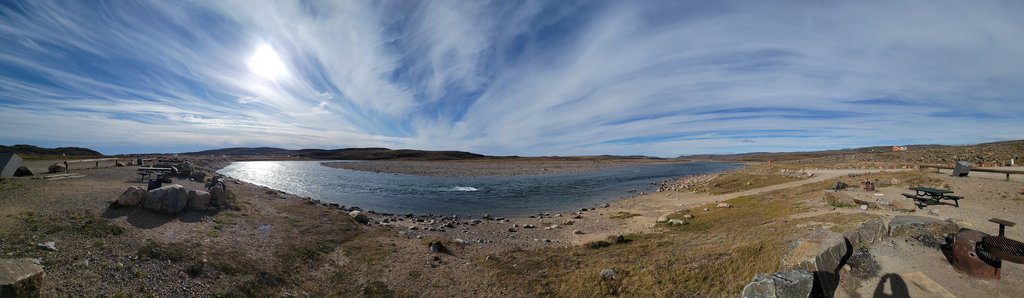
The moss is the instrument. Stair-step moss, Hylocomium splendens, grows in low mats across the tundra and has no roots, so it takes what it needs from rain and air and keeps whatever settles on it. A clump of it is a slow record of what has drifted down onto that patch of ground. Aherne's laboratory has been reading moss this way since at least 2020, when he and Brett Roblin published a test of moss as a monitor for plastic fibers falling out of the air. What is new in the lake study is the cross-check: the moss was measured against the water beside it, a place the particles end up, rather than against another collector.
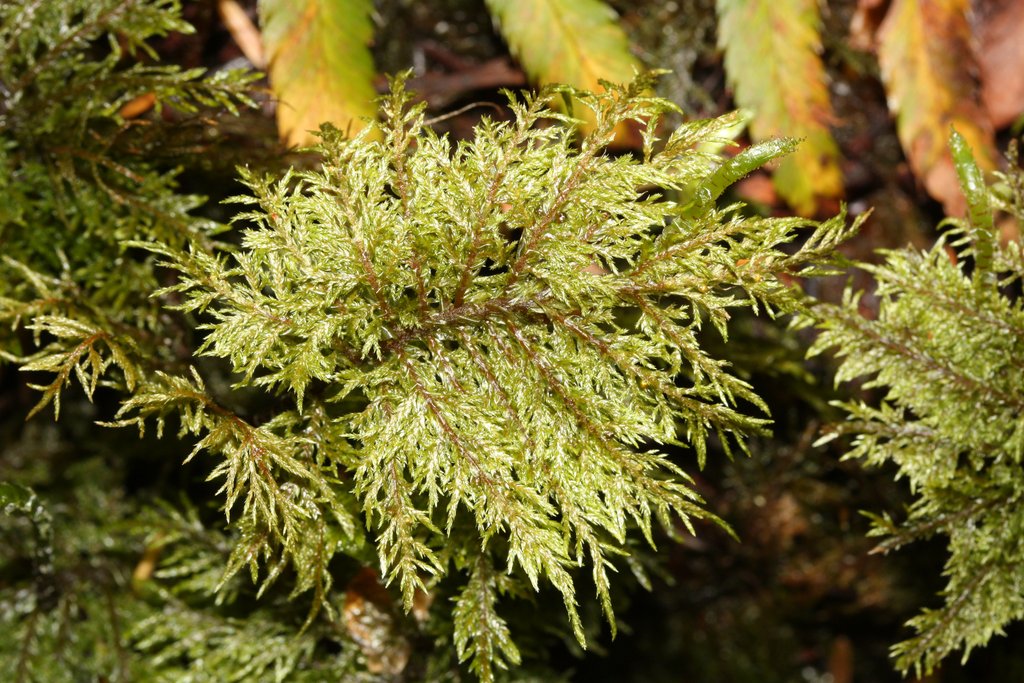
Evans and her colleagues report two patterns in the counts. The average plastic concentration in the water of the eastern lakes was statistically greater than the average in the northern lakes. And across the whole set, the number of particles in the water and the mass of plastic held in the moss both fell as the lakes got farther from the community. They say the falling trend suggests a local source in Iqaluit, and suggests is their word. The study is observational, and it covers one town: two groups of lakes compared, a trend with distance read across the set, and no second community sampled for contrast. That is an association consistent with a town source, not a path traced from the town to the water.
Water and moss agreed with each other. Plastic in the lake water rose and fell with plastic in the moss at the same site, which supports using the plant as a stand-in for what falls out of the sky.
One thing in the geometry does not follow, and it is the part to hold on to. The nine lakes with more plastic in their water sit east and upwind of Iqaluit. The ten with less are north and downwind. If plastic lifts off the town's roads and travels on the wind, the downwind lakes are where it should pile up, and they are the ones with less of it. The two results are not the same analysis. One sorts the lakes by which side of town they are on, the other by how far out they sit. A trend running outward from town can hold inside each group while the group averages run the other way. The directions as stated still pull against each other, and that is the open question in this result.
The idea being tested is not new, and the clearest evidence is the team's own earlier paper. On Oct. 23, 2025, Evans, Liisa Jantunen of Environment and Climate Change Canada and Aherne reported in PeerJ on road dust collected at 16 sites inside Iqaluit. They found plastic and tire wear particles at concentrations in line with those measured in big cities, and wrote that Arctic communities may be a substantial local source for the ecosystems around them. The lake study is the next step in that argument rather than the beginning of it.
A separate group had already pushed in the same direction from another angle. Bonnie M. Hamilton and Chelsea M. Rochman of the University of Toronto, with colleagues at Fisheries and Oceans Canada and at Environment and Climate Change Canada, sampled snow outside Iqaluktuuttiaq, a different Nunavut community. They took it at five points along a line running away from town. Their pilot study, published in 2024, used a technique that heats the particles and identifies each plastic from the gases it gives off. They found plastic at every point and reported that "patterns along the transect were unclear." The kinds of plastic near the community were not the kinds found farther out, which they read as a sign of local inputs. Against that, a pattern as orderly as the one in the Baffin Island lakes is what makes the new paper worth the time.
What the lake study adds is narrow and real. The local signal has now been counted in Arctic lake water rather than in road dust or snow, across more sites than before, with a lakeside plant checked against the water beside it. Hamilton and her colleagues wrote that the reason to sample at different distances from a town is to inform how the pollution is managed, and that is where the stakes sit. Plastic arriving from thousands of kilometers away is nobody's to switch off. A landfill and a road are another matter.