Skip to content
See the World Through ScienceA project of ALLATRA
Source: Peer-reviewedScience1 source

Scientists Trace a Mouse Embryo's Cells Back to the Egg They Came From
Science

Republish this story

Our work is licensed under Creative Commons BY-NC 4.0. You may republish this piece for free — with credit to ALLATRA Media and a link to the original, unedited beyond length trims, and not for commercial use.

Read the full license

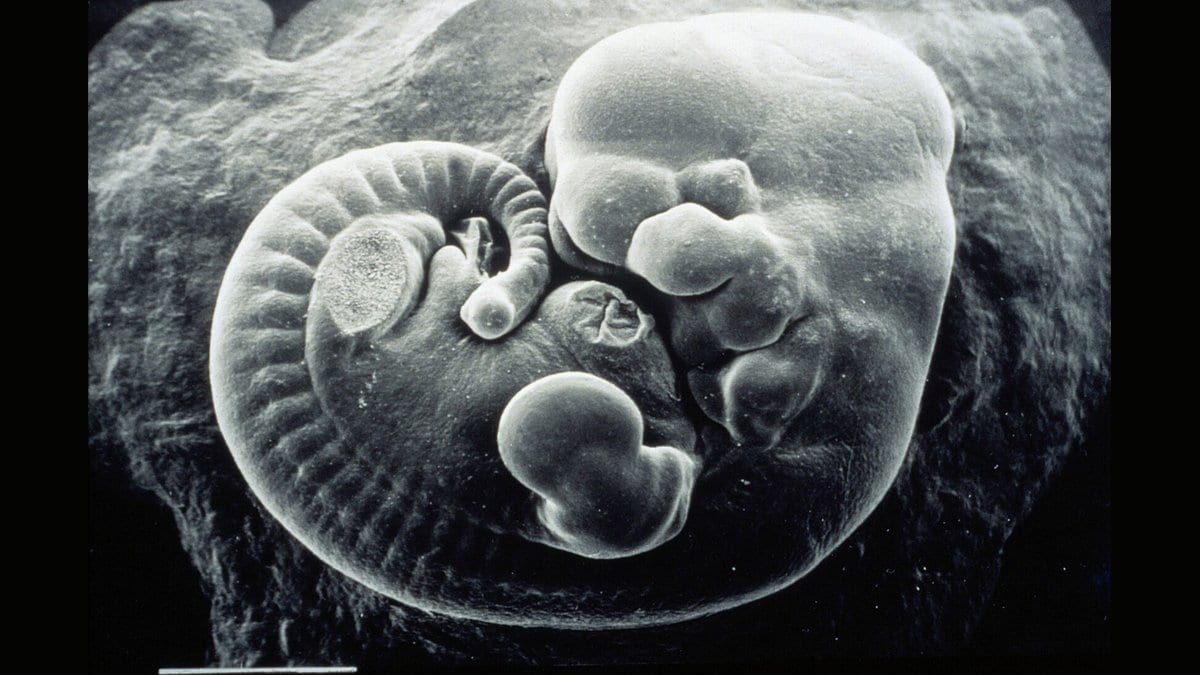
Scanning electron micrograph of a mouse embryo curled into a C shape, with limb buds, a row of somites along its back and branchial arches at the head.
Limb buds, somites and branchial arches are already in place at 11.5 days of gestation, inside the window of development the recording covered (illustrative)."Scanning electron micrograph of an 11.5 day old mouse foetus" by Paul Martin, via Wikimedia, CC0

Researchers at the University of Washington have reconstructed the family tree of 1.28 million cells from a single mouse embryo, tracing each of them back to the fertilized egg the animal started as.

The authors say the tree lets them date the moments when the body's cell types first part company. In their own assessment, a lineage-anchored account of how a mammal develops, long out of reach, is coming into view rather than finished.

The study appeared on Oct. 8, 2026, in Science. The authors recorded the lineage with DNA Typewriter, which they call a sequential molecular recorder: it writes edits into a cell's own DNA in the order they occur, so the sequence of divisions can be read back later. The recording ran across nearly two weeks of development, and from that one embryo the team built a dated tree of those cells, each with its gene activity measured as well.
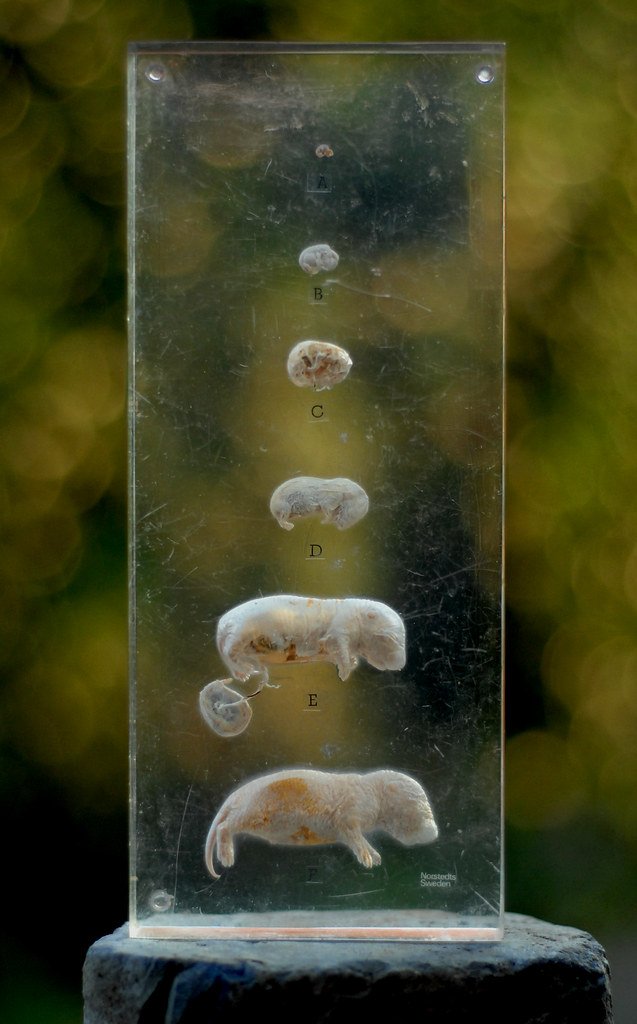
A clear plastic teaching block holding six preserved mouse embryos in a vertical row, labeled A through F, growing from a speck at the top to a fully formed pup at the bottom.
Six preserved mouse embryos set in a teaching block run from a speck of tissue to a formed pup, the span of development a recorder has now logged division by division (illustrative). "mouse embryo progression" by postbear, via Flickr, CC BY-NC-SA

A burst of editing marked the daughter cells of the embryo's first division, giving the authors a built-in replicate pair inside one animal. They report that siblings on the tree shared a cell type far more often than chance allows, that sibling pairs ending in different cell types marked where an identity split had finished, and that during the stage when the embryo lays down its body plan a few early lineages came to supply a disproportionate share of cells.

Sources

By Olga SchmidtEditor-in-Chief, Writer

Spot an error?

Spot an error?

Report an error

Spotted a mistake on this page? Tell us what's wrong and our editors will take a look.

What kind of problem?

Only if you'd like us to be able to follow up. We won't use it for anything else.

We correct mistakes openly. Select any text to flag it. Fixes are logged under our Corrections Policy.

Report an error

Reporting on

Scientists Trace a Mouse Embryo's Cells Back to the Egg They Came From

What kind of problem?

Only if you'd like us to be able to follow up. We won't use it for anything else.

We read every report. Corrections are logged publicly.