Tree Rings From Turkey Help Fix the Date of Hammurabi's World

The scribes of ancient Mesopotamia kept the kind of records a historian dreams about: king lists, administrative accounts, royal inscriptions and dated observations of the sky. They name rulers, their officials and the years of their reigns. What none of them can say is which of our own calendar years any of it happened in. The sky repeats itself, so an observation recorded once can fit more than one date, and each choice produces a different and internally consistent history of the ancient Near East.
A study published Oct. 26, 2026, in the Proceedings of the National Academy of Sciences offers an anchor that does not depend on the sky at all. Nine researchers led by Charlotte Pearson, of the Laboratory of Tree-Ring Research at the University of Arizona, measured carbon-14 in single annual growth rings of timbers recovered from archaeological sites in Anatolia. Their co-authors include Lukas Wacker and Nicolas Brehm at ETH Zurich's Laboratory of Ion Beam Physics, with colleagues at Oslo, Bern, Innsbruck and Bristol. The rings tie that wood to calendar years from 2072 BCE to 744 BCE.
Mesopotamia's astronomical records allow several alternative absolute anchor points, and the result is four rival frameworks, known in the field as high, middle, low and ultra-low. The choice between them is not academic housekeeping. The authors note that establishing which one is correct has consequences far beyond Mesopotamia, because the region's dates are the bridge that connects the Near East to the eastern Mediterranean across the second millennium BCE.
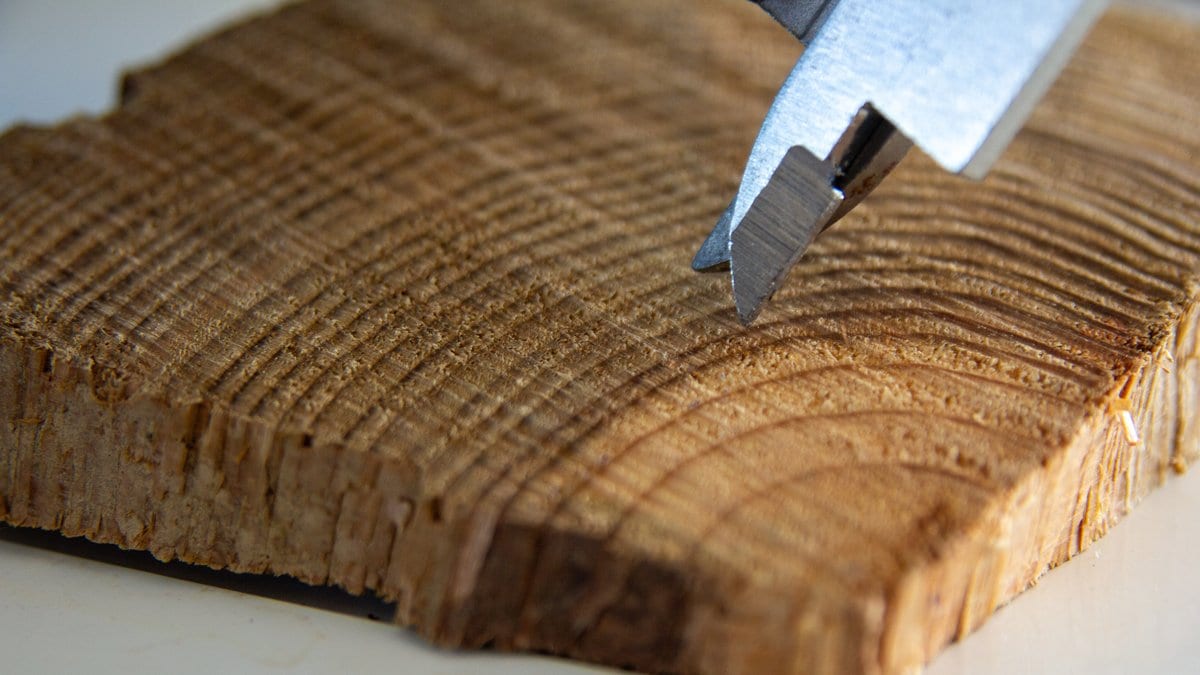
Carbon-14 in the atmosphere does not sit still. Its level drifts, and sometimes jumps, from one year to the next, and a tree lays that signal down in the ring it grows that season. A run of rings therefore carries a pattern of year-to-year change, which works rather like a barcode. Measure it in wood of unknown age, slide it along a sequence whose calendar years are already known, and the two patterns agree best in one place. Anatolian timbers had resisted that treatment, because the ring sequences built from them had never been secured to a calendar date in the first place.
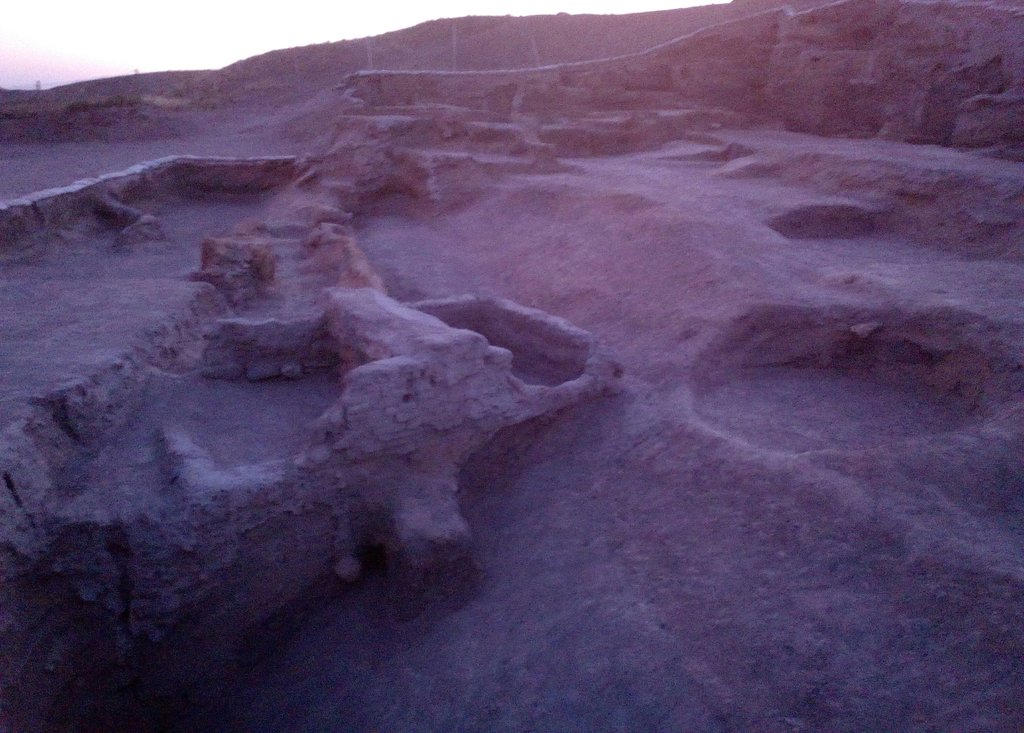
Anatolian wood can speak to Mesopotamian history because the two were joined by the Old Assyrian trade network, the long-distance commerce that carried Assyrian merchants and their paperwork into central Anatolia. That link was the basis of an independent study by Sturt W. Manning and colleagues at the Cornell Tree-Ring Laboratory, published in PLoS ONE in 2016. They reported that documents naming particular Assyrian officials and rulers have been found at Kültepe and Acemhöyük, in Turkey, together with archaeological wood. The same study put the gap between the rival schemes at 150 years and more, and named Hammurabi of Babylon among the pivotal figures whose dates have floated in calendar time. It found its own timbers compatible only with the Middle Chronology.
The new paper takes the question past a single pair of sites. With the Anatolian ring sequences anchored, Pearson and her co-authors combined the tree-ring dates with archaeological evidence and with high-resolution ice-core records, and then tested the four frameworks against the window from 2000 to 1500 BCE. Ice cores bring a second archive that counts its own years, laid down independently of any tree. The window is narrower than the anchored chronology itself: it is the stretch the Mesopotamian argument turns on, not the span of the wood.
The authors state their conclusion in one sentence: "Remaining dating uncertainties are constrained in strong support of the middle–low chronology." Constrained is not removed, and strong support is not proof. And "middle–low" is a single named scheme in the field's terminology, not a range running from the middle framework down to the low one. The new work does not overturn that earlier, independent answer. It brings single-year evidence to the same question, and it cites the 2016 study among its references.
Two things come out of the anchoring besides the chronology verdict. One is a reference chronology: wood from an Anatolian site anywhere in that span can now be dated against a sequence that is itself fixed to calendar years, which is a tool any excavation in the region can pick up. The other is a year-by-year climate record for the same period.
The anchored sequence runs on to 744 BCE, centuries past the second-millennium window the Mesopotamian argument needs. Whatever the field eventually settles on for the dates of Hammurabi's reign, the Anatolian wood now carries a calendar of its own, and the next beam lifted out of a trench in Turkey can be read against it.