A Livestock Virus Has Infected a Person for the First Time, French Doctors Report
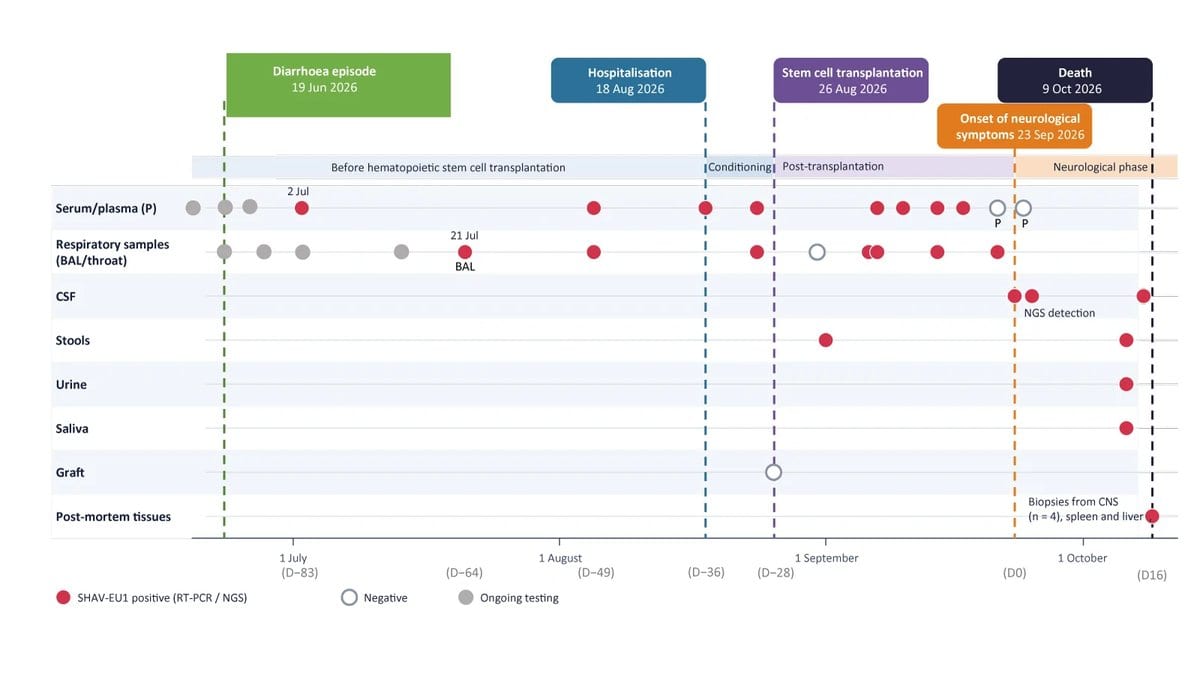
French health authorities and doctors at the Hospices Civils de Lyon have reported the first human infection with Shamonda virus, a livestock virus spread by biting midges that was until now thought not to infect people. A patient whose immune system had been severely weakened developed fatal encephalitis, an inflammation of the brain, in September 2026, a month after a stem-cell transplant from a donor.
Santé publique France says no human-to-human transmission and no health risk to the general population has been identified. The investigation now underway is meant to establish the most likely routes of transmission, rule out other sources of infection and better describe the potential risks to human health. Its leading hypothesis is the bite of an infected biting midge.
The Lyon team's report appeared Oct. 22, 2026, in Eurosurveillance. Sequencing of the fluid around the patient's brain and spinal cord found the virus, and a PCR test confirmed it. Biopsies from the central nervous system carried high levels of virus, and the virus was already present in blood serum and in respiratory and stool samples at least two months before the brain inflammation began.

The European Centre for Disease Prevention and Control (ECDC) says investigations into whether the virus caused or contributed to the patient's death, and into how the infection was acquired, are continuing. The patient died in early October 2026.
The report says SHAV-EU1 is one of two new Shamonda strains that emerged in Europe in summer 2026, primarily affecting cattle. In animals the virus causes fever, diarrhea and decreased milk production, and it was first identified in Nigeria in the 1960s. Santé publique France reports the European strain in cattle in 52 French departments as of Oct. 20, 2026, and ECDC says Shamonda virus has previously been found in animals in countries outside Europe.
Sources
- EurosurveillancePeer-reviewed

Medical Disclaimer: This content is provided for general informational and educational purposes only. It is not medical advice and should not be used as a substitute for professional medical advice, diagnosis, or treatment. Always consult a qualified healthcare professional regarding any medical condition, concern, symptom, or treatment decision.