Researchers Report the First Amphibian Known to Live Fully in the Sea
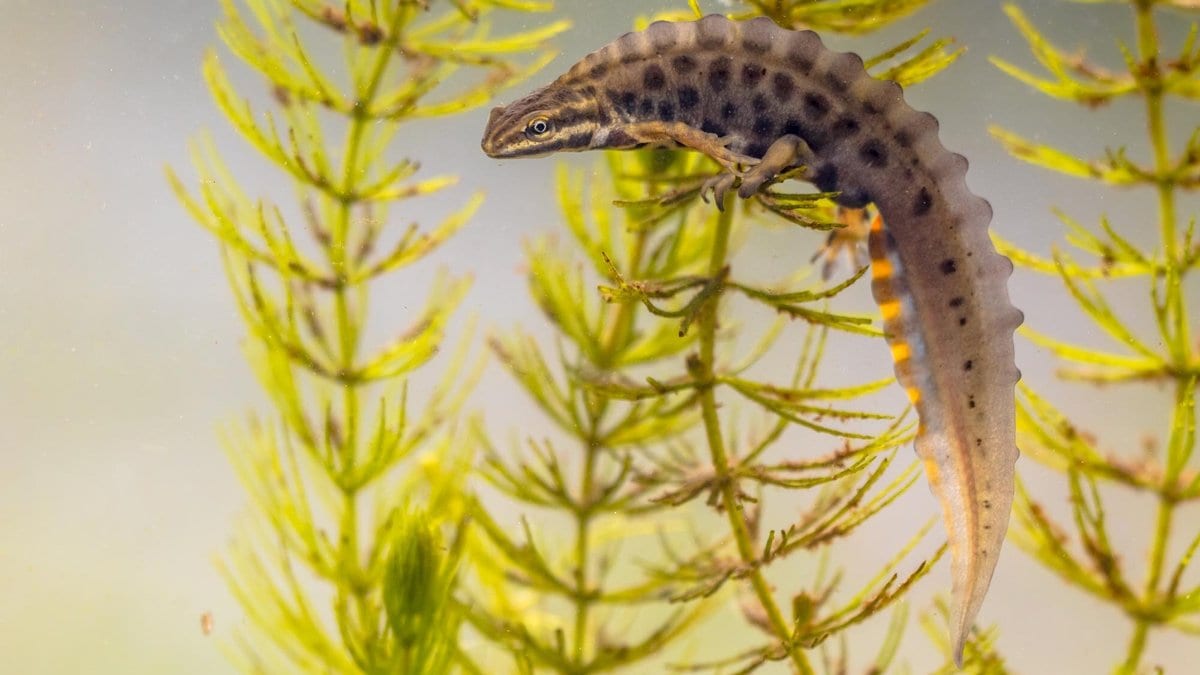
Researchers describe a new fossil species and report it as the first amphibian relative known to have lived fully in the sea. The description, published Oct. 26, 2026, in Nature Ecology & Evolution, rests on two nearly complete skeletons from Late Triassic rocks in China, about 237 million years old.
Mammals, reptiles and birds all have species that get by without food or fresh water from land. Amphibians have none, living or extinct, and the paper puts that down partly to their salt-intolerant skin. The authors name the animal Gerrothorax maritimus and place it among the stem amphibians, early members of the amphibian line that fall outside the living groups.
The authors give two lines of evidence. The skeletons were found still joined together, far from land. The strontium isotope record associated with them, a chemical signature of the water an animal lived in, points the same way. Taken together, the two suggest life in fully marine conditions.
The authors' explanation turns on armor. The new species descended from a lineage with complete body armor. Such armor would limit the exchange of water, gas and salt through the skin, which is the route amphibians normally rely on. It would instead force that work onto the gill and the gut, which can become more tolerant of salt, and that, they argue, probably prepared the lineage for life in the sea.
The fossils are held in the collection of the Geological Museum of Guizhou in China, and the paper's supplementary files carry the data table and the code behind its ecological comparisons. Lipin Diao of that museum is the first author, with Ryosuke Motani of the University of California, Davis, and Da-yong Jiang of Peking University as corresponding authors. The National Natural Science Foundation of China funded the work.
Sources
- Nature Ecology & EvolutionPeer-reviewed