Gas a Star Shed Before Exploding Could Explain Three Brief X-Ray Flashes
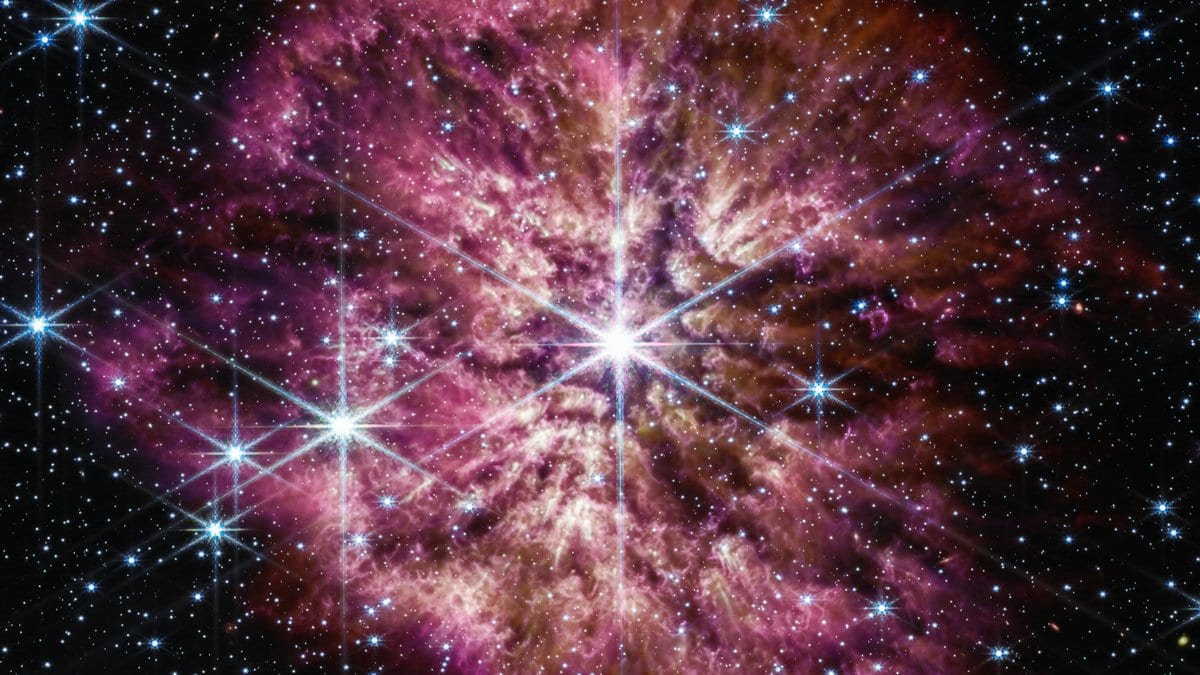
A model of exploding stars wrapped in gas they shed beforehand reproduces three brief bursts of X-rays already in the astronomical record, astrophysicists reported Nov. 11, 2026. Nothing new was observed: the bursts, cataloged as EP260321a, XRF 060218 and XRO 080109, were already known, and the work is a calculation that accounts for them.
Jin-Ping Zhu and Bing Zhang, both at The University of Hong Kong, set out the model with colleagues at Central China Normal University and Peking University in The Astrophysical Journal Letters. They say that finding more such bursts with facilities such as the Einstein Probe would give astronomers a way to track how much gas a massive star sheds, and when, in the last stages before its core collapses.
In the model, a supernova goes off inside a dense shell of gas its star had already ejected. The explosion's first flash then breaks out of that shell rather than out of the star's surface, and the authors say the time light needs to cross the shell sets both how bright the flash is and how quickly it peaks.
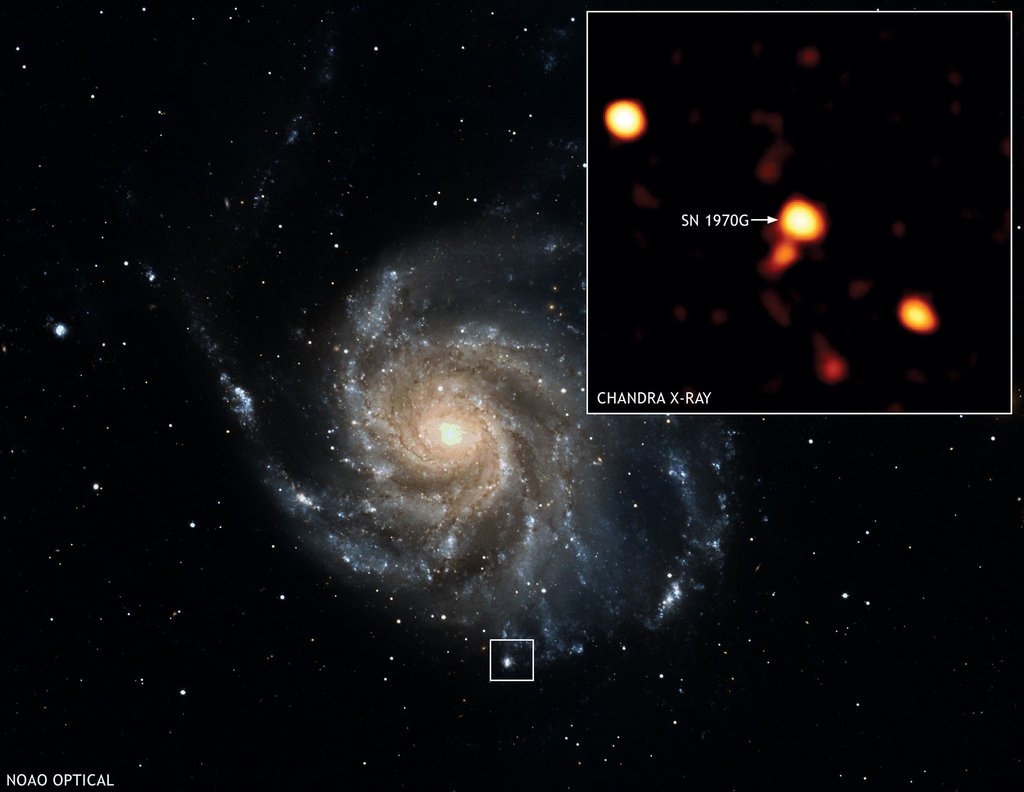
The authors report that the flash falls in the energy band today's soft X-ray telescopes cover when the shell's outer edge sits roughly 100 to 500 times the Sun's radius from the star. They also report that the X-rays should look like the glow of an object at a single temperature even though the light leaves material at many temperatures, which they offer as an explanation for the spectra measured in the real events.
The authors say matching all three bursts took different shell properties in each case, which they read as a diversity in the shells thrown off by stars that had already lost their outer layers. The Letter is published open access.
Sources
- The Astrophysical Journal LettersPeer-reviewed