Fixing One Gene Restored Lost Signals Between Human Nerve Cells
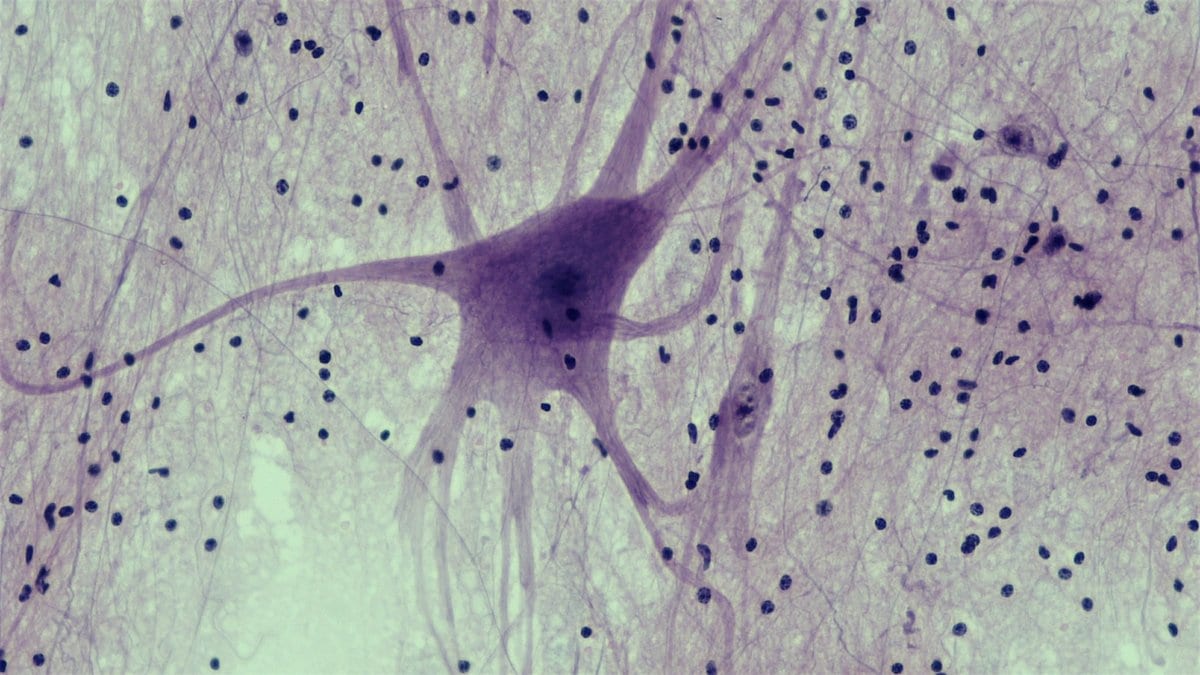
Human nerve cells that lose the protein TDP-43 stay intact but largely stop talking to one another across their synapses, and correcting a single mis-spliced gene was enough to bring that signaling back, a team led from University College London and King's College London reports.
The group calls correcting that gene, UNC13A, a treatment strategy relevant to roughly 97% of patients with amyotrophic lateral sclerosis, the motor neuron disease, and to roughly 50% of patients with frontotemporal dementia who show the same TDP-43 abnormality. Nobody has been treated with it; the work was done in lab-grown human neurons and mice.
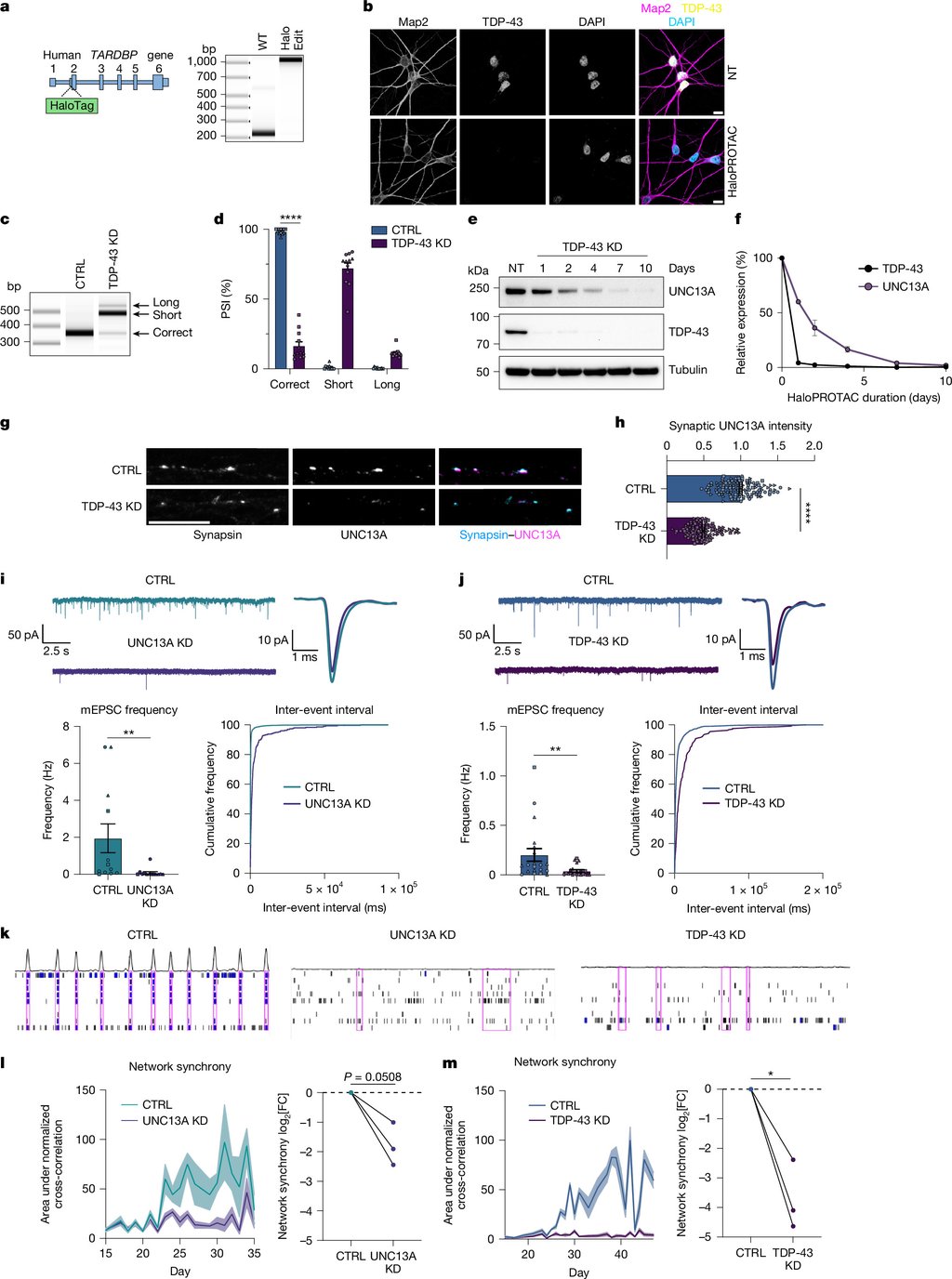
TDP-43 normally sits in the cell nucleus and trims the working copies of other genes. Without it, those copies keep stretches they should discard, and one such stretch cripples UNC13A, whose protein loads neurotransmitter packets at the sending end of a synapse. In human neurons grown from stem cells and stripped of TDP-43, less than 5% of the UNC13A protein remained, spontaneous release events grew rarer, and the network's coordinated firing fell apart, according to the paper published Nov. 11, 2026, in Nature. The cells stayed alive and structurally whole.
Matthew J. Keuss and colleagues then cut that stretch out of the genome. They report an 80% recovery in the rate of spontaneous release and a restored network rhythm, and call this splicing error a main driver of the breakdown. The neurons did not regain the synapses they had lost; the survivors worked better.
The group also built antisense oligonucleotides, short synthetic strands that stick to a working copy and mask the faulty splice site. In cortical and spinal motor neurons, the best restored correct splicing to more than 90% and UNC13A protein to more than 50% of normal, and partly restored spontaneous and stimulus-triggered release. Release at single synapses improved too, though the authors say that effect narrowly missed significance.
For the animal test, the group bred mice carrying the human version of the gene segment. Three weeks after an injection into the fluid around the brain, spinal cord tissue showed the mis-splicing partly corrected. That experiment measured splicing, not synapses.
The paper's competing-interests statement records that senior author Pietro Fratta, Keuss, and Oscar G. Wilkins have filed a patent application on the molecules. Fratta founded and holds shares in Trace Neuroscience, which funds his laboratory and that of Juan Burrone at King's College London.
Sources
- NaturePeer-reviewed

Medical Disclaimer: This content is provided for general informational and educational purposes only. It is not medical advice and should not be used as a substitute for professional medical advice, diagnosis, or treatment. Always consult a qualified healthcare professional regarding any medical condition, concern, symptom, or treatment decision.