A Second Cell Type Helps Tell High-Risk BRCA1 Mutations From Milder Ones
Researchers at the Francis Crick Institute in London have scored 4,113 BRCA1 mutations that had never been tested in a laboratory, editing each single-letter change into living human cells one at a time and measuring whether the cells survived. They then built a second version of the same assay in human breast cells, and the two cell types did not agree about which mutations are damaging.
The target is the test result nobody can interpret. A woman who carries a BRCA1 change that has rarely been seen before is told she has a variant of uncertain significance, and the authors report that over half of the single-letter BRCA1 variants on record still lack a definitive clinical interpretation. Laboratory scores are one kind of evidence the panels that classify those variants weigh.
The study, published Nov. 11, 2026, in Nature Genetics, found 538 variants that damage the gene's function. In the first cell line, the scores separated variants already known to be harmful from those already known to be harmless almost perfectly, the authors report. In the breast cells, where 2,157 of the same variants were scored, nearly half of the variants that had disabled the gene in the first line scored normal.
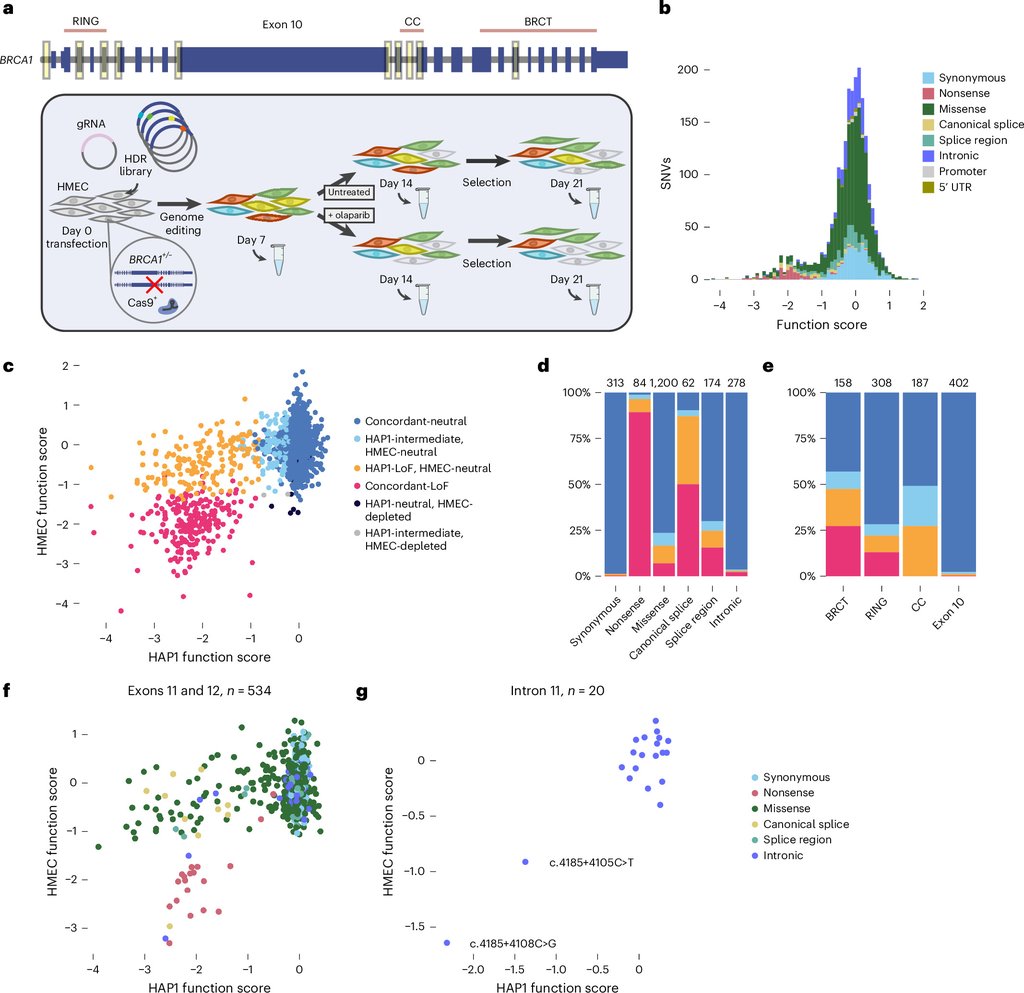
That disagreement turned out to carry information. Combining the two readouts with case-control data from UK Biobank and the BRIDGES study, the team estimated that variants damaging in both cell types were associated with roughly a 13-fold higher risk of breast cancer, against roughly 3-fold for the variants damaging in the first line only. The paper describes the second group as partial losses of BRCA1 function rather than complete ones, and says larger patient groups are needed before those risk figures can be pinned down.
The authors present the scores as evidence that could support clinical interpretation, not as a reclassification of anyone's result. The work was led by Phoebe Dace in Gregory M. Findlay's Genome Function Laboratory at the Crick, and the paper is open access.
Sources
- Nature GeneticsPeer-reviewed