Scientists Calculated the True Colors of Dead Stars. One Came out Green.
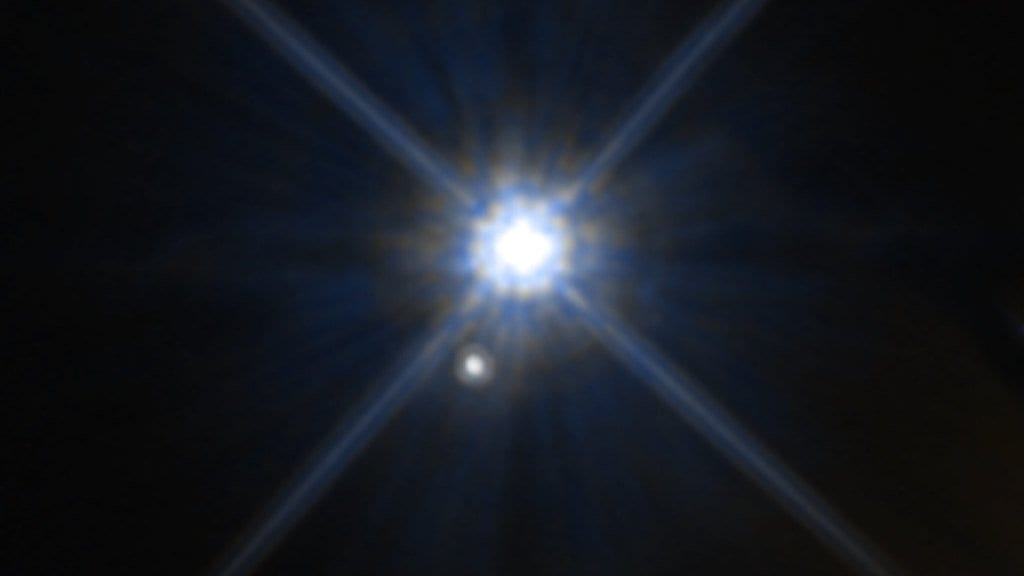
A University of Warwick team has calculated what white dwarf stars would look like to the human eye, and reports that one of them, WD J1330+6435, would appear green. Nobody has photographed one: no white dwarf is close enough for its color to be seen directly, so the team ran spectra that telescopes already collect through a model of human color vision.
A spectrum is normally read for a star's temperature and its chemical makeup; in the team's account, it also carries the color the star would show up close. The paper was published Oct. 15, 2026, in RAS Techniques and Instruments.
Density is what breaks the usual rule that a star's color follows its temperature, with cooler stars orange and the hottest ones pale blue. Mark Hollands and colleagues at Warwick report that the coolest white dwarf atmospheres can be about as dense as water, and that at those densities traces of carbon, calcium or sodium absorb light across much wider bands, producing stars that would look yellow, green, cyan, pink or purple.
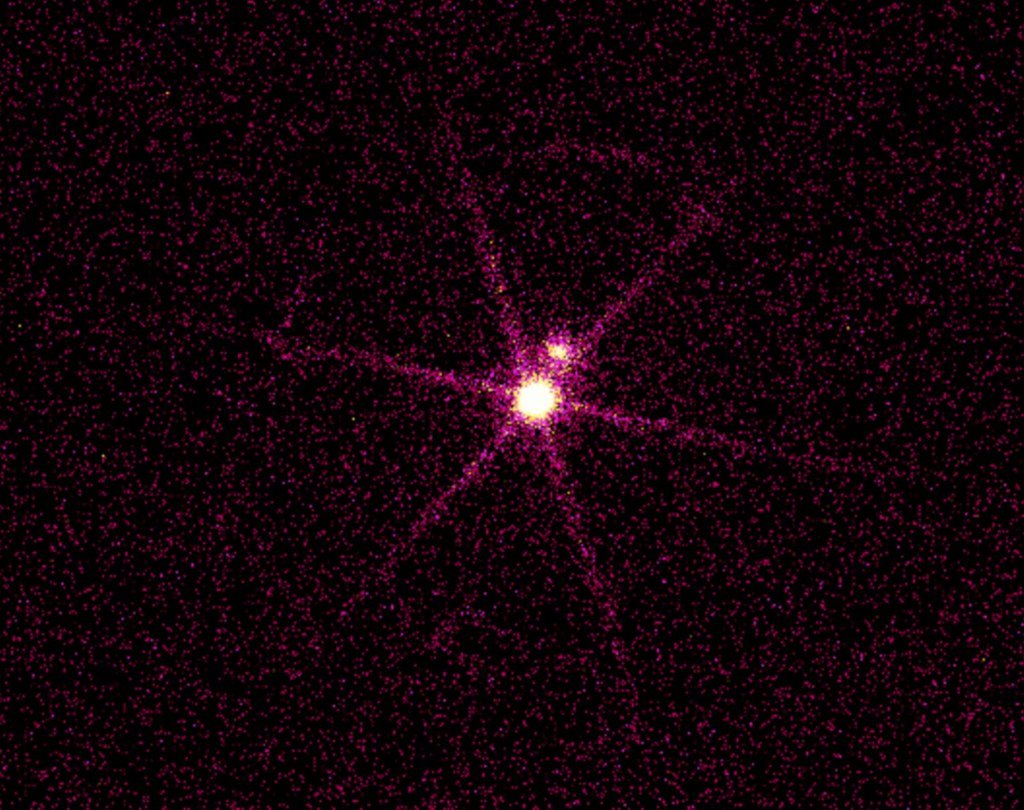
WD J1330+6435 is about 4,000 degrees Celsius and has pulled in rocky debris from its planetary system; sodium absorbs the orange part of its spectrum, leaving green. The claim of a first appears in Warwick's announcement, not in the paper: as far as the team is aware, no other star, living or dead, has ever been credibly reported as green.
Across the 151 white dwarfs within about 65 light-years of Earth, the median color temperature is about 6,800 K, which the eye reads as white. Five of them are unusually colored, two yellow and three pink, which the team extrapolates to roughly 1 in 30 white dwarfs.
"Yet if we take the median across a representative population of white dwarfs, we found that the average white dwarf really is white," said Boris Gänsicke of Warwick, a co-author of the paper.
The same models give the team a candidate for the reddest star on record: WD J1011+2845, where carbon dredged up from the core pushes nearly all of its light into the red.
Sources
- RAS Techniques and InstrumentsPeer-reviewed
- warwick.ac.uk