Hole in a Neanderthal's Shoulder Blade Fits a Wooden Spear, Team Says
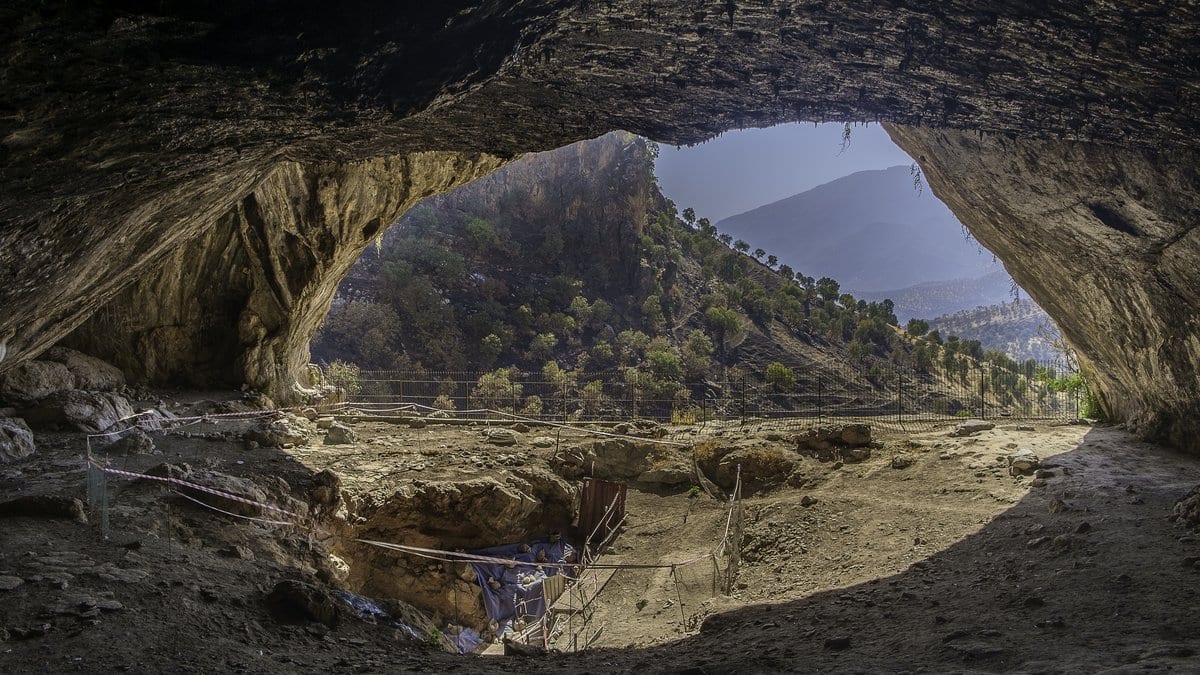
Researchers have described a new Neanderthal from Shanidar Cave in Iraqi Kurdistan, deposited about 75,000 years ago, raising the minimum number of individuals placed in one small spot in the cave to five. The description was published Oct. 15, 2026, in Scientific Reports.
That cluster, first identified in 1960, is central to a long argument over whether Neanderthals deliberately treated their dead. Emma Pomeroy of the University of Cambridge, Graeme Barker of the university's McDonald Institute for Archaeological Research, and colleagues report in their paper that the bodies were placed in one tightly restricted space on several separate occasions, and that intentional, patterned behavior is the most likely explanation.
The new individual, labeled Shanidar A, was an older adult. The surviving remains are a largely complete right hand, rib fragments, a left shoulder blade and seven teeth, recovered in excavations that restarted in 2015. A flash flood washed most of the skeleton away after the body had decayed.
The front teeth are worn in an unusual pattern, and one incisor had been split lengthwise yet stayed in use long enough to collect a thick layer of hardened plaque. The team reads that as the trace of a severe facial injury the individual survived.
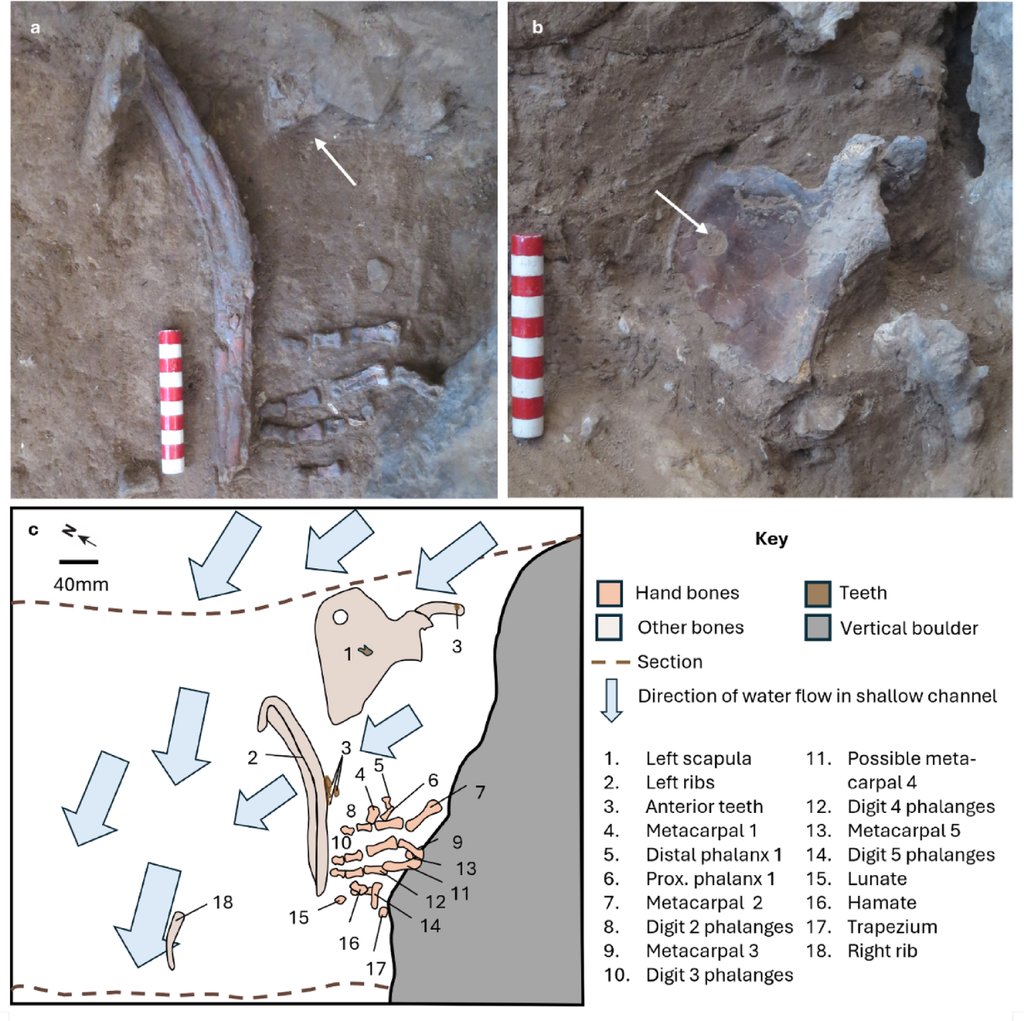
The left shoulder blade carries a near-circular hole with no sign of healing. The authors interpret it as a wound inflicted around the time of death and likely the cause of it. They compared its outline with published wounds on animal bones and with wounds made experimentally, and say the round shape fits a wooden spear rather than a stone-tipped weapon. They call that indirect evidence for the use of wooden implements in the Middle Paleolithic, a period from which wood almost never survives. The authors say they cannot tell whether the wound came from a hunting accident or from violence between people.
The 1960 remains are now held at the Iraq Museum in Baghdad. The team says it plans to study them to test whether some of the individuals found in the new excavations were among those recovered then.
Sources
- Scientific ReportsPeer-reviewed