Skip to content
See the World Through ScienceA project of ALLATRA

Dragon Capsule Delivers the Space Station's Last Set of New Solar Arrays
Space

Republish this story

Our work is licensed under Creative Commons BY-NC 4.0. You may republish this piece for free — with credit to ALLATRA Media and a link to the original, unedited beyond length trims, and not for commercial use.

Read the full license

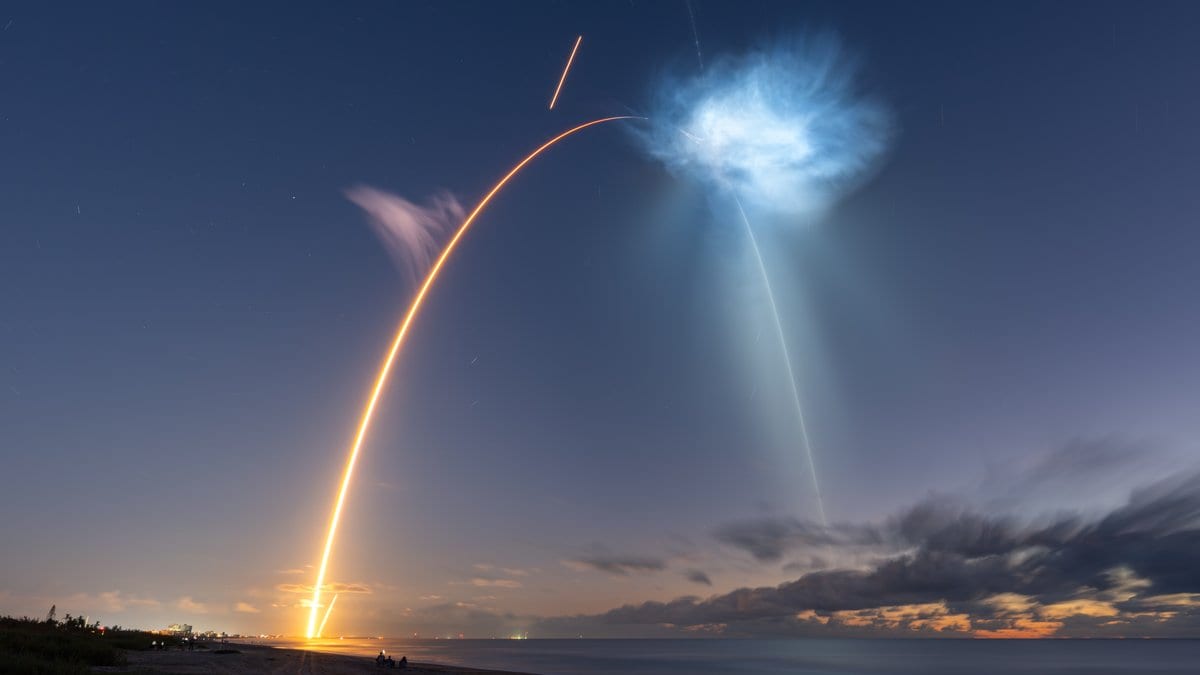
A long exposure shows the glowing orange arc of a Falcon 9 rocket rising from the Florida coast before sunrise, its upper-level exhaust plume lit pale blue high in the sky, with a few spectators on the dark beach below.
Seen from the beach near Cape Canaveral, Florida, the Falcon 9 carrying the CRS-35 Dragon traces its climb in a single long exposure on Oct. 13, 2026.NASA/John Kraus · pdm

A SpaceX Dragon cargo spacecraft docked to the International Space Station at 10:27 a.m. EDT on Oct. 15, 2026, delivering more than 6,300 pounds of food, supplies and equipment to the crew. NASA said the capsule attached to the space-facing port of the station's Harmony module, and that this is the 35th cargo resupply flight SpaceX has flown for the agency.

Aboard is the final set of roll-out solar arrays, the add-on panels NASA calls IROSAs. The agency says on its space station blog that they will be installed later this fall, finishing a run of array sets flown up one batch at a time.
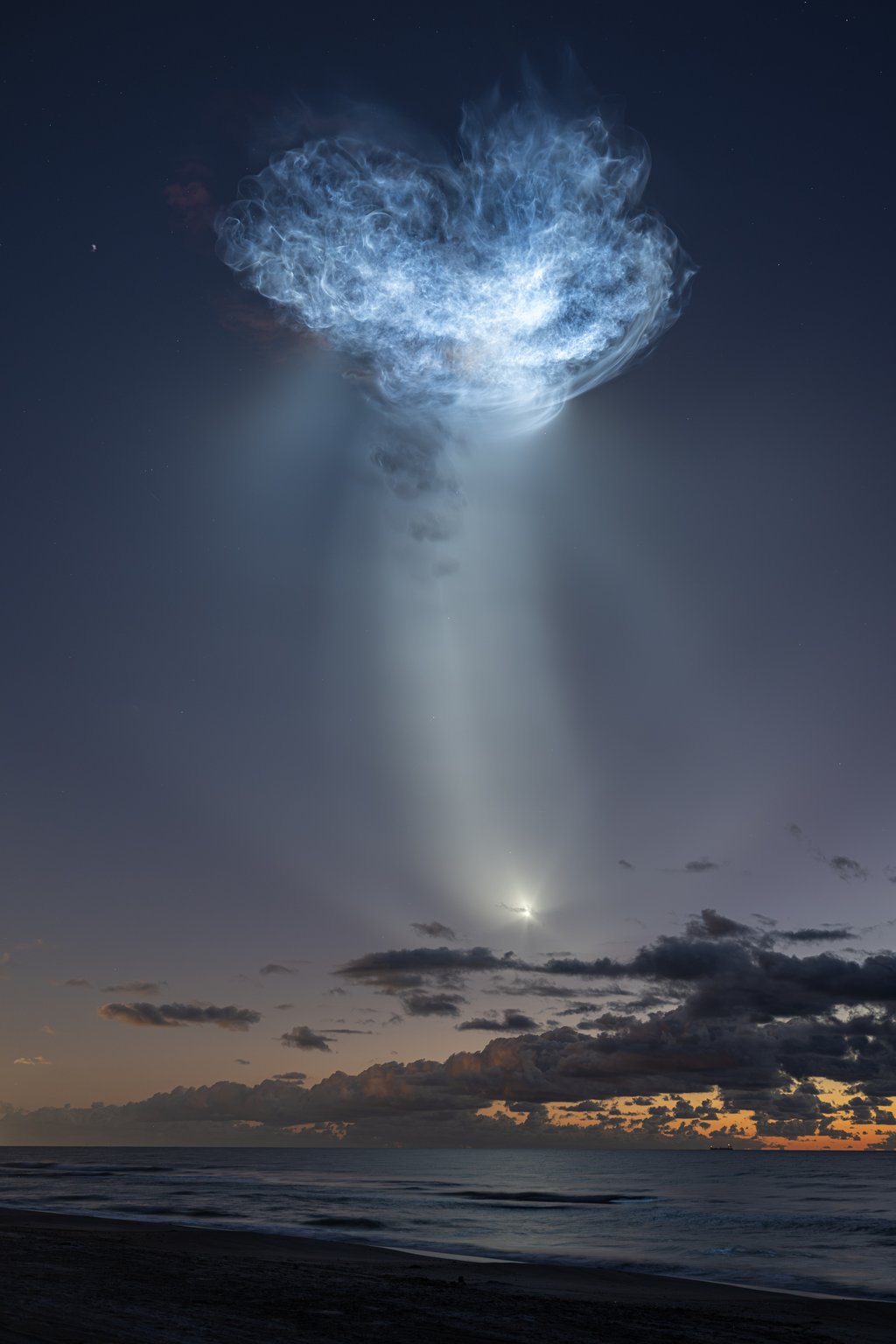
A tall, sunlit rocket exhaust plume stands like a column in a twilight sky above a line of dark clouds and an orange horizon, with the ocean and a dark beach below.
The plume stands over the Atlantic off the Florida coast as dawn breaks on Oct. 13, 2026. NASA/John Kraus

NASA says the flight also carries equipment for making artificial retinas in microgravity, the near-weightlessness of orbit, a process the agency expects to help restore vision on Earth. Also on the manifest are heart tissue models grown in three dimensions, meant to support large-scale drug testing on future missions, and materials for studying how a new kind of glass forms in orbit. The agency says the capsule carries brain organoids too, lab-grown clusters of brain cells that it expects to point toward treatment targets for Alzheimer's, Parkinson's and multiple sclerosis.

The mission launched Oct. 13, 2026, on a SpaceX Falcon 9 rocket from Cape Canaveral Space Force Station in Florida. NASA says the Dragon will stay at the station until mid-November, then depart and splash down off the coast of California, carrying back research and cargo the agency describes as time-critical.

Sources

Spot an error?

Spot an error?

Report an error

Spotted a mistake on this page? Tell us what's wrong and our editors will take a look.

What kind of problem?

Only if you'd like us to be able to follow up. We won't use it for anything else.

We correct mistakes openly. Select any text to flag it. Fixes are logged under our Corrections Policy.

Report an error

Reporting on

Dragon Capsule Delivers the Space Station's Last Set of New Solar Arrays

What kind of problem?

Only if you'd like us to be able to follow up. We won't use it for anything else.

We read every report. Corrections are logged publicly.