Called Carbon-Rich for Years, a Scorching Planet Turns out to Be Oxygen-Rich
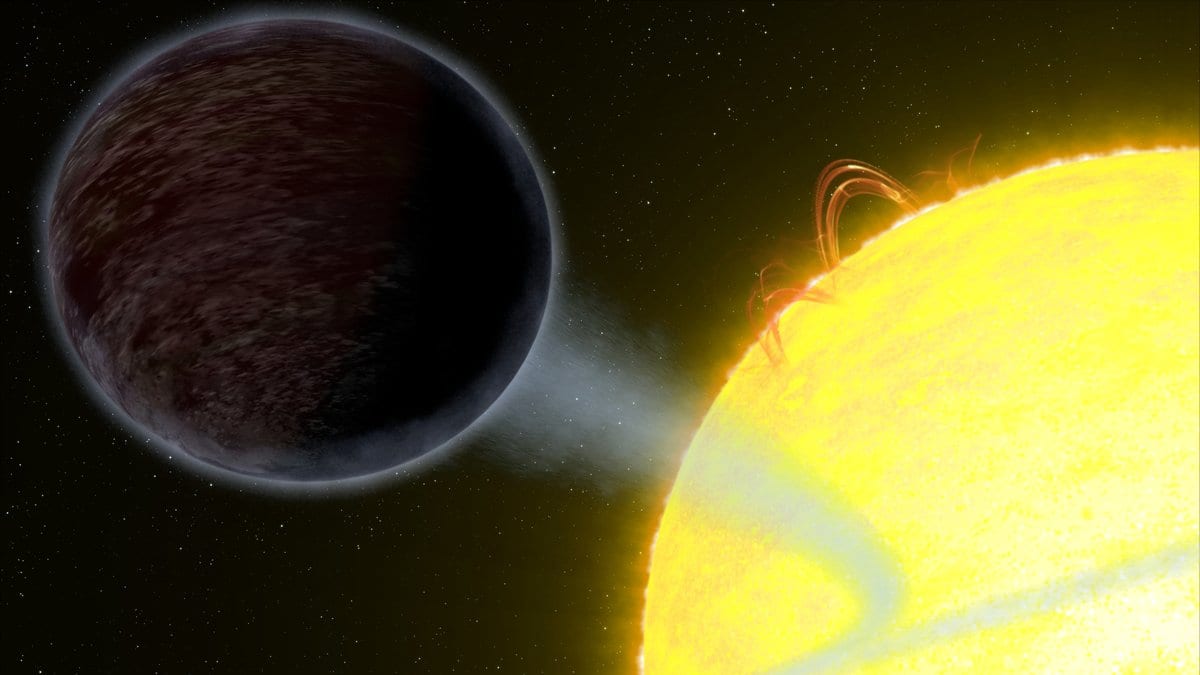
A team led by Changwoo Kye of Seoul National University and the Korea Astronomy and Space Science Institute has measured the chemistry of the dayside of the ultra-hot Jupiter WASP-12 b, a giant planet whose day face glows in the infrared, and found more oxygen there than carbon, the opposite of what some earlier readings favored.
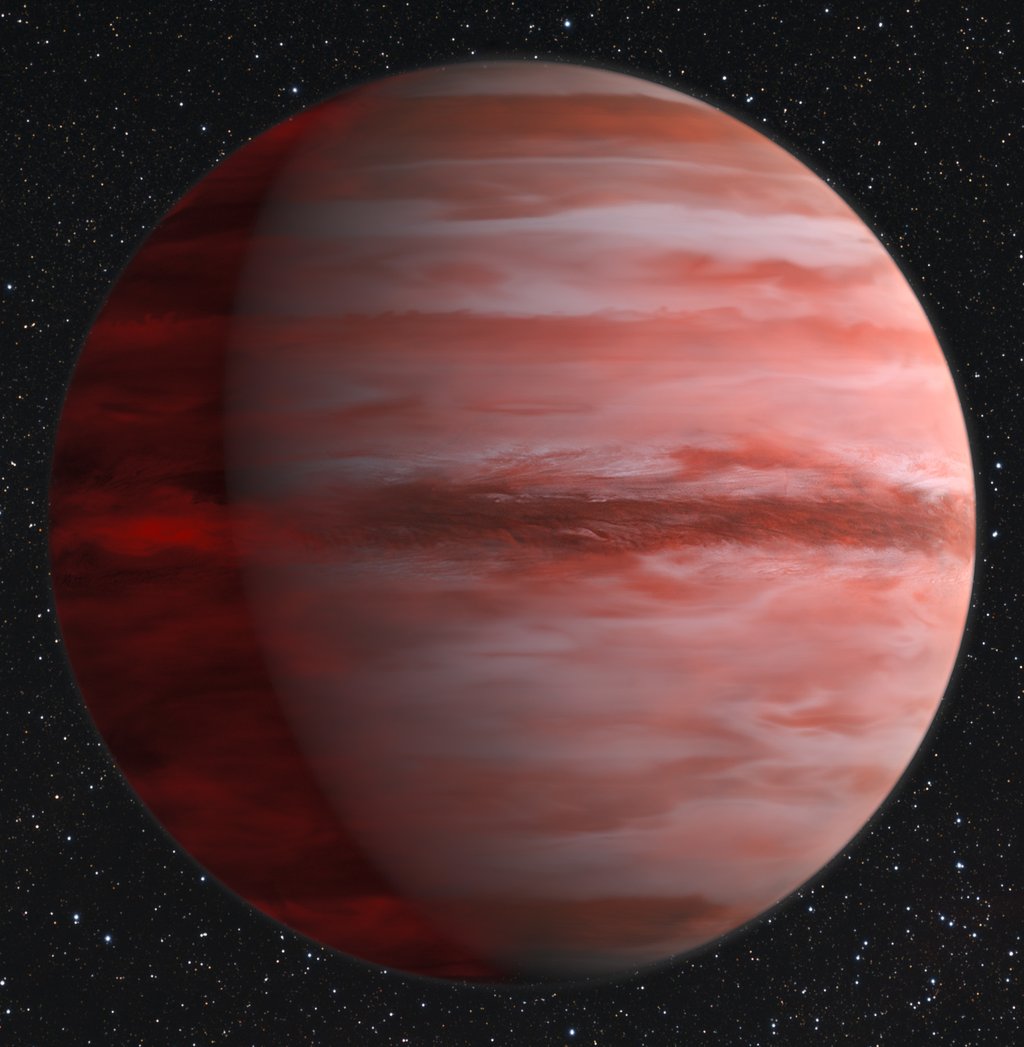
The authors write that a giant planet's carbon-to-oxygen ratio is one of the few surviving records of the gas and solids it gathered while forming, and that no high-resolution observation had pinned down WASP-12 b's dayside value line by line.
The measurement comes from IGRINS-2, a near-infrared spectrograph on the Gemini North telescope. The team observed the planet for a continuous 4.5 hours on Feb. 25, 2025, as it emerged from behind its star, and detected water and carbon monoxide in emission rather than absorption, a sign that the dayside gets hotter with altitude. Fitting a chemical model to the whole spectrum gives a carbon-to-oxygen ratio of 0.72, with an uncertainty of about a tenth either way. The paper, accepted for publication in The Astrophysical Journal Letters, reports that carbon-rich values above 1 are disfavored at more than five sigma — a very strict statistical threshold.

The paper recounts a split record. Early analyses of the planet's infrared glow favored a carbon-rich dayside, where carbon outnumbers oxygen; later work favored the reverse; and a more recent study of the planet's brightness through its orbit came back carbon-rich again. Hubble Space Telescope readings of the planet's rim pointed oxygen-rich but could not speak for the day face. Reanalyses found the answer moved with the eclipse depths and model assumptions chosen; one concluded the available data could not decide it.
The same data yield signals from hydroxyl and from rock-forming elements in gas form, which the team calls tentative. Those weaker signals leave the planet's rock-forming inventory loosely constrained, so its measured abundances overlap several of the formation scenarios tested.
The same fit puts the planet's ratio of rock-forming to volatile material in line with those of the three other ultra-hot Jupiters measured with these spectrographs.
Sources
- arXivPreprint