A Giant Star Keeps Faking Its Own Death, and X-Rays Point to the Reason
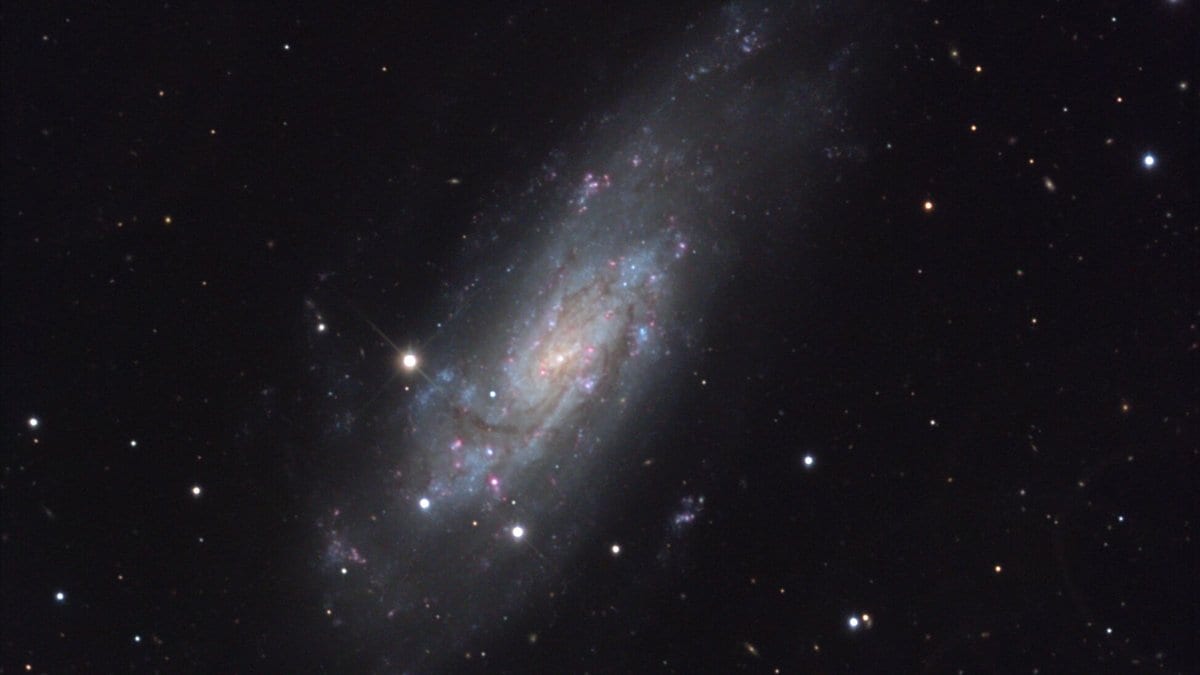
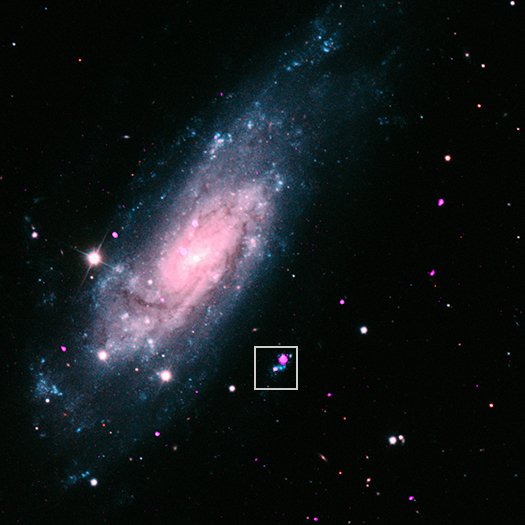
Astronomers using NASA's Chandra X-ray Observatory have traced the repeated eruptions of a giant, unstable star to a dense companion that pulls material off it at every close pass. The companion, either a black hole or a neutron star, has not been seen directly; it is inferred from the X-rays the captured material gives off.
The paper was published Nov. 9, 2026, in The Astrophysical Journal. The Chandra X-ray Center said the system may help explain other stars seen changing in brightness before they explode as supernovae.
The star, AT 2016blu, lies in the spiral galaxy NGC 4559, about 30 million light-years away, and astronomers put its mass at 33 times the Sun's or more. It is a luminous blue variable, a hot, heavy star whose brightness swings widely, and its spikes look so much like a supernova, which the star survives, that astronomers call it a supernova impostor. Between 2012 and 2026 they counted at least 27 bursts of visible light, roughly every 113 days.
"For 15 years, astronomers have been watching this star get really bright and then dim again on a regular basis," said Mojgan Aghakhanloo of the University of Virginia, who led the study.
Visible-light monitoring, including by amateur astronomers through the American Association of Variable Star Observers, showed when the star was flaring, letting the team trigger Chandra under its Target of Opportunity program. The X-ray data, taken in March 2026, caught AT 2016blu at least 100 times brighter than it had been before the outbursts began.
The best explanation, the center said, is that material shed by the star falls onto the black hole or neutron star as the two swing closest in their oval orbit, heating until it shines in X-rays. Those X-rays warm the gas around the system until it glows in visible light.
The center said this is the first X-ray detection of a star of this class, and the first found with a compact companion. AT 2016blu is now bright enough in X-rays to join a rare group of very bright X-ray sources astronomers have yet to explain.
Sources
- chandra.harvard.edu
- The Astrophysical JournalPeer-reviewed