Skip to content
See the World Through ScienceA project of ALLATRA

A Satellite Built to Inspect Dead Spacecraft Is Lost, Silenced by Its Own Safety Software
Space

Republish this story

Our work is licensed under Creative Commons BY-NC 4.0. You may republish this piece for free — with credit to ALLATRA Media and a link to the original, unedited beyond length trims, and not for commercial use.

Read the full license

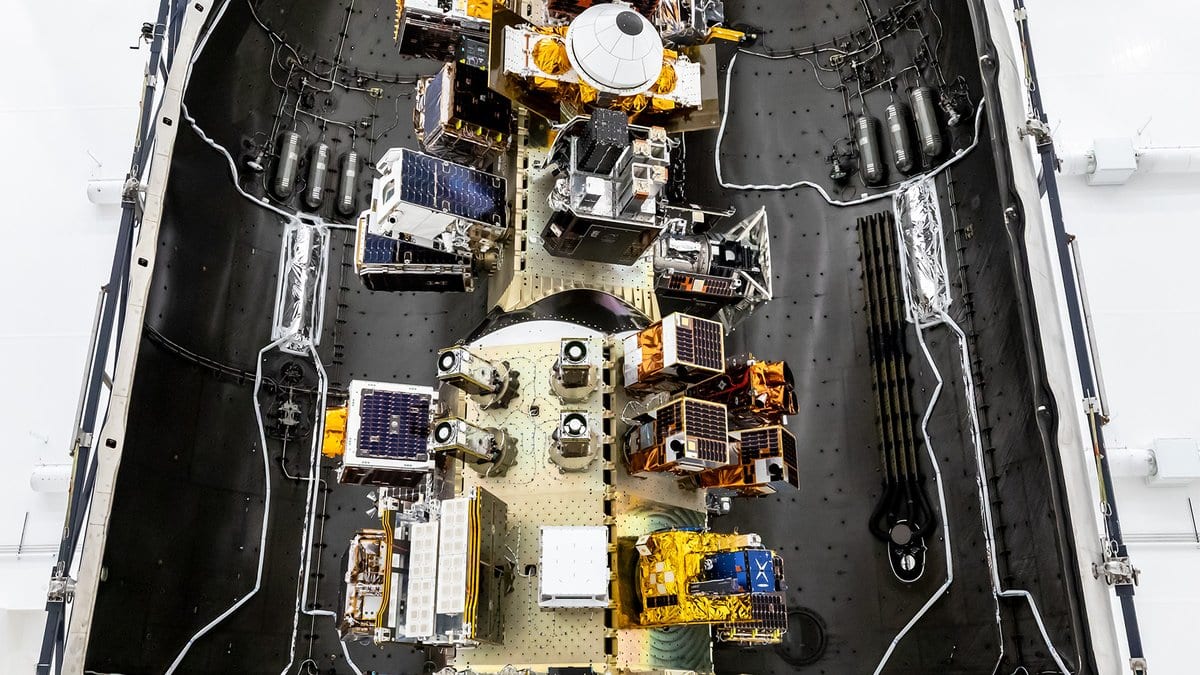
Dozens of small satellites mounted on a payload dispenser inside an open Falcon 9 fairing, seen from above.
Small satellites are packed into their Falcon 9 fairing before the Oct. 1, 2026, Transporter-18 launch, the rideshare that carried SSPICY to orbit (illustrative; the frame shows the stack as a whole)."Transporter-18 Encapsulation (KSC-20261001-PH-SPX01 0001)" by SpaceX, via Wikimedia Commons, CC0

NASA said Nov. 3, 2026, that it and Starfish Space have concluded their SSPICY satellite cannot be recovered. Troubleshooting and analysis by both organizations found an issue with the spacecraft's fault protection system, the onboard software that detects and responds to problems. That system is keeping the radio erroneously switched off.

The spacecraft was built to navigate toward and inspect inoperable space objects of U.S. origin in low Earth orbit while testing propulsion, guidance and navigation technologies, and an articulating robotic boom. Its objective was to speed up industry work on servicing, assembling and manufacturing hardware in orbit, and to collect data for NASA on what orbital debris is like.
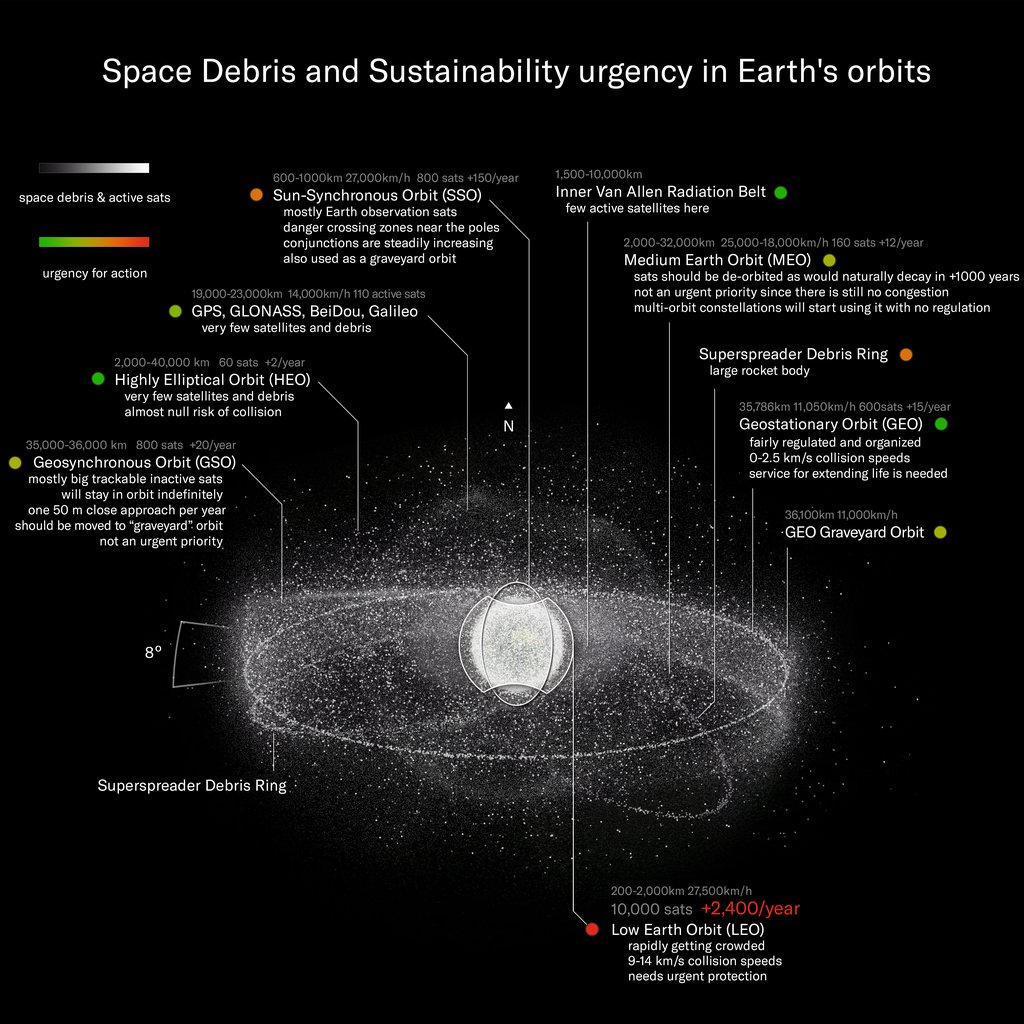
An infographic of Earth orbital bands, labeling low Earth orbit, medium Earth orbit, geostationary orbit and graveyard orbits with satellite counts and congestion notes.
A map of where the hardware sits, from the crowded shell just above the atmosphere out past the geostationary graveyard. The objects SSPICY was to approach are in the lowest band, marked here as the one needing urgent attention. "Space sustainability urgency in earth orbits black" by Pablo Carlos Budassi, via Wikimedia Commons, CC BY 4.0

The satellite, a Starfish Space spacecraft called Otter, launched Oct. 1, 2026. Starfish established contact with it and then lost that contact during commissioning, the phase after launch when systems are turned on and instruments calibrated, and has not been able to reestablish two-way communication.

NASA said the mission was the first launch and deployment of the Otter spacecraft, and the first time the company's navigation and propulsion technologies were combined into a single spacecraft system.

According to NASA, Starfish intends to keep gathering performance data on those technologies for the agency, along with orbital debris inspection data in low Earth orbit, during future Otter missions. The mission is funded by NASA's Space Technology Mission Directorate (STMD), and the agency's support is managed at its Ames Research Center in California.

Sources

Spot an error?

Spot an error?

Report an error

Spotted a mistake on this page? Tell us what's wrong and our editors will take a look.

What kind of problem?

Only if you'd like us to be able to follow up. We won't use it for anything else.

We correct mistakes openly. Select any text to flag it. Fixes are logged under our Corrections Policy.

Report an error

Reporting on

A Satellite Built to Inspect Dead Spacecraft Is Lost, Silenced by Its Own Safety Software

What kind of problem?

Only if you'd like us to be able to follow up. We won't use it for anything else.

We read every report. Corrections are logged publicly.