Skip to content
See the World Through ScienceA project of ALLATRA

Four NASA Crew Members Leave a Simulated Mars Habitat After More Than a Year
Space

Republish this story

Our work is licensed under Creative Commons BY-NC 4.0. You may republish this piece for free — with credit to ALLATRA Media and a link to the original, unedited beyond length trims, and not for commercial use.

Read the full license

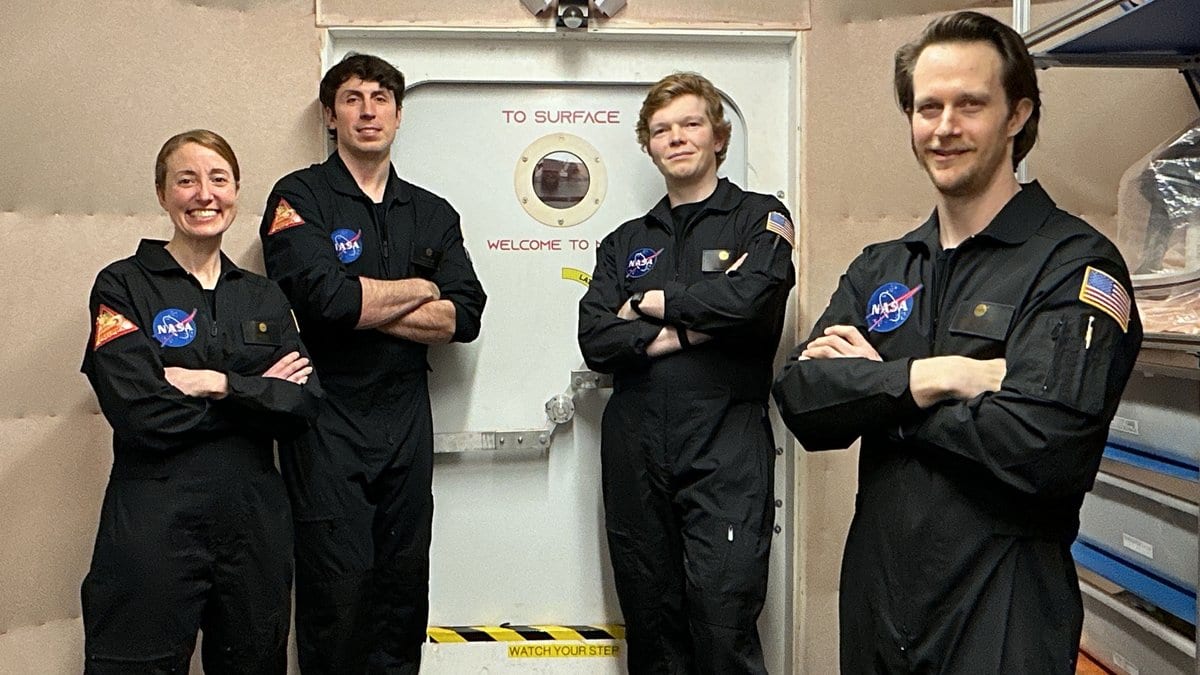
Four crew members in black NASA flight suits stand with folded arms in front of a white airlock door marked TO SURFACE inside a simulated Mars habitat.
The four crew members at the airlock of NASA's simulated Mars habitat at Johnson Space Center in Houston, photographed March 14, 2026, partway through a stay that ended Oct. 31, 2026."CHAPEA Mission 2 Crew Poses for Group Photo (jsc2026e403170)" by NASA Johnson Space Center, via Wikimedia Commons, Public domain

NASA said four crew members left its simulated Mars habitat on Oct. 31, 2026, after more than a year inside. By the agency's account, it was the first time in that span that the four had been outside.

NASA says the mission, called the Crew Health and Performance Exploration Analog and shortened to CHAPEA, was run to help it learn how crews adapt to long stays away from Earth. The agency also says what it draws from this crew will help it design its future Moon base and plan for missions on Mars.

The crew members were Matthew Montgomery, James Spicer, Ross Elder and Ellen Ellis. NASA says they spent more than a year testing systems, maintaining crops, managing limited resources and the delays built into their communications, and conducting simulated spacewalks.
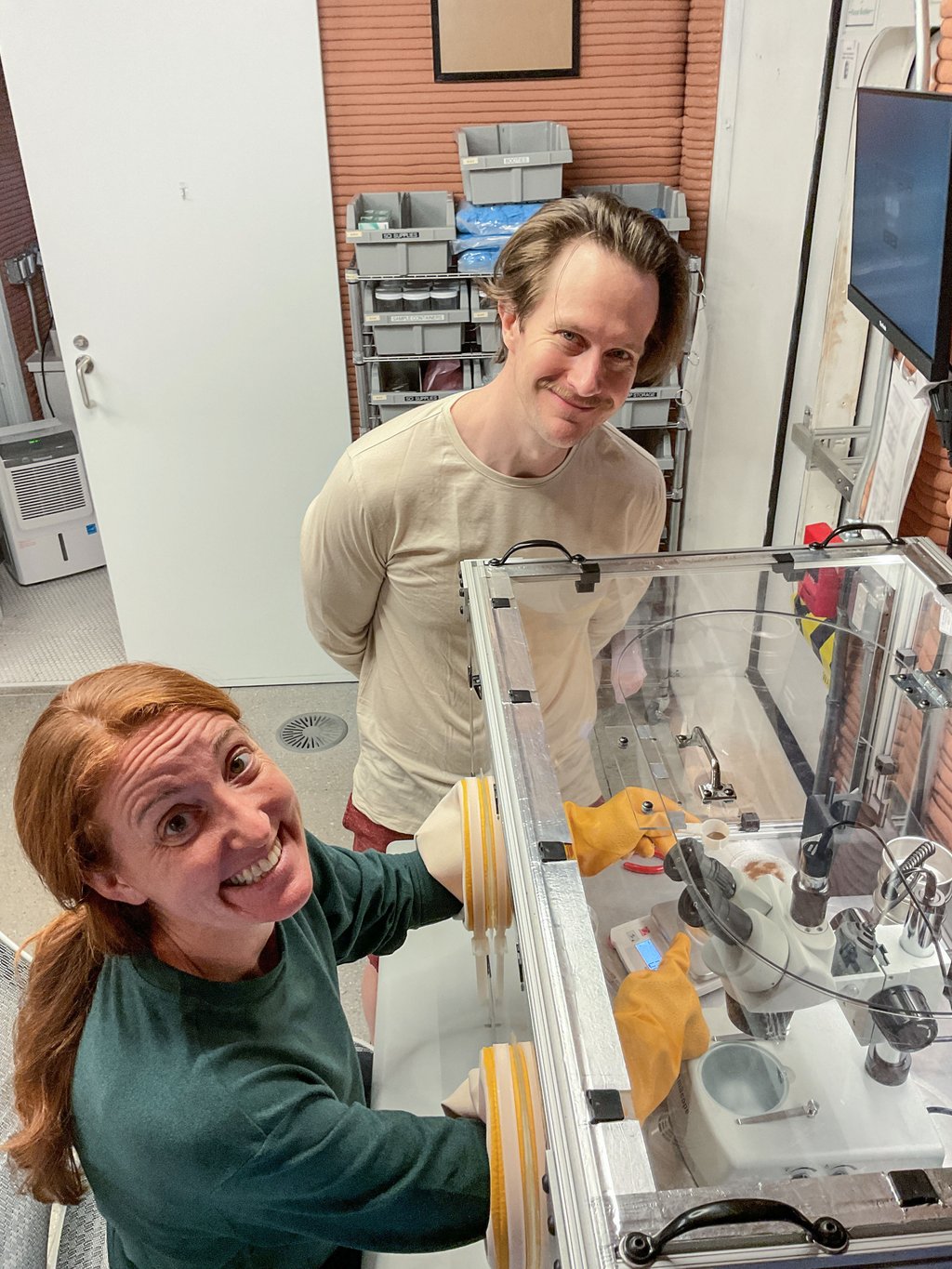
Two crew members lean over a clear-sided glovebox holding small orange-handled tools inside the habitat.
Work at a sealed science glovebox in the habitat at Johnson Space Center in Houston, photographed Oct. 21, 2025. "CHAPEA Mission 2 Crew Members Use Science Glovebox (jsc2026e403162)" by NASA Johnson Space Center, via Wikimedia Commons, Public domain

NASA published the crew's exit as a photo caption on Nov. 2, 2026. The caption records the date the mission ended and the work the crew did, and gives no data or results from the year inside. The photograph is credited to NASA's James Blair.

Sources

Spot an error?

Spot an error?

Report an error

Spotted a mistake on this page? Tell us what's wrong and our editors will take a look.

What kind of problem?

Only if you'd like us to be able to follow up. We won't use it for anything else.

We correct mistakes openly. Select any text to flag it. Fixes are logged under our Corrections Policy.

Report an error

Reporting on

Four NASA Crew Members Leave a Simulated Mars Habitat After More Than a Year

What kind of problem?

Only if you'd like us to be able to follow up. We won't use it for anything else.

We read every report. Corrections are logged publicly.