The Telescope Built to Map Dark Energy Now Has Its Camera Working
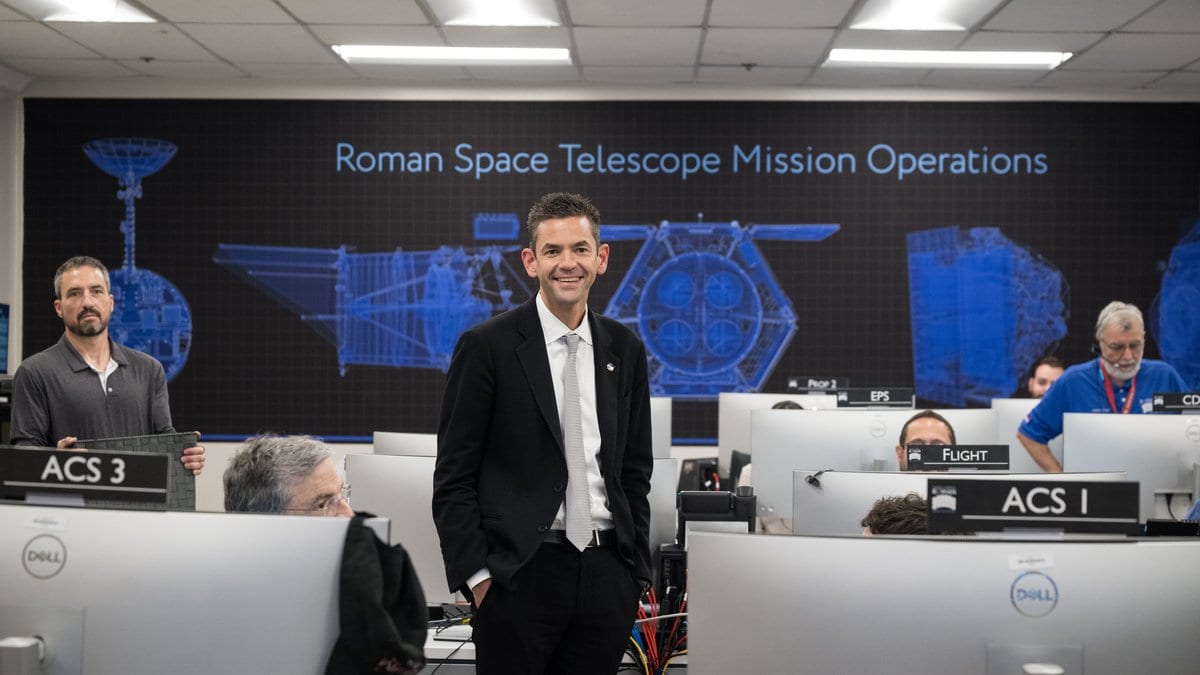
NASA says it has finished checking out the main camera on the Nancy Grace Roman Space Telescope and has brought the telescope's optics into focus. In a mission blog post dated Oct. 14, 2026, the agency reports that after corrections the Wide Field Instrument's optics deviate from a perfect focus by 63 nanometers RMS. The image-quality requirement was about 90 nanometers, a tolerance NASA puts at around 1,000 times thinner than a human hair.
The Wide Field Instrument is the camera Roman's sky surveys will be made with. "All of Roman's sweeping surveys will rely on the Wide Field Instrument," said Dave Hickey, a Wide Field Instrument systems engineer at NASA's Goddard Space Flight Center in Greenbelt, Maryland. He said the mission's primary goals, among them studying dark matter and dark energy, would not be possible without it.
The instrument was switched on in September 2026. NASA says the team has since exercised its parts one at a time and together: the 18 detectors and their electronics, the element wheel that passes selected wavelengths of light to them, and the calibration system's internal LEDs. The alignment mechanism was deployed out of the position it was stowed in for launch, and the thermal system was tested last.
The agency also puts the instrument's performance at nearly 30% better than the Roman team predicted. That is the team's own comparison against its own pre-launch models, and no independent measurement of Roman's optics has been published.
Roman launched Aug. 30, 2026. NASA says the Coronagraph Instrument's images were slightly out of focus at first, by less than the team had expected, and that the focus has been corrected. Roman is still in commissioning, and NASA reports no survey observations in the post.
NASA says the Coronagraph Instrument team will continue calibrating the camera's settings and its deformable mirrors before attempting to demonstrate the instrument's starlight-blocking capability.