Five Galaxies at Cosmic Noon Get Their Dust Chemistry Read by Webb
Astronomers have used the James Webb Space Telescope to take mid-infrared spectra of large soot-like carbon molecules in five ordinary star-forming galaxies at a redshift of about 1, the era known as cosmic noon, when the universe was building most of its stars. The work is a preprint posted Sept. 24, submitted to the journal Astronomy & Astrophysics and not yet peer-reviewed.
The molecules, polycyclic aromatic hydrocarbons or PAHs, help set how gas heats and cools where stars form, and astronomers use them as a stand-in for dust, star formation and gas temperature in galaxies too distant to pick apart. Irene Shivaei and colleagues call their program, PAHSPECS, the first survey of these features with Webb's mid-infrared spectrograph in ordinary galaxies at that distance, and write that PAHs there had not been explored before.
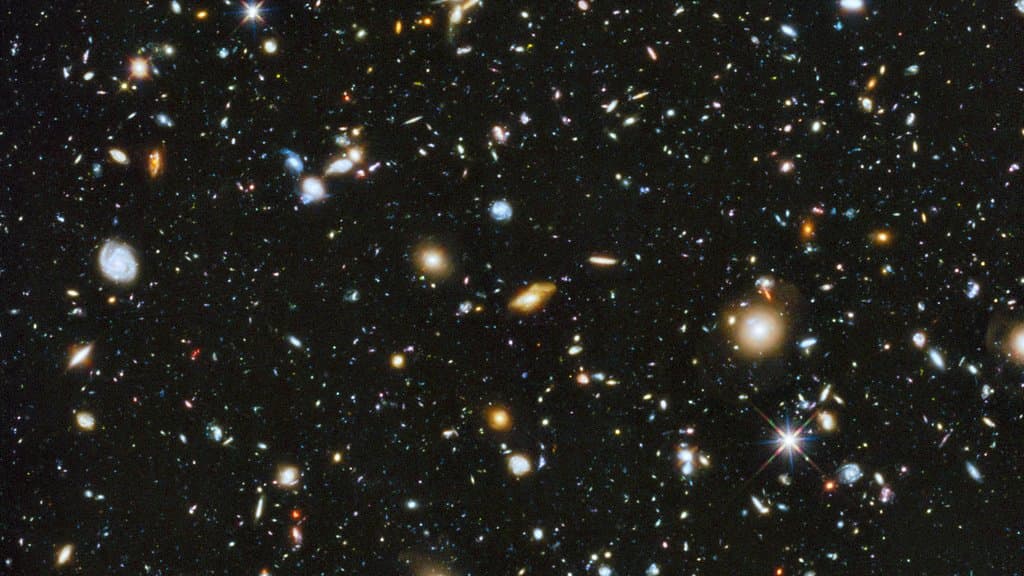
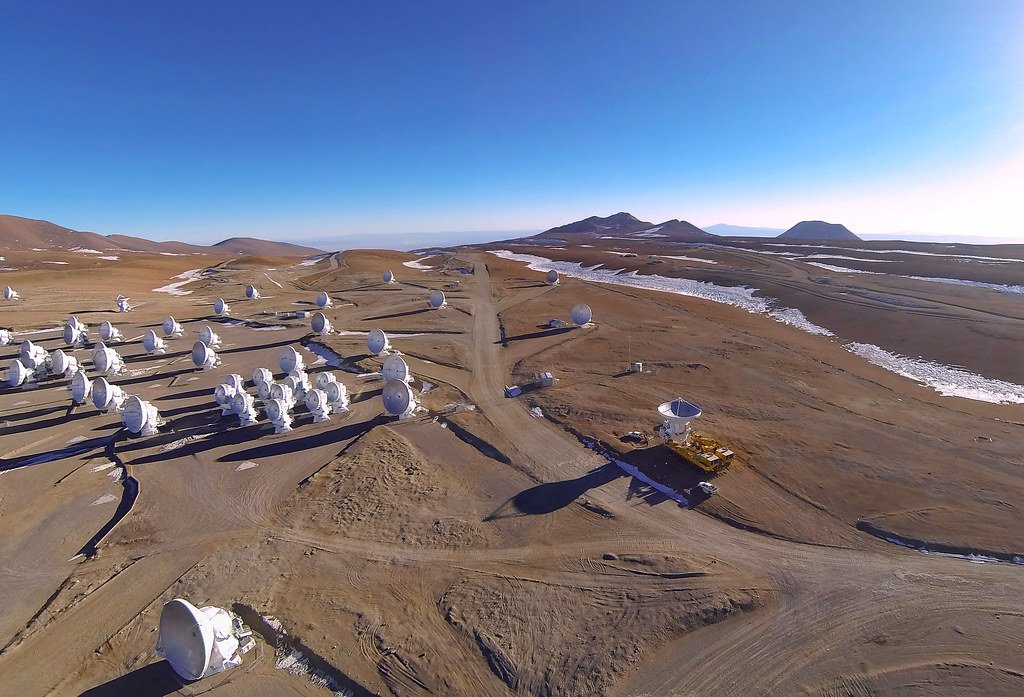
The five galaxies PAHSPECS observed were drawn from a deep survey of carbon monoxide and continuum emission made with ALMA, the radio array in Chile, in the Hubble Ultra Deep Field. Three of the five PAH features were detected in all five galaxies; the shortest was detected in only two.
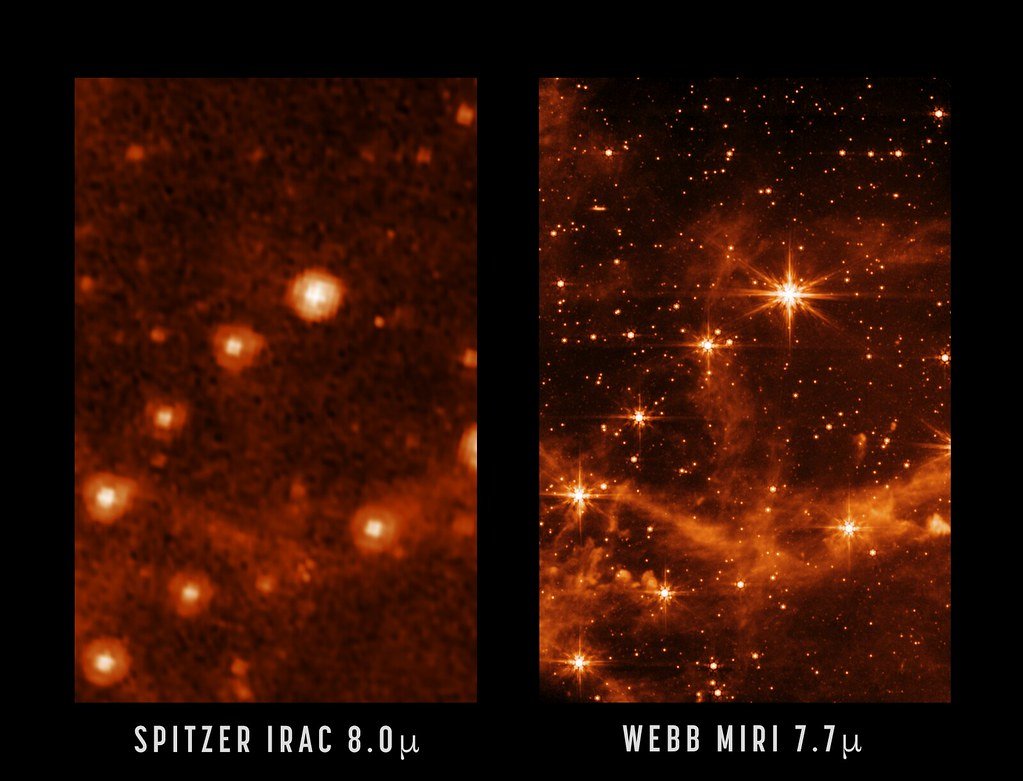
The team also checked a cheaper method other work relies on: estimating PAH content from a few wide filters rather than a full spectrum. The paper reports that the method recovered the 6.2 and 7.7 micron PAH brightness to within about 25% of the values from the spectra, but overestimated the 3.3 and 11.3 micron features by about 50%, and in places by three to five times.
Maps of the most extended galaxy in the sample show the 7.7 micron feature's contribution to the light in one Webb filter varying across it. The authors read that as meaning the filter method can estimate a galaxy's total PAH brightness, but that tracking how the balance between features shifts inside a galaxy needs full spectra.
The authors also report that the five galaxies' PAH features have different relative strengths from those of nearby dusty galaxies, which they read as a sign that the size distributions of neutral and charged PAHs change differently at cosmic noon.
Sources
- arXivPreprint