Webb Spectra Point to a Black Hole Lighting up Gas in a Nearby Dwarf Galaxy
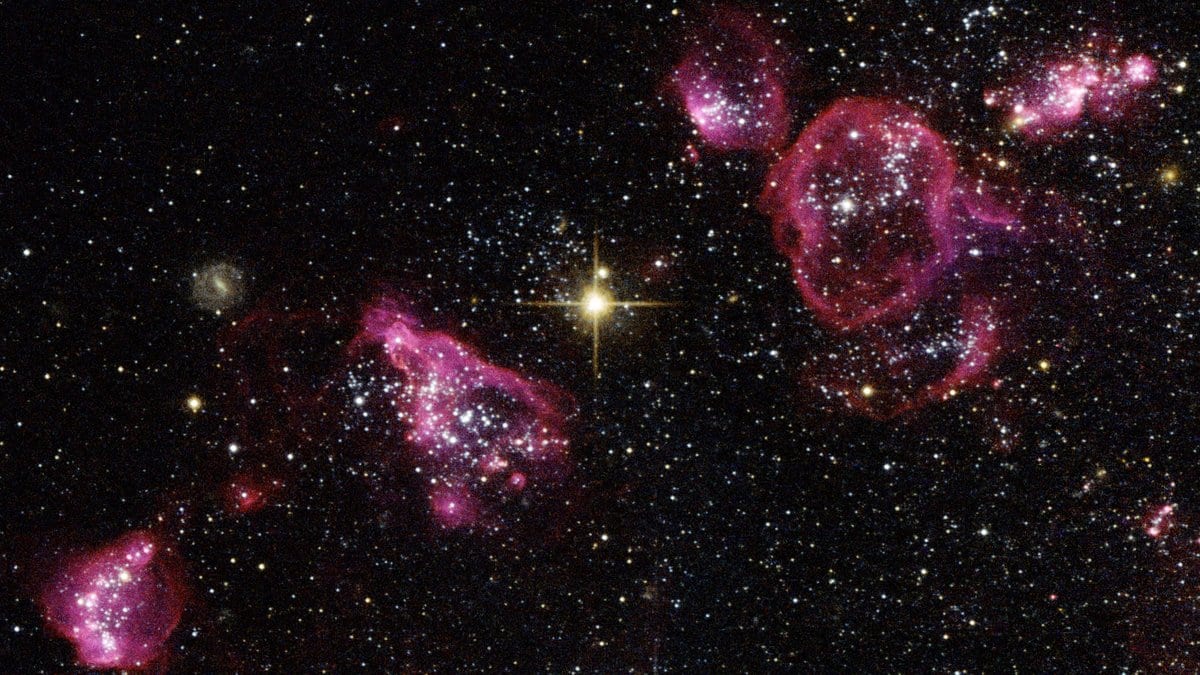
Astronomers using the James Webb Space Telescope report the first detections of neon stripped of four and five electrons in the glowing gas around Ho II X-1, an X-ray source in the nearby dwarf galaxy Holmberg II that outshines what a star-sized black hole should manage. The most highly stripped gas sits off to one side of the source, not around it.
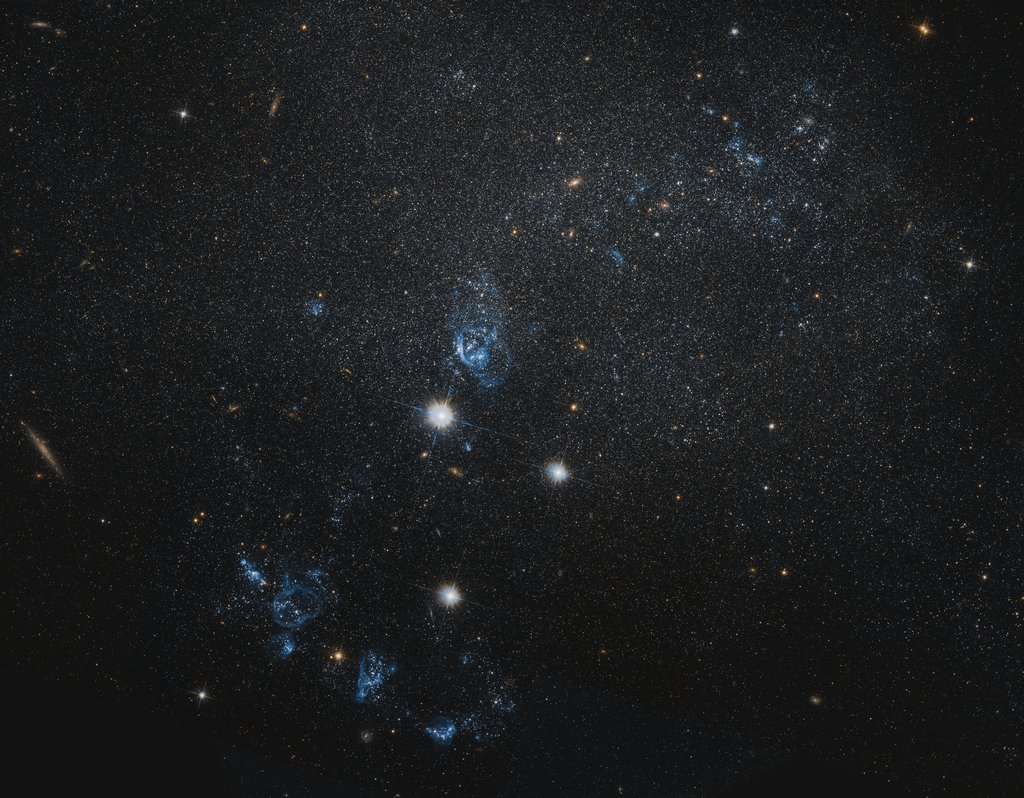
The authors write that Webb has been finding similar high-energy lines in other galaxies poor in elements heavier than helium, and that what ionizes that gas is an open question. Sources this bright, called ultraluminous X-ray sources, have been candidates, with little direct evidence tying any one of them to a highly ionized cloud. Their letter, published Nov. 4, 2026, in The Astrophysical Journal Letters, puts Ho II X-1 forward as that evidence.
Both neon species are brightest in compact patches offset from the source toward two radio knots mapped earlier, while hydrogen and less ionized species fill the wider cloud. The more highly ionized the gas, the narrower the cone it fills, and the narrowest cones all point along the radio knots' axis.
Every line the team measured is narrow, no wider than the instrument's own resolution, which means the gas is not moving fast. Shocks of the kind seen around other X-ray sources would leave fast-moving gas. The authors write that the absence of those signatures favors the source's own radiation as the main thing ionizing the cloud.
Spitzer had picked up one such high-energy oxygen line here before, without resolving the cloud. The star feeding the black hole is too cool to contribute much to the ionization. Estimates of the black hole's mass run from 16 to 70 times the Sun's.
The authors write that the match between the most highly ionized gas and the radio knots suggests a physical connection with past or recurrent jet activity. That gas sits more than 65 light-years out, so its glow records radiation that left decades ago, not the source's present state.
Sources
- The Astrophysical Journal LettersPeer-reviewed