Boston Dynamics Put Scooter Wheels on Atlas to See What Its Motors Could Take
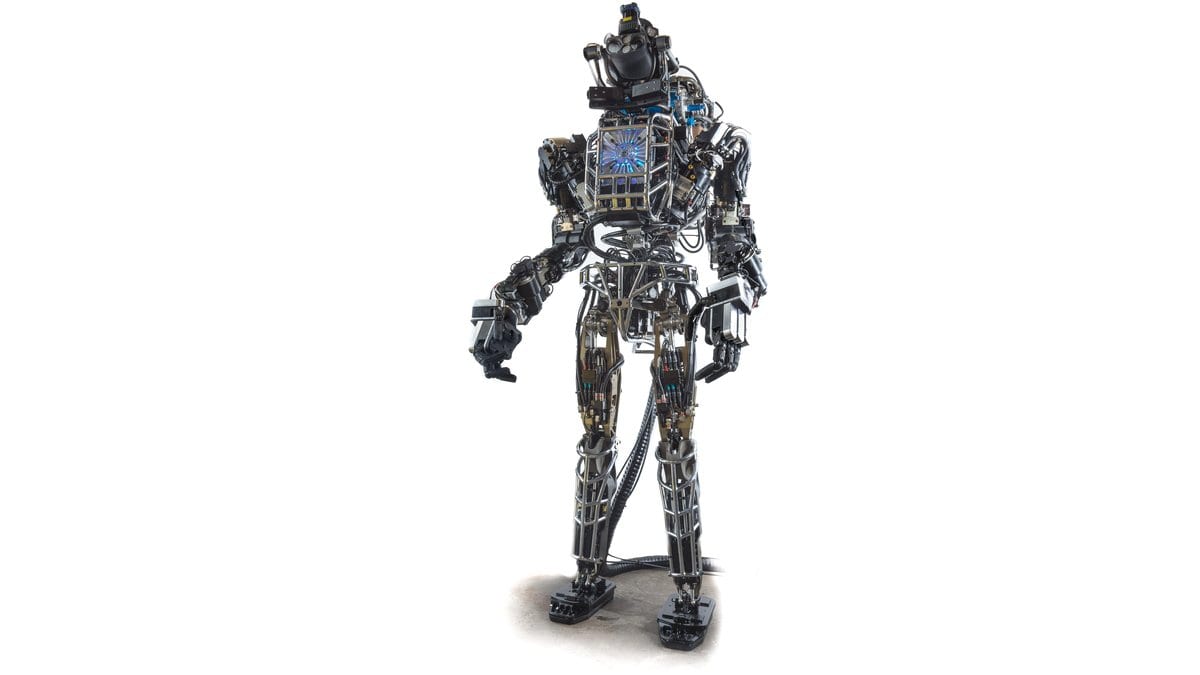
Boston Dynamics has replaced the feet of its Atlas humanoid robot with electric-scooter wheels and driven it with the same learned whole-body controller that normally walks it. The company described the build in an engineering post published Nov. 9, 2026, written by Xiaoyu (Andy) Wu, a controls engineer on the Atlas team.
The wheels were not the objective. Wu writes that the project was meant to test how faithfully a controller trained in simulation works with real motors pushed to the edge of what they can deliver. He says driving fit that aim because every launch, turn and stop works a motor across its full torque and speed range. The post is explicit about what the machine is not: "A wheeled Atlas isn't a product. It's a research testbed."
A single custom adapter holds an off-the-shelf scooter rim on Atlas's existing ankle actuator, and the company says that adapter is "the only new part in the whole build," comparing the retrofit to swapping a wheel on a bicycle. In software, each wheel is treated as an ankle joint that can spin without stopping, and the rest of the robot model was unchanged.
Boston Dynamics says several moves came from a library of recorded human movement. In the side dashes, where a person would slide their feet, the trained policy worked out how to steer the wheels and roll through the move instead. The 360-degree jump followed a recording of a person doing the same move, and the company says "it worked on the first try."
Such policies are trained over millions of simulated runs before the robot moves, and the company says much of the work went into measuring the real motors and tuning the simulated ones to match. The post includes no figures for speed, torque or how well the simulation matched the hardware, and no independent tests have been published. Boston Dynamics says the lessons are already being applied to the standard Atlas.
The post credits Yuval Tassa and the MuJoCo team at Google DeepMind for the open-source physics engine used for training.