New Images Show a Supernova's Streaks Are Really Chains of Knots
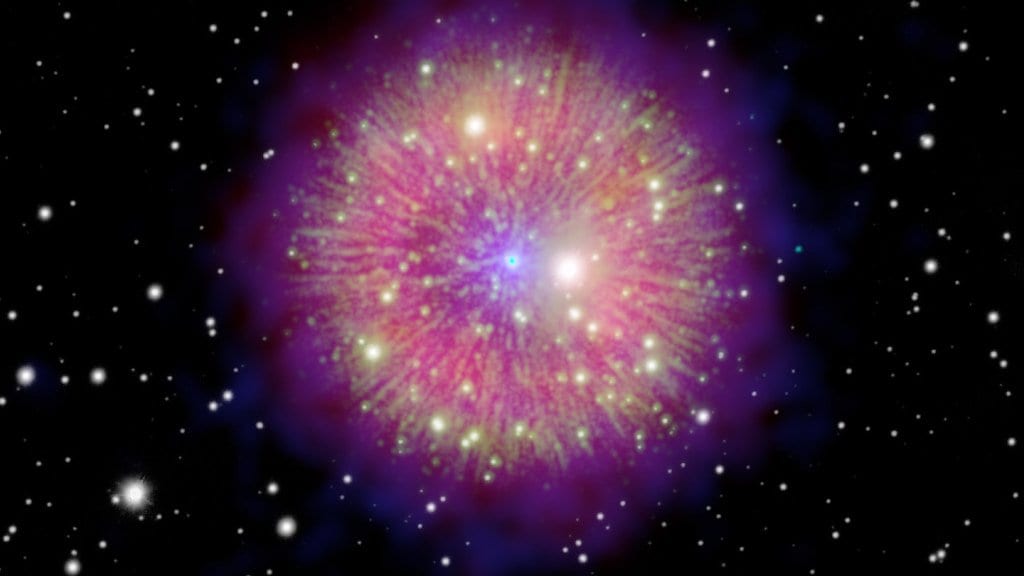
Deep images from the Gemini North telescope have resolved the spoke-like filaments of the supernova remnant Pa 30 into cascades of small knots. In light emitted by sulfur, the images show about ten times as many filaments as previous studies, according to a paper published Oct. 6, 2026, in The Astrophysical Journal.
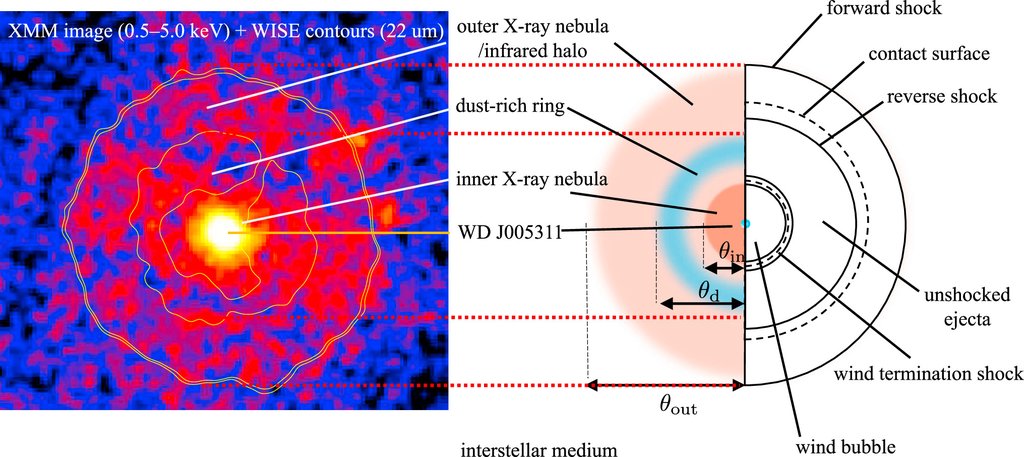
Tim Cunningham of the Center for Astrophysics | Harvard & Smithsonian and the University of Warwick, Scott J. Kenyon of the Center for Astrophysics, and colleagues write in The Astrophysical Journal that the clumpy substructure gives a new observational constraint on models for how the remnant's filaments formed and evolved. The remnant still has a star at its center, and the new images also measure where that star sits relative to the nebula's own center.
The paper reports that the filaments are not smooth radial streaks but chains of knots or clumps, and that images in oxygen light give the first confirmation that a diffuse oxygen glow seen in earlier observations comes from the same filaments traced in sulfur light. The knots are only partly resolved, which makes their size an estimate rather than a measurement; the characteristic knot diameter comes out at about 100 billion kilometers.
The authors also report that the measured center of the nebula matches the position of the central star, so the explosion gave that star no large sideways kick. They put the upper limit on any such kick at about 100 kilometers per second.
The identification of Pa 30 with a historical supernova rests on the same group's earlier work. Their 2024 paper in The Astrophysical Journal Letters described it as unique among known supernova remnants and reported what the authors called strong confirmation that the explosion originated from SN 1181, a supernova recorded in the year 1181. The same paper describes the Type Iax class named in the new paper's title as a suggested failed explosion of a white dwarf that leaves the star behind instead of destroying it.
Sources
- The Astrophysical JournalPeer-reviewed
- noirlab.edu